Home › Training, Behavior & Exercise
Car Travel With a Golden Retriever: Preparing, Packing and Planning Stops
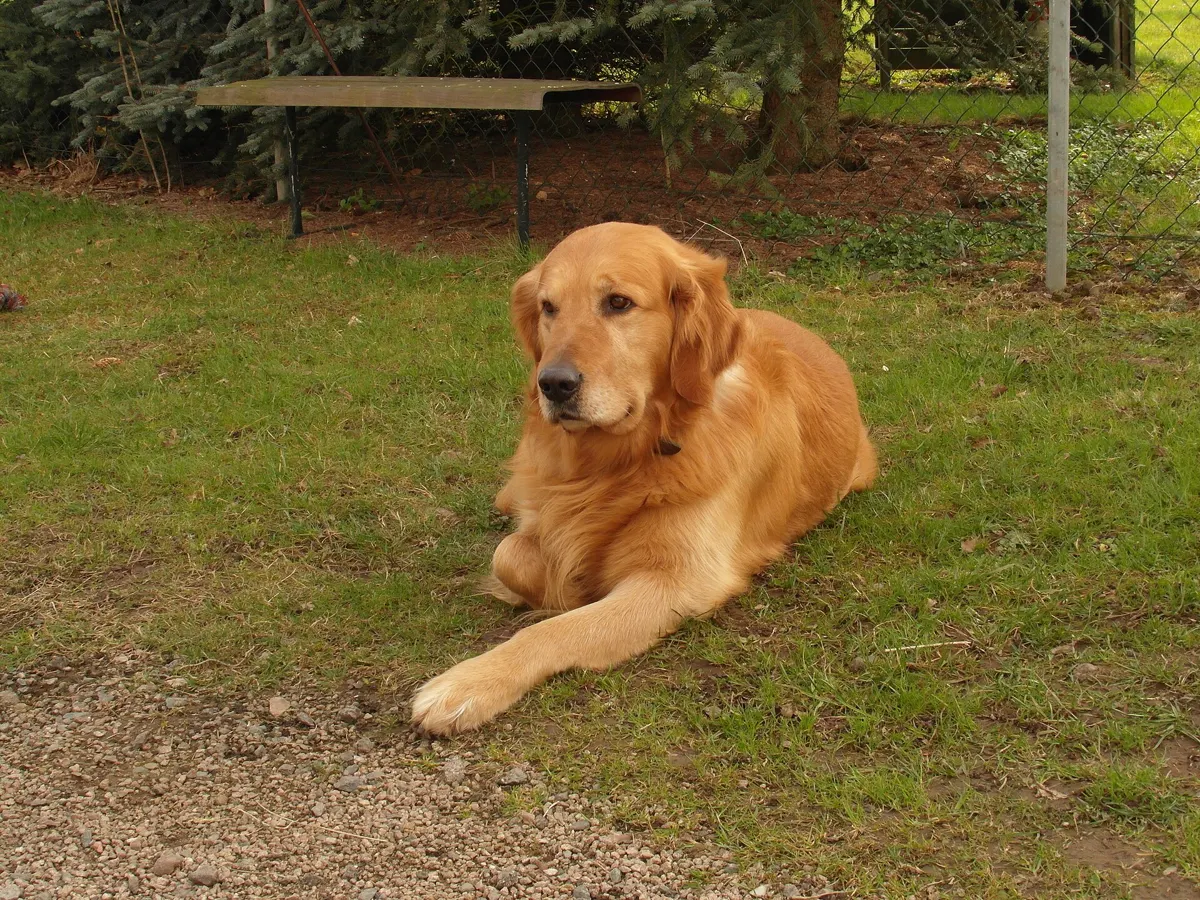
Photo: Barras via Wikimedia Commons, CC BY 3.0
🐾 Getting ready for a puppy? Grab the free Golden Retriever Puppy Checklist (PDF) — no email required.
A good car trip starts before your golden climbs aboard. Think beyond the drive itself: where will you stop, who will stay with your dog, and how will you get them out without opening a door onto traffic?
You do not need a new collection of gadgets. You need suitable restraint, supplies you can reach and a plan that leaves room for your individual dog’s needs. This guide focuses on that journey workflow, not product rankings or a medical travel plan.
Plan the stops before the route gets busy
First, consider whether your golden needs to come. The American Veterinary Medical Association’s vehicle-safety guidance recommends asking that question before taking a pet along. If your errands would leave your dog alone in the car, make different arrangements.
Think through meal stops, toilet breaks and your destination’s dog-access arrangements. A stop is not useful if the only plan is to leave your golden in the parking lot while everyone goes inside. Check access beforehand rather than relying on a “dogs welcome” sign you have not seen.
Check your dog’s identification and contact details. The CDC’s travel guidance recommends microchip identification with updated information, and checking requirements before interstate travel. Requirements depend on the destination; do not assume one document or deadline covers every journey. Ask your veterinarian about your dog’s health and vaccination needs before you go.
Set up restraint before loading your golden
A dog should not ride loose, on the driver’s lap or with their head outside the window. AVMA describes distraction, collision and airborne-debris risks. A familiar journey is not a reason to skip restraint.
A walking harness is not automatically a vehicle restraint. For a dog riding on a seat, CDC advises the back seat with a harness attached to the seat buckle. AVMA notes that vehicle harnesses differ from walking harnesses and recommends looking for crash-tested options that work with your vehicle’s seat belt. Choose equipment intended for vehicle restraint and follow its fitting and attachment instructions for your dog and vehicle. Our harness guide explains the distinction; this is not a recommendation for a particular model.
For crate travel, CDC advises adequate ventilation, room to stand, sit, lie down and turn around, and securing the crate so it cannot slide or shift. AVMA also advises positioning a crate or carrier as near the center of the vehicle as possible and securing it in place. Check the equipment’s installation instructions rather than improvising an attachment. Our crate-size guide can help with measuring, but fitting inside a home crate does not establish that the crate is suitable for a vehicle.
If a dog must travel in a pickup truck bed, AVMA advises using a secured, appropriately sized and ventilated kennel rather than leaving the dog loose or relying on a tether, which can tangle or choke.
Do the setup while parked. No restraint or crate should be described as a guarantee against injury.
Rehearse, then pack what you can actually use
CDC suggests a series of short drives, gradually increasing time in the car. Do not make departure day the first occasion you check whether your golden can travel comfortably in the planned setup. There is no breed-specific practice schedule here, and a longer drive is not automatically progress if your dog is struggling. If you plan to use a crate, our crate-training guide covers a calm, reward-based introduction at home; it is not a road-trip timetable.
If your golden becomes ill or distressed during travel, discuss it with your veterinarian instead of trying to push through. Medication and feeding arrangements need an individual plan. Do not improvise sedation, change prescribed doses or withhold food or water to avoid stops.
Pack the practical basics CDC identifies: water, food, a bowl, leash, waste bags, grooming supplies, required documents and any medication your dog already needs. Include basic first-aid supplies and accessible contact details for your veterinarian and an emergency veterinary hospital near your destination. CDC also recommends keeping a pet poison-control contact available. First aid does not replace veterinary care.
Use the puppy preparation checklist to organize supplies if you are planning a first journey with a young dog. It helps you gather gear; it is not a travel schedule.
Keep the items needed at stops accessible without unpacking the whole vehicle. That is a packing convenience, not a reason to handle your dog or rearrange equipment while driving.
Make each stop a supervised transition
CDC recommends frequent toilet and movement breaks, but that does not establish a universal interval for every golden. Plan around your dog’s needs and allow flexibility rather than treating a clock as permission to postpone a needed break.
Choose a place where you can manage the dog away from moving traffic. Once parked, have the leash ready and control the opening before releasing your golden from their travel setup. Keep them on a leash outside the vehicle. CDC advises supervising pets while traveling and not allowing them to interact with street dogs, stray animals or wild animals. Take time for a toilet break, water and movement, then check their restraint again before driving.
That door-to-leash sequence is a practical application of CDC’s supervision and leash advice, not a tested training protocol. Adjust the handling arrangement to your equipment and dog; do not leave them unsecured beside an open door while searching for supplies.
Never leave your dog alone in a parked vehicle. AVMA advises this regardless of outdoor temperature or how briefly you expect to be away. Shade and cracked windows do not solve the heat risk. CDC also warns that parked cars can become dangerously hot within minutes and that animals left in cars in cold weather can freeze. If the planned stop cannot accommodate your dog safely, change the stop or the journey. Our heatstroke guide covers warning signs and urgent veterinary help; this article does not replace it.
Finish with the same care you started with
Arrival is still part of the journey. Get the leash and supplies ready before opening the travel space, keep your dog supervised, and give them a chance to settle into the destination. CDC recommends a daily health check when you are away from home. If you notice concerning physical or behavioral changes, contact a veterinarian rather than assuming travel explains everything.
A short before-departure checklist
- Restraint fitted and secured according to its instructions.
- Stops and arrival access planned, without leaving the dog alone in the car.
- Identification checked; applicable destination requirements checked.
- Water, food, bowl, leash, waste bags and existing prescribed supplies packed.
- Veterinary contacts and needed documents accessible.
- Time and flexibility allowed for your dog’s actual needs.
Frequently asked questions
Can I use this plan for a puppy's first journey?
Use the preparation principles, not an adult dog's assumed tolerance. Ask your veterinarian about the puppy's health, vaccination situation and appropriate stopping arrangements. This is a travel-planning guide, not a puppy holding-time formula or a replacement for individual advice.
Does every interstate car trip require the same health certificate?
Do not assume so. CDC advises checking requirements before crossing state lines. Confirm the current official requirements for your destination and discuss any required veterinary documents before departure; this guide does not establish a universal certificate or validity period.
What if my golden repeatedly gets sick or frightened in the car?
Arrange veterinary advice before another demanding journey. A clinician can assess the individual problem and discuss an appropriate plan. Do not select a sedative, dose, fasting routine or water restriction from a general travel article.
A quick note: this guide is general information from published sources, written by dog lovers, not a veterinarian. Your own vet knows your dog's history, so check with them before changing food, exercise or treatment.
Sources
Keep reading
Best Harness for Golden Retrievers: Fit, Style and No-Pull Features Explained
How to choose the best harness for a golden retriever: front-clip vs. back-clip, no-pull features, sizing and fitting steps, and picks for puppies, pullers and car travel.

What Size Crate Does a Golden Retriever Need? Puppy to Adult Guide
What size crate for a golden retriever? Adult sizes, how to use a divider for puppies, how to measure your dog, wire vs. plastic vs. soft crates and what to look for when you buy.

Golden Retriever Heatstroke: Warning Signs, First Aid and Prevention
Heatstroke is a veterinary emergency. Learn the signs in golden retrievers, what to do while getting to the vet, who is most at risk and how to keep your dog safe in hot weather.


Golden Retriever Crate Training: A Calm, Step-by-Step Plan
Teach a golden retriever to settle in a crate with reward-based steps, realistic limits, and clear signs to slow down or call a vet or trainer.
New Golden Retriever Puppy Checklist: What to Do Before, During and After Pickup
A step-by-step new golden retriever puppy checklist: what to arrange before pickup, what to do on day one, and what to tackle in weeks 2 to 12. Free printable PDF included.