Best GPS Tracker for Golden Retrievers: Fi vs. Tractive vs. AirTag
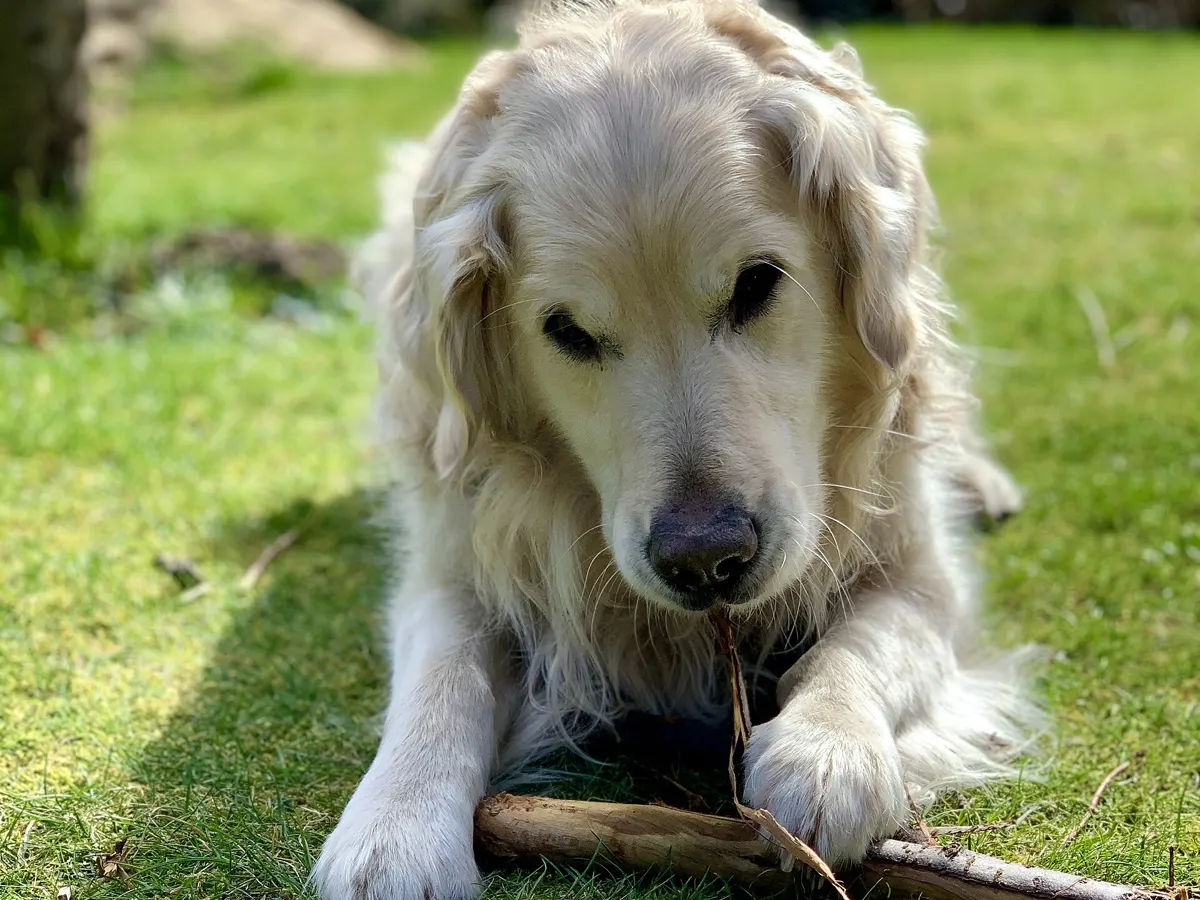
Photo: Johannnes89 via Wikimedia Commons, CC BY-SA 4.0
🐾 Getting ready for a puppy? Grab the free Golden Retriever Puppy Checklist (PDF) — no email required.
The short answer: for most golden retriever owners, a Tractive DOG 6 XL (or the tougher XL Adventure) is the best choice if you want fast live tracking and a tracker that clips onto the collar you already use, while the Fi Series 3+ is the better pick if you want the longest battery life, a tracker built into a heavy-duty collar and strong water resistance for frequent swimmers. An Apple AirTag is not a GPS tracker: it’s a Bluetooth item finder that only updates when nearby Apple devices pick up its signal, so treat it as a backup at most. Fi and Tractive both require a subscription.
Golden retrievers are famously friendly, food-motivated and drawn to water, wildlife and new people. Even a well-trained golden can slip through an unlatched gate or follow a scent trail farther than expected. Choosing the right tracker comes down to how your dog spends their time: neighborhood walks, lakes and beaches, or remote trails without cell service.
We haven’t tested these trackers ourselves. Specs come from the manufacturers’ product pages and help centers, and we checked each Amazon listing on November 26, 2026. Features and plans change, so confirm details with the maker before you buy.
Quick comparison: Fi Series 3+ vs. Tractive DOG 6 vs. AirTag
| Feature | Fi Series 3+ | Tractive DOG 6 / DOG 6 XL | Apple AirTag (2nd generation) |
|---|---|---|---|
| How it finds your dog | GPS, sent over AT&T’s LTE-M network; uses the Fi Base, your phone or Wi-Fi when nearby | GPS, GLONASS and Galileo, sent over partner cellular networks; Bluetooth and Wi-Fi | Bluetooth signal relayed by nearby devices in Apple’s Find My network (no GPS) |
| Live tracking | Yes (Lost Mode; Fi says updates every few seconds) | Yes (LIVE mode, every 2 to 3 seconds) | No (updates only when near a Find My network device) |
| Water rating (maker) | IP68 (1.5 m, 30 min) and IP66K | IP68 (1.5 m, 30 min) | IP67 (1 m, 30 min) |
| Battery (maker) | Up to 3 months at low activity; up to 2 weeks at high activity | DOG 6 up to 2 weeks, XL up to 6 weeks (with Power Saving Zones) | Replaceable CR2032 coin cell; more than a year |
| How it attaches | Built into the Fi collar band | Clips onto a collar (fits widths up to 1.1, 1.6 or 2.0 in by model) | Needs a separate holder |
| Escape alerts | Yes (Safe Zones) | Yes (Virtual Fences) | No |
| Coverage | U.S., Canada and Mexico (Fi) | 175+ countries with partner coverage (Tractive) | Wherever Find My network devices happen to be |
| Subscription | Required (Fi membership) | Required (separate from tracker) | None |
| Best for | Full-time collar wearers and swimmers | Fast live tracking, using your own collar, travel | Backup only, in busy areas |
Why golden retrievers need specific tracker features
Not every pet tracker holds up to a golden retriever’s lifestyle. Before comparing brands, filter every option through four breed-specific realities:
1. Real water resistance for swimmers
The AKC describes the golden as a Scottish gundog, and many will dive into ponds, creeks and mud puddles the moment they get the chance. Look for an IP68 rating (protection against continuous immersion) rather than basic splash resistance, and check how deep and how long the maker says the device can stay underwater. Rinse salt water, sand and mud off afterward. If your golden spends a lot of time in lakes or pools, pair your tracker with the water safety habits in our golden retriever swimming guide.
2. Durability for rough play
Adult goldens are strong, active dogs. A tracker that dangles from a D-ring can get snagged on brush or grabbed during a wrestling match with another dog. A tracker built into the collar (like the Fi Series 3+) or one that clips flat against the collar strap (like Tractive’s) reduces swinging and snagging.
3. Comfort under a thick double coat
A golden’s dense neck ruff hides a collar easily, which is both a blessing and a challenge. A collar that stays damp under a thick coat can contribute to skin irritation, and moisture is one of the triggers for hot spots. Check the skin under the collar regularly, dry the neck thoroughly after swimming, and ask your vet if you notice redness, odor or hair loss under the collar line.
4. Collar vs. harness
Many golden owners walk their dogs on a harness to reduce pulling (see our collar or harness for golden retrievers guide). A GPS tracker only helps if your dog is actually wearing it when they slip away, so decide whether the tracker will live on a full-time collar or on a walking harness. The Fi Series 3+ replaces your dog’s collar; Tractive’s clip fits straps up to a set width, so measure first.
Fi Series 3+
The Fi Series 3+ is a smart collar with the tracking module built into the collar band. Fi describes it as stainless steel with an LED night light you can control in the app.
How it tracks
Fi gets your dog’s position from GPS and sends it over AT&T’s LTE-M cellular network (your own phone can be on any carrier). At home, the tracker hands off to lower-power sources first, such as the Fi Base, your phone’s Fi app over Bluetooth or Wi-Fi, and only switches on GPS and LTE when none are available. If your golden leaves a Safe Zone, the app alerts you, and Lost Mode turns on live tracking that Fi says updates every few seconds.
Strengths for golden retrievers
- Strong water resistance: Fi says the Series 3+ is tested to IP68 (up to 1.5 m for 30 minutes in salt, fresh and chlorinated water) and IP66K (high-pressure water jets). Fi recommends cleaning the tracker after swimming.
- Long battery life: Fi estimates up to 3 months for a dog that’s mostly home or on short walks, 4 to 6 weeks at moderate activity and up to 2 weeks for a dog outdoors and roaming most of the day. Lost Mode drains it faster (about 2 days on a full battery, per Fi).
- Low profile: the tracker sits inline with the collar strap rather than dangling.
- Custom bands: Fi sells other band styles through its Fi Makers collection.
Trade-offs to know
- It replaces the collar: the Series 3+ is built into its band. Fi’s smaller Fi Mini attaches to a collar or harness instead.
- One carrier: it relies on AT&T’s LTE-M network, with coverage in the U.S., Canada and Mexico, so check coverage where you walk.
- Subscription required: Fi says the tracker only works with an active membership.
Tractive DOG 6 and DOG 6 XL
Tractive sells three dog models: the DOG 6 (dogs above 9 lb), the DOG 6 XL (above 44 lb) and the DOG 6 XL Adventure (above 55 lb), which adds a bite-proof fiberglass casing. Most adult goldens fall in XL territory; a young puppy may start on the standard DOG 6.
How it tracks
Tractive uses GPS, GLONASS and Galileo with a built-in SIM that connects to partner cellular networks in more than 175 countries. Its standout feature is LIVE mode, which updates your dog’s location every 2 to 3 seconds, compared with every 2 to 60 minutes in default tracking. LIVE mode ends after 5 minutes by default to save battery, and you can continue it.
Strengths for golden retrievers
- Fast live updates: LIVE mode’s 2-to-3-second refresh helps if your golden bolts after a squirrel or wanders into a wooded park.
- Broad network coverage: connecting to partner networks across many countries is handy for car travel and trips.
- Works with your gear: the tracker clips onto a collar; Tractive lists the maximum collar width for each model (1.1 in, 1.6 in and 2.0 in).
- Waterproof: Tractive says its trackers are IP68 rated to 1.5 m for 30 minutes and safe in pools, lakes, rivers and sea water; rinse with fresh water after the ocean. GPS can’t update while the tracker is underwater.
- Virtual Fences: you can draw boundaries, like your yard, and get an alert if your dog leaves.
Trade-offs to know
- Battery: Tractive lists up to 2 weeks for the DOG 6 and up to 6 weeks for the XL models with Power Saving Zones, or up to 6 and 20 days without them. LIVE mode uses more battery.
- Clip-on bulk: because it sits on top of the collar, it sticks out more than Fi’s inline module, and the XL models are larger and heavier than the standard DOG 6.
- Subscription required: Tractive’s plans are sold separately from the tracker.
Apple AirTag
The Apple AirTag is a small, coin-shaped item finder. Apple pitches it for keys and bags, and has said AirTag “was designed to help people locate their personal belongings.” Many dog owners still attach one to a collar with a third-party holder.
How it actually works
Apple’s tech specs list Bluetooth, Ultra Wideband and NFC, not GPS or cellular. The AirTag sends out a secure Bluetooth signal that nearby devices in Apple’s Find My network can detect, and those devices report its location to you. When you’re close, a compatible iPhone can use Precision Finding to point you toward it. The second-generation AirTag needs an iPhone or iPad on iOS or iPadOS 26 or later.
When an AirTag makes sense, and when it doesn’t
- Where it helps: in busy neighborhoods, an AirTag can be a no-subscription backup alongside a microchip and ID tag. Apple says its user-replaceable CR2032 battery lasts more than a year, and it’s rated IP67 (up to 1 m for 30 minutes).
- Where it fails: if your golden runs into a park, forest, beach or rural road with no Apple devices nearby, the AirTag can’t update its location. It also can’t send an escape alert when your dog leaves the yard. And because of Apple’s anti-stalking design, an AirTag separated from its owner can alert nearby phones and eventually play a sound.
- Safety warning: an AirTag holds a lithium coin battery. Pet Poison Helpline says disc-shaped and lithium batteries can cause burns when they sit in the esophagus or intestines, that a dog who swallows a battery should not be made to vomit, and that immediate veterinary attention is required. Use a sturdy, fully enclosed holder, and call your vet or an emergency clinic right away if you think your golden chewed or swallowed an AirTag or its battery.
What if you hike or hunt without cell service?
Fi and Tractive need cellular coverage to send your dog’s GPS position to your phone. If you take your golden into national forests, remote mountains or rural fields with no cell bars, a cellular tracker won’t update until your dog is back in coverage.
For off-grid tracking, look at radio systems such as a Garmin Alpha handheld paired with a Garmin Alpha T 20 tracking collar. The collar works out its position by GPS and sends it straight to the handheld by VHF radio, with no cell tower or cellular plan needed for tracking; Garmin lists up to 9 miles of range, which shrinks with hills and dense cover. These systems are bulkier and built for field work. Fi also sells a Fi Ultra with satellite connectivity in the U.S. through T-Mobile’s T-Satellite with Starlink.
Activity and wellness tracking: helpful context, not a diagnosis
Both Fi and Tractive track activity and sleep, and both advertise behavior monitoring such as barking and scratching. For golden owners, these trends can help you spot gradual changes, like a drop in daily movement or restless nights, and you can log routines alongside our Puppy Care Log.
However, no collar can diagnose a medical condition. If you notice a sudden change in your golden’s energy, sleep, scratching or mobility, treat the app data as a conversation starter and check with your veterinarian.
A GPS tracker never replaces microchips, ID tags or recall
A GPS collar is a safety net, not a standalone solution. Batteries die, collars slip off and cell signals drop. The AKC calls GPS devices and microchips complementary, not substitutes, and recommends a layered approach:
- Microchip (permanent ID): ask your vet to implant a microchip, register it and keep your contact details current. The AVMA suggests asking your vet to scan the chip at routine checkups to confirm it’s still working.
- ID tag: the AKC says all pets should keep wearing a collar and tags with the owner’s contact information.
- Reliable recall: practice coming when called in low- and high-distraction places using reward-based methods. Our golden retriever recall training guide shows how to build a dependable response.
- Gear from day one: if you’re bringing home a new puppy, use our free puppy checklist so the collar, ID tag and microchip plan are ready.
How to choose the right tracker for your golden
- Choose the Fi Series 3+ if: your golden swims constantly, you want the longest time between charges and you prefer a low-profile, all-in-one collar (and AT&T coverage is solid where you live).
- Choose a Tractive DOG 6 XL or XL Adventure if: you want the fastest live tracking (every 2 to 3 seconds), broad network coverage for travel, or a tracker that clips onto the collar you already use.
- Choose an Apple AirTag only if: you live in a busy area and want a no-subscription backup to go with a microchip and ID tag, never as your main escape tracker.
- Choose a Garmin radio system if: you regularly hike, camp or hunt with your golden where there’s no cell service.
How tight should a GPS collar be?
Measure your golden’s neck under the coat and make sure you can slide two fingers between the collar and the neck. Too loose and it can slip over the head; too tight and it can rub. Recheck the fit often on a growing puppy, and see our best harness for golden retrievers guide if you’d rather mount gear on a harness.
This guide is general information, not veterinary advice. Ask your vet about microchipping and any skin irritation under a collar.
GPS tracker picks for golden retrievers
We describe what to look for in each type of product. Affiliate product links, when present, are marked as sponsored.
Pick 1
Tractive DOG 6 XL GPS tracker
Best for: Adult goldens (Tractive: dogs above 44 lb) and owners who want fast live tracking on their own collar
What to look for:
- LIVE mode updates every 2 to 3 seconds; default tracking every 2 to 60 minutes
- IP68, rated to 1.5 m for 30 minutes
- Up to 6 weeks of battery with Power Saving Zones (up to 20 days without)
- Clips onto collars up to 1.6 in wide; requires a Tractive subscription
Pick 2
Tractive DOG 6 XL Adventure GPS tracker
Best for: Big, rough-and-tumble goldens (Tractive: dogs above 55 lb) that crash through brush
What to look for:
- Same tracking features and battery claims as the DOG 6 XL
- Bite-proof fiberglass casing, per Tractive
- Fits collars up to 2.0 in wide
- Requires a Tractive subscription
Pick 3
Fi Series 3+ smart GPS collar
Best for: Goldens who wear one collar full-time, swim often and live in areas with good AT&T coverage
What to look for:
- Tracker built into the collar band; charges on the included Fi Base
- IP68 (1.5 m, 30 minutes) and IP66K, per Fi
- Battery up to 3 months at low activity, 4 to 6 weeks moderate, up to 2 weeks high
- Requires an active Fi membership; linked listing is the Large band, so check Fi's size chart
Pick 4
Apple AirTag (2nd generation)
Best for: A no-subscription backup for iPhone owners in busy neighborhoods, alongside a real GPS tracker, microchip and ID tag
What to look for:
- Not a GPS tracker: Bluetooth item finder that relies on Apple's Find My network
- IP67 (up to 1 m for 30 minutes); user-replaceable CR2032 coin battery
- Needs an iPhone or iPad on iOS or iPadOS 26 or later
- Needs a dog-proof, fully enclosed collar holder (sold separately)
Prices and availability change, so we do not list them here. Check the retailer's page for current details.
Frequently asked questions
Do GPS dog trackers work without a subscription?
Cellular GPS trackers such as Fi Series 3+ and Tractive need an active plan because they use cellular networks to send your dog's location to your phone: Fi says its tracker only works with an active membership, and Tractive says the subscription is separate from the tracker. Radio-based systems such as Garmin's Alpha handhelds with a T 20 collar send the location straight to a handheld by VHF radio, so tracking doesn't need a cellular plan.
Is an Apple AirTag good enough for a golden retriever?
Not as your main safety device. Apple designed AirTag to help people find their personal belongings, and its tech specs list Bluetooth, Ultra Wideband and NFC, not GPS or cellular. Its location only updates when a device in Apple's Find My network passes close enough to pick up its Bluetooth signal, and it can't send an alert the moment your dog leaves the yard. That makes it unreliable on trails, beaches and quiet rural roads.
Can my golden retriever swim with a Fi or Tractive tracker?
Yes. Fi says the Series 3+ is tested to IP68 (up to 1.5 m for 30 minutes in salt, fresh and chlorinated water) and IP66K, and Tractive says its trackers are IP68 rated to 1.5 m for 30 minutes. Both brands recommend rinsing or cleaning the tracker after swimming, and Tractive notes GPS can't update while the tracker is underwater. Dry your golden's neck coat well afterward.
Should I put a GPS tracker on a golden retriever puppy?
Check the maker's weight and size limits first. Tractive's standard DOG 6 is for dogs above 9 lb, while the DOG 6 XL is for dogs above 44 lb and the XL Adventure for dogs above 55 lb. Puppies outgrow collars fast, so recheck the fit every week or two. For young puppies, supervision, a well-fitted collar with an ID tag, a registered microchip (ask your vet about timing) and early recall practice come first.
Will a GPS tracker work if my golden retriever gets lost in the woods?
A cellular tracker needs cell coverage to send updates, and GPS works best with a clear view of the sky. In dead zones, Fi and Tractive can't report your dog's new position until the tracker reconnects. For backcountry hiking or hunting, a radio system such as a Garmin Alpha handheld with a T 20 collar (Garmin lists up to 9 miles of VHF range, less in hills and thick cover) or Fi's satellite-capable Fi Ultra are built for areas without cell service.
Does a GPS collar replace a microchip?
No. The AKC points out that collars and tags can break off or be removed and a GPS tracker needs a charged battery, while a microchip permanently identifies your dog when a vet or shelter scans it. Use both, register the chip and keep your contact details current, and keep an ID tag with your phone number on your golden's collar.
A quick note: this guide is general information from published sources, written by dog lovers, not a veterinarian. Your own vet knows your dog's history, so check with them before changing food, exercise or treatment.
Sources
- Fi: Series 3+ smart collar (product page)
- Fi: Compare Fi devices (Series 3+, Fi Mini, Fi Ultra)
- Fi Help Center: What's included with your Fi purchase (membership required for remote tracking)
- Fi Help Center: Fi tracker coverage
- Fi Help Center: Fi partnership with AT&T (LTE-M network)
- Fi Help Center: Fi tracker location tracking methods
- Fi Help Center: Fi tracker battery life
- Fi Help Center: Fi tracker waterproof rating
- Tractive: GPS tracker for dogs (DOG 6, DOG 6 XL and XL Adventure specs)
- Tractive Help Center: How to activate and use LIVE Tracking
- Tractive Help Center: Are Tractive trackers waterproof and dustproof?
- Apple: AirTag (product page and tech specs)
- Apple Newsroom: An update on AirTag and unwanted tracking
- Garmin: Alpha 300 series handheld and Alpha TT 25 / T 20 dog collars announcement
- Garmin: Alpha T 20 owner's manual, dog collar specifications
- AKC: How Does a Dog Microchip Work? Should My Dog Have One?
- AVMA: Microchips reunite pets with families
- Pet Poison Helpline: Batteries
Keep reading

Golden Retriever Recall Training: How to Teach Your Golden to Come When Called
A step-by-step plan to teach a golden retriever to come when called: name games, a happy recall cue, long-line practice, an emergency recall word and the mistakes that quietly ruin recall.

Collar or Harness for a Golden Retriever? When to Use Each (and How to Size Them)
Is a collar or harness better for a golden retriever? When to use each, which collar types to consider or avoid, how to measure a golden's neck and chest and what the fit should feel like.
Golden Retriever Swimming: How to Teach Your Golden and Keep Them Safe in the Water
Most goldens love the water, but not every golden is born knowing how to swim. Here's how to introduce your dog to water, plus the safety risks to watch for: water intoxication, limber tail and cold water.

Car Travel With a Golden Retriever: Preparing, Packing and Planning Stops
Plan a car journey with your golden retriever: appropriate restraint, practical packing, supervised breaks and a destination routine, without leaving your dog alone in a parked car.
Best Harness for Golden Retrievers: Fit, Style and No-Pull Features Explained
How to choose the best harness for a golden retriever: front-clip vs. back-clip, no-pull features, sizing and fitting steps, and picks for puppies, pullers and car travel.