Home › Training, Behavior & Exercise
Golden Retriever Swimming: How to Teach Your Golden and Keep Them Safe in the Water
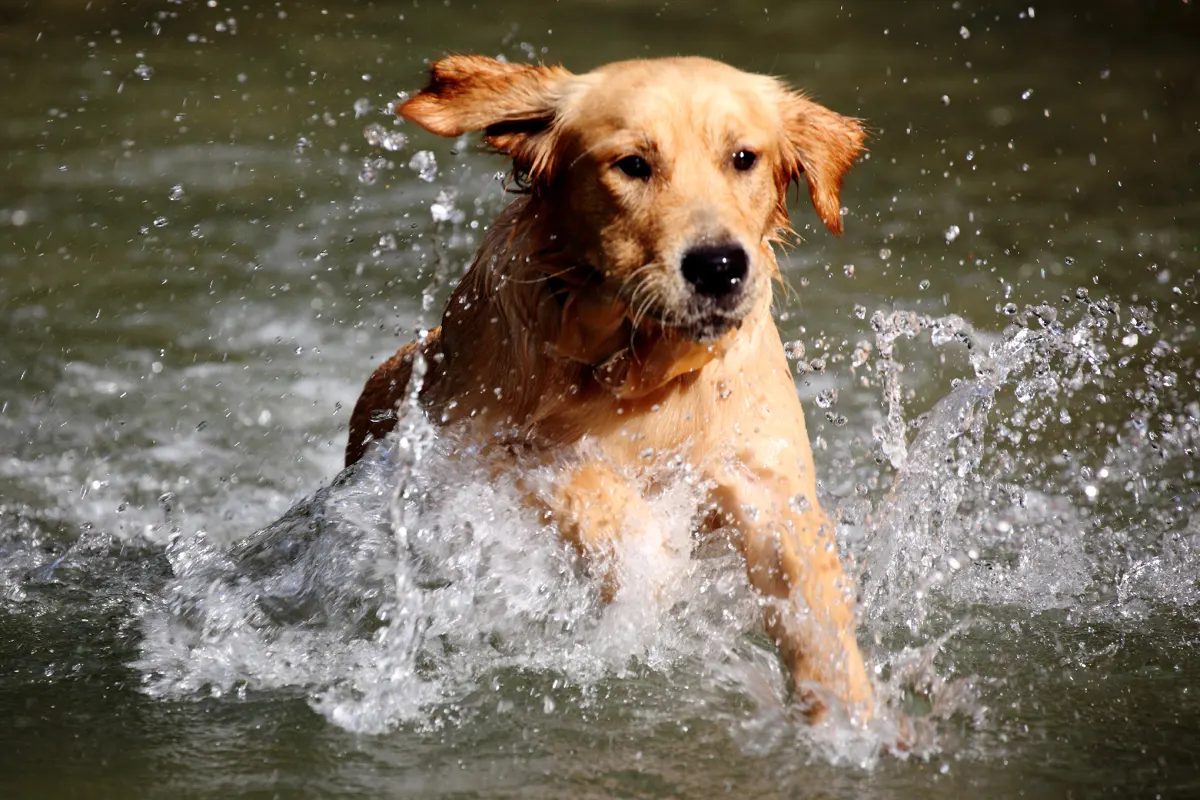
Photo: Franco Vannini via Wikimedia Commons, CC BY 2.0
🐾 Getting ready for a puppy? Grab the free Golden Retriever Puppy Checklist (PDF) — no email required.
Golden retrievers were developed as gundogs that retrieve from land and water, so it’s no surprise that many of them head straight for the lake. But a love of water isn’t the same as knowing how to swim safely, and a few water-related problems are worth knowing about before your first beach or pool day.
Talk to your vet first. VCA recommends checking with your veterinarian before water activities to make sure your dog has no condition, such as heart or lung disease, that would make swimming unsafe. Puppies, seniors and overweight dogs may also need extra care.
Can every golden retriever swim?
Don’t assume so. VCA’s water sports guidance says plainly not to assume your dog knows how to swim and not to force them into the water. Some goldens paddle confidently on day one; others splash with their front legs and need time to learn to use their back end.
How to teach your golden to swim
These steps follow the AKC’s advice on teaching dogs to swim:
- Fit a dog life jacket. Choose one with a handle on top so you can guide or lift your dog. VCA recommends a well-fitted life jacket for all water activities.
- Start in calm, shallow water. Let your dog get used to wet paws first. Don’t move deeper until they’re relaxed.
- Let them choose to go in. Use a toy, treats and your own presence to encourage them. Never pull or throw your dog in.
- Move deeper gradually. Praise and reward every bit of progress. If your dog seems overwhelmed, go back to the shallows or dry land.
- Teach the exit. Repeatedly guide your dog to the shore, steps or pool ramp so they know how to get out on their own. Pools are a particular risk for dogs who can’t find the way out.
- Wear your own life jacket. A panicked large dog may try to climb on you.
A calm, water-loving dog to watch can help too. The AKC notes some dogs learn by seeing another dog swim.
Brushing up on come, stay and wait before you head to the water makes everything safer. Our puppy training guide covers the basics.
Water safety risks to know
Water intoxication
Goldens that swim with their mouths open, dive for toys or bite at the hose can swallow a lot of water. According to the AKC, this can lead to water intoxication, where sodium levels drop dangerously. Signs include:
- Lethargy or restlessness
- Bloating and vomiting
- Loss of coordination (staggering or falling)
- Drooling, pale gums, dilated pupils or glazed eyes
Severe cases can progress to trouble breathing, seizures or coma. If you suspect water intoxication, go to a vet or emergency clinic immediately.
To lower the risk, the AKC suggests short sessions with frequent rest and potty breaks, flat toys like a soft flying disc instead of tennis balls, and no diving for objects or biting the high-pressure hose stream. VCA also advises limiting how much fresh or salt water your dog drinks.
Limber tail (swimmer’s tail)
If your golden’s tail hangs limp or sticks out briefly and then droops the day after a long swim, it may be acute caudal myopathy, often called limber tail. VCA describes it as a strain of the tail muscles linked to overexertion and cold water, and says it is more common in large breeds. Dogs may struggle to sit, rise or squat.
The AKC warns that tail fractures, spinal problems, anal sac issues and other conditions can look similar, so have your vet examine your dog rather than guessing. Use only pain medication your vet prescribes. Human pain relievers can be dangerous for dogs.
Cold water and hypothermia
Cold water raises the risk of limber tail and hypothermia. A trainer quoted by the AKC uses a rule of thumb that water temperature plus air temperature should add up to at least 100°F before letting a dog swim, and notes puppies are especially sensitive. If your dog is shivering or not using their tail after a cold swim, call your vet.
Exhaustion and hot days
VCA notes some dogs will swim to the point of exhaustion, so watch the clock and call your golden out for breaks. Water play on a hot day doesn’t make a dog immune to overheating; see our heatstroke guide for warning signs.
Hazards in lakes, rivers and the ocean
The AKC lists fishing hooks and bait (dogs may swallow them, which is an emergency), wildlife such as snakes and snapping turtles, and the extra dangers of the ocean. Also avoid water that looks scummy or discolored and follow any local water advisories. Never leave your dog unsupervised near water.
After the swim
- Rinse off chlorine, salt or lake water, then towel dry. A golden’s double coat holds a lot of water.
- Dry the ears. Their floppy ears trap moisture, which can contribute to infections. Read our ear infection guide for cleaning tips and warning signs.
- Check the coat and skin for burrs, ticks and damp spots that stay wet under the undercoat. See hot spots for why that matters.
- Watch your dog for the next day for vomiting, staggering or a limp tail.
Swimming as exercise
Swimming is a fun way for many goldens to burn energy. If your dog has hip, elbow or other joint problems, ask your vet whether and how to include it, and see our exercise needs guide for how swimming fits into a weekly routine.
Getting a new puppy?
Water training is easier when it starts with calm, positive experiences. Grab our free new puppy checklist to plan everything your golden needs in the first weeks home.
Frequently asked questions
Do golden retrievers know how to swim naturally?
Goldens were bred to retrieve from water and many take to it quickly, but you shouldn't assume any individual dog can swim. The AKC and VCA both recommend introducing water gradually with a well-fitted dog life jacket.
How long should a golden retriever swim?
Keep sessions short with frequent rest breaks. A trainer quoted by the AKC suggests about 10 minutes at a time to lower the risk of water intoxication. Ask your vet what's right for your dog.
What is water intoxication?
It happens when a dog swallows too much water, often while swimming or retrieving, which throws off sodium levels. Signs include vomiting, bloating, staggering, drooling and pale gums. It's an emergency: go to a vet right away.
Why is my golden's tail limp after swimming?
It may be limber tail (also called swimmer's tail or cold tail), a muscle strain linked to overuse and cold water. Other problems can look similar, so have your vet examine your dog.
Should I dry my golden's ears after swimming?
Yes. Moisture in the ear canal can contribute to ear infections, and goldens' floppy ears trap it. See our ear infection guide.
A quick note: this guide is general information from published sources, written by dog lovers, not a veterinarian. Your own vet knows your dog's history, so check with them before changing food, exercise or treatment.
Sources
Keep reading
Golden Retriever Exercise Needs: How Much Is Enough at Every Age
How much exercise does a golden retriever need? Age-by-age guidance for puppies, adults and seniors, plus swimming, mental games and hot-weather safety.

Golden Retriever Ear Infections: Signs, Causes, Treatment and Prevention
Why golden retrievers get ear infections, the signs to watch for, what a vet will do, how to clean ears safely and how to reduce the chance they come back.


Golden Retriever Heatstroke: Warning Signs, First Aid and Prevention
Heatstroke is a veterinary emergency. Learn the signs in golden retrievers, what to do while getting to the vet, who is most at risk and how to keep your dog safe in hot weather.