Home › Training, Behavior & Exercise
Golden Retriever Puppy Training: A Step-by-Step Guide for the First Year
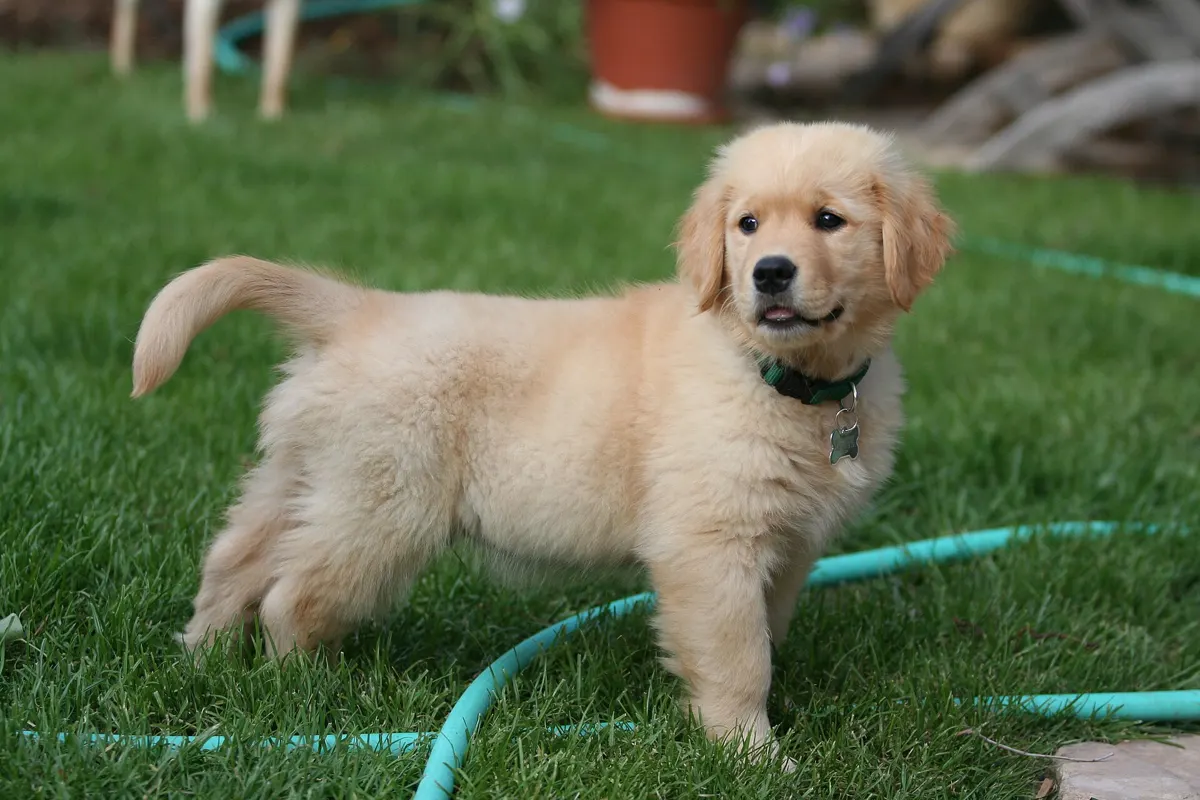
Photo: Scott via Wikimedia Commons, CC BY 2.0
🐾 Getting ready for a puppy? Grab the free Golden Retriever Puppy Checklist (PDF) — no email required.
Bringing home a golden retriever puppy is one of life’s great joys, and also a bit like adopting a very cute, very fast land otter with a mouth full of tiny needles. The good news is that goldens are among the most trainable breeds around. The better news is that the habits you build in the first year shape the dog you’ll live with for the next ten.
This guide walks you through golden retriever puppy training in order: socialization, mouthing and biting, crate and potty training, basic manners, and what to expect as your puppy moves from sweet little angel to scatterbrained teenager.
Start on day one
Breeders who spoke with the American Kennel Club for its golden retriever puppy timeline were blunt about the most common mistake: owners “naively believe they almost ‘train themselves.’” Goldens are eager to please and learn fast, but the calm, polite, well-mannered adult everyone admires is built, not born.
The AKC timeline recommends starting immediately with a group puppy kindergarten class and basic obedience. Classes also meet your puppy’s physical, social and mental needs, and they teach you how to read your dog.
Two principles will carry you through the whole first year:
- Reward what you like. The AVSAB says positive, consistent training is associated with fewer behavior problems and better obedience than methods that rely on punishment or “dominance.” Use treats, praise, play and petting to pay your puppy for good choices.
- Keep sessions short and fun. Goldens are smart but young puppies have short attention spans. Several 5-minute sessions a day beat one long, frustrating one.
Socialization: the window that matters most
If you do one thing really well in the first months, make it socialization. The AVSAB says the primary and most important time for socialization is the first three months of life. During that window, puppies should meet as many new people, animals, sounds, surfaces and environments as can be achieved safely, without overwhelming them to the point of fear or withdrawal.
For a golden, that might look like:
- Meeting calm, friendly adults, children and people in hats, uniforms, wheelchairs or carrying umbrellas (the AKC timeline specifically suggests exposing puppies to unexpected movements and loud sounds such as vacuums, lawnmowers and thunderstorms)
- Walking on different surfaces: grass, tile, gravel, wood, a grooming table
- Short car rides and visits to a pet-friendly store (carried, when needed, before vaccinations are complete)
- Gentle handling of paws, ears, mouth and tail, which also makes grooming and vet visits easier
You may have been told to keep your puppy home until every vaccine is done. AVSAB’s position is that it should be the standard of care for puppies to receive socialization before they are fully vaccinated, because the risk of behavior problems from under-socialization is serious. Their guidance is to start puppy classes as early as 7 to 8 weeks, once the puppy has had at least one set of vaccines at least 7 days before the first class and a first deworming. They also advise avoiding dog parks and other places where dogs of unknown health status mix. Check with your vet about local disease risks and what makes sense for your puppy.
Mouthiness and biting
If your golden puppy is mouthing your hands, you aren’t alone. The AKC timeline reminds owners that “Goldens were created to carry things in their mouth, namely waterfowl,” and that mouthiness is “front and center,” especially during teething.
Biting is normal puppy behavior, but your puppy needs to learn that human skin is sensitive. This is called bite inhibition, and the ASPCA and AKC both give a clear approach:
- Give an alternative. Keep a chew toy handy and swap it for your hand or the furniture.
- Make play stop when teeth touch skin. The ASPCA suggests a high-pitched yelp, letting your hand go limp, and praising the puppy when they stop. The AKC warns that for some puppies, yelping makes them more excited. If that’s your puppy, quietly turn away, tuck your hands in, or place them calmly in the crate or pen for a short break.
- Use brief time-outs. The ASPCA recommends ignoring the puppy for 10 to 20 seconds, or getting up and moving away, then resuming play.
- Don’t yell. The AKC says yelling can inadvertently reward biting by giving it attention, and it can make puppies fearful of being handled.
- Be consistent. Everyone in the home has to follow the same rule.
The AKC’s chief veterinarian points out that play biting “does not mean your puppy is vicious,” but if you haven’t been able to moderate it by around 6 months, it’s a good idea to consult an experienced trainer or behavior specialist.
Crate training
Many golden owners love the crate, because it helps with potty training, chewing and safe travel. The AKC explains that the crate should be just large enough for your puppy to stand, turn around and lie down comfortably. Because goldens grow up to be large dogs, consider a crate with a divider that grows with your puppy.
How to teach it, according to the AKC:
- Toss treats into the crate and let your puppy walk in voluntarily. Keep the door open at first.
- Build up the time slowly. Give a food-filled chew toy whenever your puppy goes in.
- Place the crate in a quiet area, take your puppy out to potty and play beforehand, and take the collar off when the puppy is inside for safety.
- Never use the crate as punishment, and never leave a dog in it longer than they can hold their bladder.
Not every dog tolerates a crate. The AKC cautions that dogs with separation anxiety may panic in a crate and hurt themselves. If you see pacing, drooling, frantic escape attempts or long bouts of howling, stop and read our guide to golden retriever separation anxiety.
Potty training
Potty training is mostly management plus lots of rewards. Take your puppy outside:
- First thing in the morning and last thing at night
- After waking up from naps
- After meals and after drinking
- After play sessions and crate time
Go to the same spot, wait calmly, and reward immediately when your puppy goes. The AKC’s potty-training timeline offers a rule of thumb: a puppy can hold it for roughly their age in months plus one hour, as a maximum. So a 3-month-old might manage about four hours, though young puppies often need breaks much more often while awake. Accidents happen. Clean them thoroughly with an enzymatic cleaner and move on without scolding.
The golden retriever training timeline
Breeders interviewed by the AKC lay out a helpful road map.
The angel phase (about 2 to 6 months)
Your puppy is sweet, quick to learn and has a short attention span. Focus on puppy kindergarten, socialization, handling, short walks, routines and introducing house rules. Expect mouthiness and “fear stages,” where an object that never bothered your puppy suddenly seems scary. Don’t force it. Let the puppy investigate at their own pace, reward bravery and keep experiences positive.
The teenage phase (roughly 6 months to 18 months or more)
This is where many owners are surprised. The AKC breeders say people “over-prepare for the Baby stage” and “woefully underprepare for the Terrible Teens.” Hormones emerge, and your formerly perfect puppy may become feisty, distracted or moody. A second fear stage can appear. Keep training: give your dog a job (fetch, tricks, scent games, rally, agility) and channel their mouth with commands like “leave it,” “drop it” and “give.”
According to the AKC article, goldens reach about 80% of their growth in this phase, and exercise needs climb. See our guide to how much exercise a golden retriever needs for what’s appropriate at each age, since too much hard running can be a problem for growing joints.
Young adult (about 18 months to 2 years)
By two years, goldens have usually finished growing, though males may take a little longer to fill out. Personality settles. As the AKC article puts it, this is when the puppy’s “head reattaches to the body.” This is also around the time to transition from puppy to adult food. Talk to your vet about timing, and see our golden retriever feeding guide.
Basic manners to prioritize
You don’t need a long list. Teach these first and practice daily:
- Name and attention: reward every time your puppy looks at you.
- Sit, down and stay: the foundation for every other behavior.
- Come when called: the most important safety cue. Practice on a long line and never punish a puppy for coming to you.
- Leave it and drop it: essential for a mouthy retriever.
- Loose-leash walking: start inside and in the yard, with short, rewarding sessions.
- Settle on a mat: teaches calm, which many people forget to train.
Many owners also enroll in an AKC S.T.A.R. Puppy class and later work toward the Canine Good Citizen title, both mentioned by the AKC as ways to socialize and build skills.
Common mistakes to avoid
- Waiting too long to start. Socialization has a time limit.
- Too much unstructured excitement. Goldens thrive on routine and rest. Overtired puppies bite more.
- Skipping the teenage months. Keep up classes and practice when training seems to “fall apart.”
- Inconsistent rules. If the couch is off-limits on Tuesday, it’s off-limits on Saturday.
- Expecting a calm dog without meeting needs. The AKC breeders say a golden will settle quietly beside you at night only if their physical, mental and social needs are met each day.
A final word
Training a golden isn’t about perfection. It’s about building a partnership with a dog who wants nothing more than to be with you. Be patient, laugh a lot, and take lots of pictures. They grow up quickly. And when you want to compare notes (or just see a hundred puppy photos), our Facebook group is full of owners who survived the mouthy months and are happy to tell you all about it.
Frequently asked questions
When should I start training my golden retriever puppy?
The day your puppy comes home. The AKC's puppy timeline recommends starting with a group puppy kindergarten class and basic obedience right away, and the American Veterinary Society of Animal Behavior (AVSAB) says the first three months of life are the most important window for socialization.
Are golden retrievers easy to train?
They are eager to please and highly trainable, which VCA rates at the top of its scale for the breed. But breed experts told the AKC that owners often expect a golden to almost train itself. Goldens still need consistent daily work, especially through their teenage months.
How do I stop my golden retriever puppy from biting?
Mouthiness is normal in goldens, since they were bred to carry things in their mouths. Redirect to a toy, and when teeth hit skin, end the play for a few seconds. Both the ASPCA and the AKC advise teaching bite inhibition rather than punishing, and the AKC suggests consulting a trainer if the biting hasn't eased by about six months.
How long can a puppy hold it between potty breaks?
The AKC's rule of thumb is a puppy's age in months plus one hour, as a maximum. That means a three-month-old might manage about four hours, but young puppies also need breaks right after waking, eating, playing and crate time, so plan on far more frequent trips.
Is it too early to take my puppy to puppy class before all their shots?
AVSAB says puppy classes can start as early as 7 to 8 weeks of age, as long as the puppy has had at least one set of vaccines at least 7 days before the first class, plus a first deworming. Avoid dog parks and other high-traffic places where dogs of unknown vaccination status gather. Ask your vet to confirm what is right for your area.
When does a golden retriever puppy calm down?
Goldens usually finish most of their physical growth by about two years, though males may take a bit longer to fully mature. Breeders interviewed by the AKC say that around the two-year mark the personality settles and the dog you've been working toward emerges.
A quick note: this guide is general information from published sources, written by dog lovers, not a veterinarian. Your own vet knows your dog's history, so check with them before changing food, exercise or treatment.
Sources
- AKC: Golden Retriever Puppy Training Timeline, From 8 Weeks to 2 Years
- AVSAB Position Statement on Puppy Socialization
- AKC: How to Stop Puppy Biting and Train Bite Inhibition
- ASPCA: Mouthing, Nipping and Biting in Puppies
- AKC: Everything You Need to Know About Crate Training Your Dog
- AKC: Puppy Potty Training Schedule, a Timeline for Housebreaking Your Puppy
- VCA Animal Hospitals: Golden Retriever
Keep reading
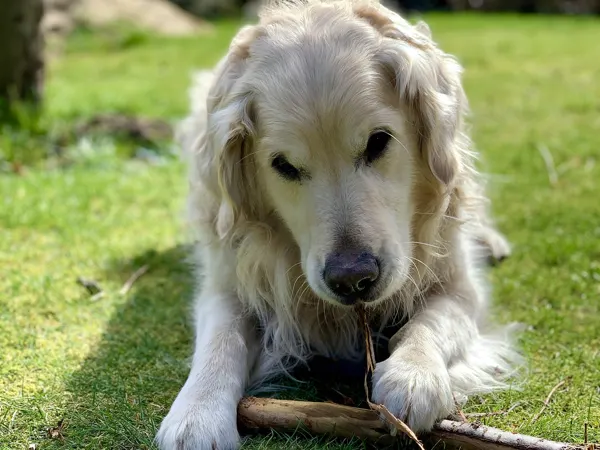
Golden Retriever Puppy Potty Training Schedule: A Step-by-Step Plan That Works
A practical golden retriever puppy potty training schedule: how often to go out, how to use the crate, what to do after accidents and how long house training really takes.
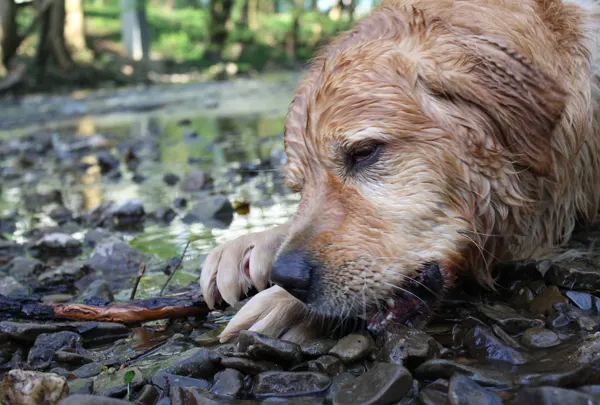
Golden Retriever Puppy Biting: Why It Happens and How to Stop It
Why golden retriever puppies bite and mouth, when it usually fades, and a calm, step-by-step plan to teach bite inhibition without yelling or punishment.
How to Stop a Golden Retriever Pulling on the Leash
Why goldens pull and how to teach loose-leash walking with positive reinforcement. Step-by-step training, gear that helps, common mistakes and a practice plan.

New Golden Retriever Puppy Checklist: What to Do Before, During and After Pickup
A step-by-step new golden retriever puppy checklist: what to arrange before pickup, what to do on day one, and what to tackle in weeks 2 to 12. Free printable PDF included.