Golden Retriever Puppy Biting: Why It Happens and How to Stop It
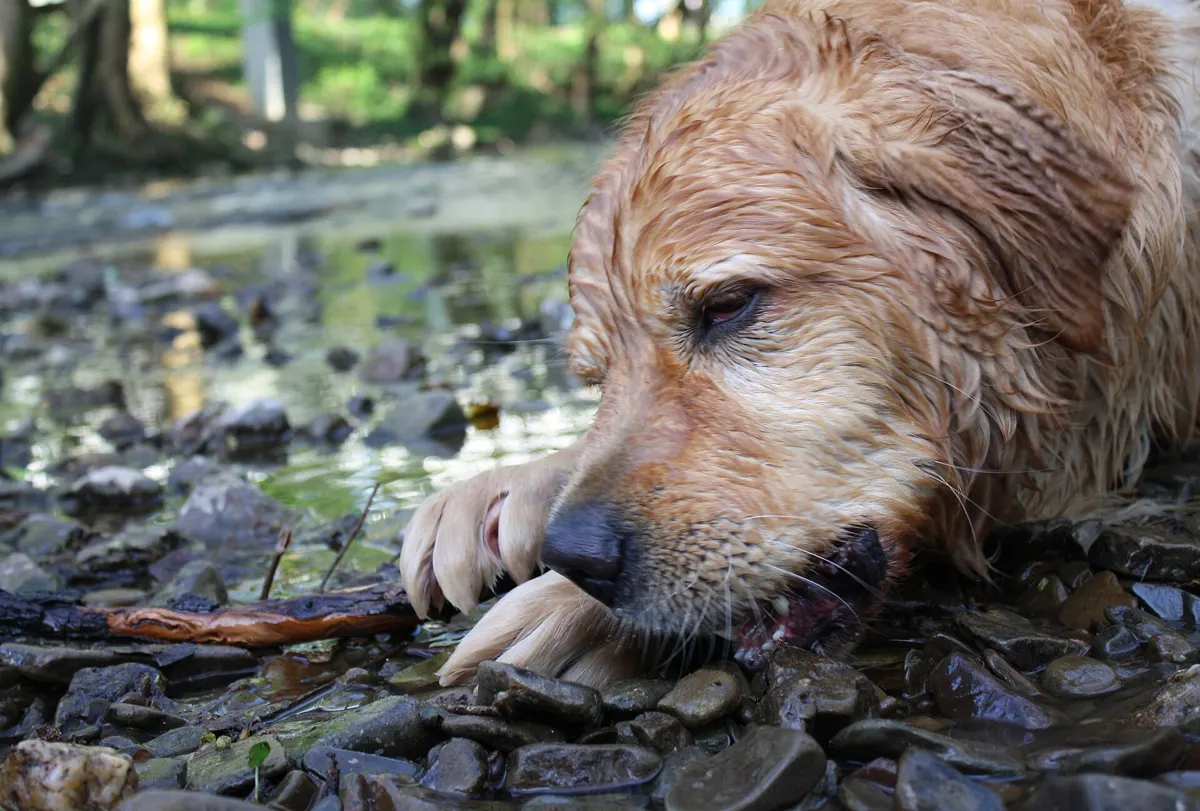
Photo: User:Jo!Hannes via Wikimedia Commons, CC BY-SA 4.0
🐾 Getting ready for a puppy? Grab the free Golden Retriever Puppy Checklist (PDF) — no email required.
If your golden puppy’s teeth feel like needles and your hands look like a pincushion, take heart. Puppy biting is one of the most common problems, and also one of the most fixable. The AKC and ASPCA both describe mouthing as normal puppy behavior that can be shaped with patience.
Why goldens mouth so much
- Exploration. Puppies learn about the world through their mouths.
- Play. Littermates wrestle and bite each other. When one yelps, the play pauses. That is how puppies learn bite inhibition.
- Teething. Gums are sore when baby teeth fall out and adult teeth come in, see our teething guide.
- Breed history. The AKC points out that goldens were created to carry things in their mouths, namely waterfowl. A golden’s soft mouth is a gift, but it needs to be taught.
- Overtiredness. A tired puppy often turns into a nippy puppy.
The plan
1. Teach bite inhibition
When your puppy bites too hard, say a calm “ouch” in a flat voice, remove your hand and pause the play for 10 to 20 seconds. Resume if the puppy settles. This copies what littermates do. Over time, reward gentler mouthing and reduce your tolerance for pressure.
2. Redirect to something legal
Always have a chew toy within reach. When teeth touch skin or clothing, offer a toy and praise when they take it. Rotating toys keeps them interesting. See our teething toy guide.
3. Use short time-outs
If your puppy gets too wound up, calmly leave the room for a short time or place the puppy in a pen with a chew. This is not punishment. It is a quiet break to reset.
4. Manage the environment
Use baby gates, pens and leashes to prevent practicing the bad habit. Keep your hands out of their face during rough play.
5. Exercise and sleep
Overtired puppies lose control. Make sure naps are happening (our sleep schedule guide can help) and offer mental games like sniffing for treats or simple training.
6. Reward calm
Praise and treat when your puppy sits or lies down calmly, especially when excited people arrive. You are teaching “calm gets attention.”
What not to do
| Don’t | Why |
|---|---|
| Hold the muzzle shut or flick the nose | Can frighten the puppy, damage trust and escalate mouthing |
| Yell or shake your hands in their face | Often makes the puppy more excited |
| Play tug or rough games that encourage biting | Teaches that teeth on skin is a game |
| Let kids chase or run from the puppy | Running triggers chasing and nipping |
| Wait for them to outgrow it | Mouthing improves faster with consistent training |
A sample “witching hour” fix
Many owners notice nipping in the evening. Try this: give a final meal in a stuffed toy, take a short walk, then rest in the crate or a pen with a chew. Many puppies calm down quickly when they are allowed to sleep.
Tips for families with kids
- Supervise at all times. The AVMA’s dog bite prevention advice stresses supervising interactions between young children and dogs.
- Teach kids to stay calm, pet gently and not to take food or toys from the dog.
- Give the puppy a safe space where they are not disturbed.
When to get help
Playful mouthing is normal. Seek help from your vet and a qualified trainer or veterinary behaviorist if you see growling or snapping over food or toys, stiff body language, or biting that does not decrease with training. Sudden changes in behavior can also be a sign of pain or illness, so check with your vet.
For a broader plan, see our golden retriever puppy training guide.
Frequently asked questions
Why does my golden retriever puppy bite so much?
Puppies explore with their mouths, play by mouthing and are teething. Goldens were bred to carry game birds, so mouthiness is part of the breed. It is normal behavior that needs guidance, not a sign of aggression.
When do golden retriever puppies stop biting?
Most puppies improve a lot with consistent training and as teething ends at around six to seven months, but some mouthiness can continue into adolescence. Keep redirecting and rewarding calm behavior.
Should I yell or hold my puppy's mouth shut?
No. Yelling can excite a puppy and physical corrections can make biting worse or damage trust. Use calm redirection and brief time-outs.
Is puppy biting ever a sign of aggression?
Playful mouthing is normal. If your puppy growls while guarding food or toys, freezes and stiffens, or bites hard in a way that does not respond to redirection, talk to your vet and a qualified trainer or behavior professional early.
How do I stop my puppy biting kids?
Supervise all interactions, teach children to stay calm and not wave hands or squeal, and give your puppy a chew toy and breaks. Never leave a young child alone with a puppy.
A quick note: this guide is general information from published sources, written by dog lovers, not a veterinarian. Your own vet knows your dog's history, so check with them before changing food, exercise or treatment.
Sources
Keep reading

Golden Retriever Teething: Timeline, Signs and What Actually Helps
A golden retriever teething timeline: when baby teeth fall out, when adult teeth arrive, signs of teething pain, safe chews and when to call the vet.
Best Teething Toys for Golden Retriever Puppies: Safe Chews That Actually Help
How to pick safe teething toys for a golden retriever puppy: rubber, frozen, rope and soft chews compared, what to avoid and how to protect your furniture during teething.

Golden Retriever Puppy Training: A Step-by-Step Guide for the First Year
How to train a golden retriever puppy: socialization, biting, crate and potty training, and what to expect from the angel stage through the teenage months.