Golden Retriever Puppy Sleep Schedule and Bedtime Routine: Naps, Night Potty Trips and Sample Days by Age
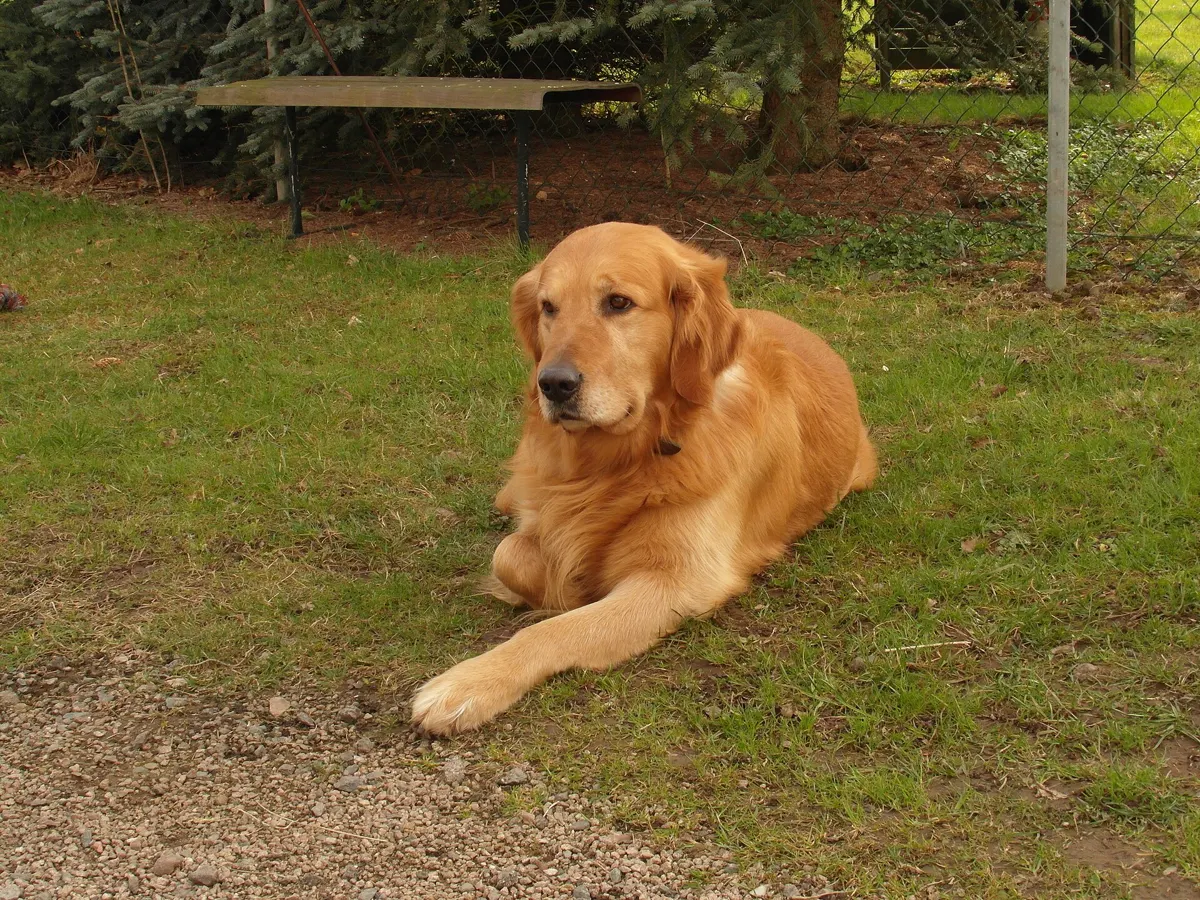
Photo: Barras via Wikimedia Commons, CC BY 3.0
🐾 Getting ready for a puppy? Grab the free Golden Retriever Puppy Checklist (PDF) — no email required.
Quick answer: young golden retriever puppies sleep a lot, often 16 to 20 hours a day according to AKC articles, in short naps plus night sleep. A good bedtime routine is the same few steps every night: an early dinner, a calm last hour with dim lights and a chew instead of rough play, a quiet last potty trip, then into the crate with a small treat and lights out. Expect night potty trips at first. VCA notes that puppies may need them until about 5 months of age.
Below you’ll find the bedtime routine step by step, sample schedules for three age ranges, crate setup, night potty trips and what to do when your puppy won’t settle.
How much sleep does a golden puppy need?
The AKC says puppies usually sleep 18 to 20 hours a day, and its puppy-schedule article says 16 to 18. Either way, it is most of the day. Treat these numbers as normal context, not a target. An AAHA article on canine sleep points out that the 18 to 20 hour figure is popular guidance, that measured studies of puppies have found less, and that sleep quality matters too. Deep, relaxed sleep looks like a puppy lying flat or on their side, breathing slowly. Lying still with ears twitching and eyes moving is lighter rest.
What matters more than hours is rhythm. The AKC notes that puppies won’t always put themselves to bed because the world is so exciting, and that a puppy may nap every hour or so for 30 minutes to two hours. In the early weeks, a simple loop works well: wake, potty, eat or play, potty, nap.
Watch the puppy, not the clock. An overtired golden puppy rarely looks sleepy. It looks wild: zoomies, biting hands and ankles, barking and not settling. A quiet rest in the crate or pen fixes this better than more play.
What a golden retriever puppy bedtime routine looks like
Use the same steps in the same order every night. The AKC says a set bedtime makes adjustment and house training easier, and that it doesn’t matter whether it is 8 p.m. or midnight, as long as it’s a routine.
- Early dinner (a few hours before bed). The AKC suggests limiting food and water for several hours before bedtime. Water needs vary, so ask your vet what’s right for your puppy, especially in hot weather or after exercise.
- Active play earlier, not right before bed. AAHA suggests walks and active play earlier in the day, with low-key activities such as chews and snuffle mats as evening comes on. A big burst of fetch right before bed tends to wind a puppy up, not down.
- Calm last hour. Dim the lights, lower your voice, put away squeaky toys and stop tug and rough play. Offer a safe chew while your puppy lies near you. Our teething toys guide covers chews that are safe for puppies.
- Quiet last potty trip. Take your puppy out on leash to the usual spot. VCA suggests waiting a few minutes, then quietly praising and giving a small treat right there after they go. Keep it boring: no yard play at bedtime.
- Into the crate with a small treat. Toss a treat or put a safe chew inside so your puppy walks in on their own. The AKC says never to force a dog into the crate, and to remove the collar when your dog is crated so it can’t catch on the bars.
- Lights out. Keep the room quiet and dark. The AKC suggests blackout shades if early light wakes your puppy, and a crate cover on a wire crate to make it more den-like. Cornell’s veterinary college recommends leaving one or two sides uncovered.
Overnight, young puppies may still need potty trips. That’s normal and gets better with age.
Sample schedules by age
These are examples, not rules. Shift the times to fit your household, follow your vet’s or breeder’s feeding plan, and watch your own puppy. If you want to see your puppy’s real pattern, our free Puppy Care Log lets you note meals, potty trips, rest periods and activity on your own device.
8 to 12 weeks
Young puppies tire quickly and need lots of potty trips. VCA lists potty breaks right after waking, after meals or a big drink, every 1 to 2 hours while awake, about every half hour during high-energy play, and during the night. The AKC says most puppies eat three times a day.
| Time | Example activity |
|---|---|
| 6:30 am | Wake, potty, breakfast, potty again |
| 7:00 am | Short play and a little socialization |
| 7:30 am | Potty, then nap in crate or pen |
| 9:30 am | Wake, potty, a few minutes of training, play |
| 10:30 am | Potty, nap |
| 12:00 pm | Wake, potty, lunch, potty |
| 12:30 pm | Gentle play or a look around the yard |
| 1:30 pm | Potty, nap |
| 3:30 pm | Wake, potty, play |
| 4:30 pm | Potty, late-afternoon nap |
| 6:00 pm | Wake, potty, dinner, potty |
| 7:00 pm | Calm family time with a chew |
| 8:30 pm | Wind-down: dim lights, no rough play |
| 9:30 pm | Last potty, bed |
| Overnight | Expect one or more quiet potty trips at first |
3 to 4 months
Your puppy stays awake a little longer and is more curious. Daytime naps still matter, especially after puppy class, visitors or outings.
| Time | Example activity |
|---|---|
| 6:30 am | Wake, potty, breakfast, potty, short play |
| 8:00 am | Morning nap |
| 10:00 am | Potty, short training session, food puzzle |
| 12:00 pm | Potty, lunch, potty, yard time |
| 1:00 pm | Midday nap |
| 3:00 pm | Potty, short sniff walk or a safe outing |
| 5:00 pm | Short early-evening nap |
| 6:00 pm | Potty, dinner, potty, calm family time |
| 8:45 pm | Wind-down with a chew |
| 9:45 pm | Last potty, bed |
| Overnight | Some puppies still need a trip out |
5 to 6 months
Your golden has more stamina now, and teething can briefly disturb sleep. Keep two real rest periods in the day, which also helps with adolescent mouthiness. Ask your vet how many meals your puppy should be on.
| Time | Example activity |
|---|---|
| 7:00 am | Wake, potty, breakfast, short walk |
| 8:30 am | Morning rest in crate, pen or quiet room |
| 11:30 am | Potty, training games, a safe chew |
| 1:30 pm | Afternoon nap |
| 4:00 pm | Potty, age-appropriate walk or play on soft ground |
| 6:00 pm | Dinner, potty, calm enrichment such as a snuffle mat |
| 9:00 pm | Wind-down |
| 10:00 pm | Last potty, bed |
Crate setup and where your puppy should sleep
- Near you at first. The AKC notes that many owners keep the crate in their bedroom so the puppy feels the family is close, and so you can hear when they need to go out. AAHA cites research finding that most puppies choose to sleep near people when given the choice. You can move the crate later if you want.
- The right size, with a divider. Cornell recommends buying a crate big enough for your dog as an adult (able to stand without ducking, turn around and lie down comfortably) and using a divider so a young puppy can’t use one end as a bed and the other as a toilet. Our crate size guide has golden-specific sizes.
- Cheap, safe bedding. The AKC advises against an expensive bed for a new puppy, who will likely chew it. It suggests a soft, inexpensive blanket and warns that wool blankets or mats can be chewed into strings that cause choking. Remove anything your puppy is shredding.
- A happy place, never punishment. Build up crate time slowly with treats and meals. Our crate training plan walks through it step by step.
- Pens are fine too. AAHA’s article notes that some behaviorists prefer a puppy pen for daytime rest, because the puppy can get up, chew and go back to sleep. Use whatever setup your puppy settles in safely.
How to handle night potty trips
When your puppy wakes and fusses at night, the AKC’s crate-training advice is to let them out, because they most likely need the bathroom. Keep it all business:
- Carry or leash your puppy straight outside. The AKC suggests calmly carrying a young puppy out.
- Keep lights low and voices quiet. No play, no long cuddles.
- Wait at the potty spot. VCA suggests giving a few minutes. Praise quietly when they go.
- Straight back to the crate. Then lights out.
The AKC also suggests setting an alarm in the early weeks and getting up a little before you think your puppy will wake, so you’re not rewarding whining and barking. Our potty training schedule covers daytime trips too.
When do golden puppies sleep through the night?
There’s no exact date. VCA notes that puppies may need overnight outings until about 5 months of age. A common pattern looks like this, but your puppy may be faster or slower:
| Age | What you might see |
|---|---|
| First weeks home | One or more night potty trips |
| About 3 to 4 months | Longer stretches, often fewer trips |
| About 5 to 6 months | Many puppies no longer need a night trip, with the occasional wake-up |
Illness, new surroundings, teething and changes in routine can all cause setbacks.
Common sleep problems and what usually helps
Crying in the crate at night
First, assume they may need to potty, and take them out quickly and quietly. If they have just gone, are comfortable and are fussing because they’re lonely, keep the crate near your bed. The AKC says never to let a dog out of the crate for whining during crate training, because that teaches whining works. Night potty needs are the exception. If your puppy seems panicked, drools heavily, or won’t stop crying, the AKC advises stopping crate training and getting help from a professional trainer or behavior consultant, and Cornell says highly stressed dogs should never be forced to stay crated alone. Our first night guide and separation anxiety guide can help.
Waking up too early
Blackout shades help, as the AKC suggests. If your puppy wakes very early, treat it like a night trip: quiet potty, then back to the crate for a while with a chew before the day starts. You can also shift dinner and bedtime a little later over several days.
Won’t nap during the day
Goldens love being where the action is. Put the crate or pen in a quieter part of the house for naps, as the AKC suggests, and take your puppy out to potty first. Ask family members, especially children, not to wake a sleeping puppy.
Evening zoomies and biting
This is the classic “witching hour.” AAHA notes that it often comes from an overtired puppy, typically in the evening. Try an earlier late-afternoon nap, calmer evenings and a chew. See puppy biting for more.
Peeing in the crate overnight
Usually the crate is too big (move the divider in) or the stretch was longer than your puppy can manage yet (add a trip). Clean with an enzymatic cleaner and never punish accidents. If a puppy who was dry suddenly starts having accidents, see your vet, since VCA notes a medical cause is possible.
Exercise and sleep
Daytime activity helps nights go better, but more mileage isn’t the fix for a wired golden puppy. The AKC cautions that sustained, strenuous exercise like long runs and jumping isn’t good for puppies, while play, mental stimulation and running around in the yard are. Growth plates close at different ages in different breeds. Short sniff walks, free play on soft ground and short training games are ideal. Ask your vet what’s right as your puppy grows, and see our exercise needs guide.
When to call the vet
Sleeping a lot is normal for a puppy. What matters is how your puppy acts when awake and whether something has changed. Call your vet, or an emergency clinic after hours, if your puppy:
- Is suddenly lethargic, weak or hard to wake
- Isn’t interested in food or water
- Breathes fast or hard while resting
- Has sleep changes along with vomiting, diarrhea, coughing or pale gums
- Strains or cries when peeing, or suddenly has accidents after being dry
Related puppy guides and tools
- Free puppy checklist for the first weeks home, including a quiet sleeping area near you
- Puppy Care Log to note meals, potty trips and rest
- What size crate does a golden need?
- Golden retriever crate training
- Best teething toys for golden retriever puppies
Frequently asked questions
How many hours a day does a golden retriever puppy sleep?
AKC articles put it at about 16 to 20 hours a day for young puppies, in many naps plus night sleep. That is popular guidance rather than a quota: AAHA notes that measured studies found less, and that how deeply a puppy sleeps matters as much as the total. If your puppy seems frantic and wired, they are more likely overtired than under-exercised.
What does a golden retriever puppy bedtime routine look like?
Keep it the same every night: an early dinner, a calm last hour with dim lights and a chew instead of rough play, a quiet last potty trip on leash, then into the crate with a small treat and lights out. The AKC suggests limiting food and water for a few hours before bed; ask your vet what is right for your puppy, especially in hot weather.
What time should a golden retriever puppy go to bed?
Whatever time you can keep every night. The AKC says it doesn't matter if bedtime is 8 p.m. or midnight, as long as it becomes a routine. Start winding down about an hour before.
When do golden retriever puppies sleep through the night?
It varies. VCA notes that puppies may need overnight potty trips until about 5 months of age. Night stretches usually get longer as bladder control improves. Illness, teething, new surroundings and changes in routine can cause setbacks.
Should I wake my puppy up to pee at night?
In the early weeks, the AKC suggests setting an alarm and taking your puppy out a little before you think they will wake, so you aren't responding to whining. Keep the trip quick and boring, then go straight back to bed. During the day, let a sleeping puppy rest.
Why is my golden puppy so hyper in the evening?
Many puppies have a 'witching hour' in the evening. AAHA describes evening biting and zoomies as often a sign of an overtired puppy. Do active play and walks earlier in the day, switch to chews and calm activities in the evening, and give your puppy a chance to rest instead of trying to tire them out with more play.
Is it OK for a puppy to nap in the crate?
Yes, as long as the crate has been introduced positively and is never used as punishment. Take your puppy out to potty first, then offer a safe chew. A puppy pen is another option for daytime rest.
A quick note: this guide is general information from published sources, written by dog lovers, not a veterinarian. Your own vet knows your dog's history, so check with them before changing food, exercise or treatment.
Sources
- AKC: How to Make Sure Your Puppy Gets Enough Sleep
- AKC: Setting Schedules and Developing a Routine for Your New Puppy
- AKC: Safe and Stress-Free Crate Training, A Step-by-Step Guide
- AKC: How to Crate Train a Puppy
- AAHA: How sleep shapes canine behavior
- Cornell University College of Veterinary Medicine: Dog crates, when to use them and how to pick one
- VCA Animal Hospitals: House Training Your Puppy
- AKC: Golden Retriever Puppy Training Timeline, From 8 Weeks to 2 Years
- AKC: How Much Mental and Physical Exercise Do Puppies Need?
Keep reading

Golden Retriever Puppy's First Night Home: A Realistic Plan
How to handle a golden retriever puppy's first night home: crate near your bed, calm night potty trips, what to do about crying and when to call a vet.
Golden Retriever Puppy Potty Training Schedule: A Step-by-Step Plan That Works
Golden retriever puppy potty training schedule by age: how often to go out, a sample day, crate and night trips, accidents, and when to call the vet.
Golden Retriever Crate Training: A Calm, Step-by-Step Plan
Teach a golden retriever to settle in a crate with reward-based steps, realistic limits, and clear signs to slow down or call a vet or trainer.

Golden Retriever Puppy Biting: Why It Happens and How to Stop It
A humane plan for golden retriever puppy mouthing: safer play, toy redirection, calm breaks, child supervision and warning signs that need professional help.