Home › Training, Behavior & Exercise
Golden Retriever Exercise Needs: How Much Is Enough at Every Age
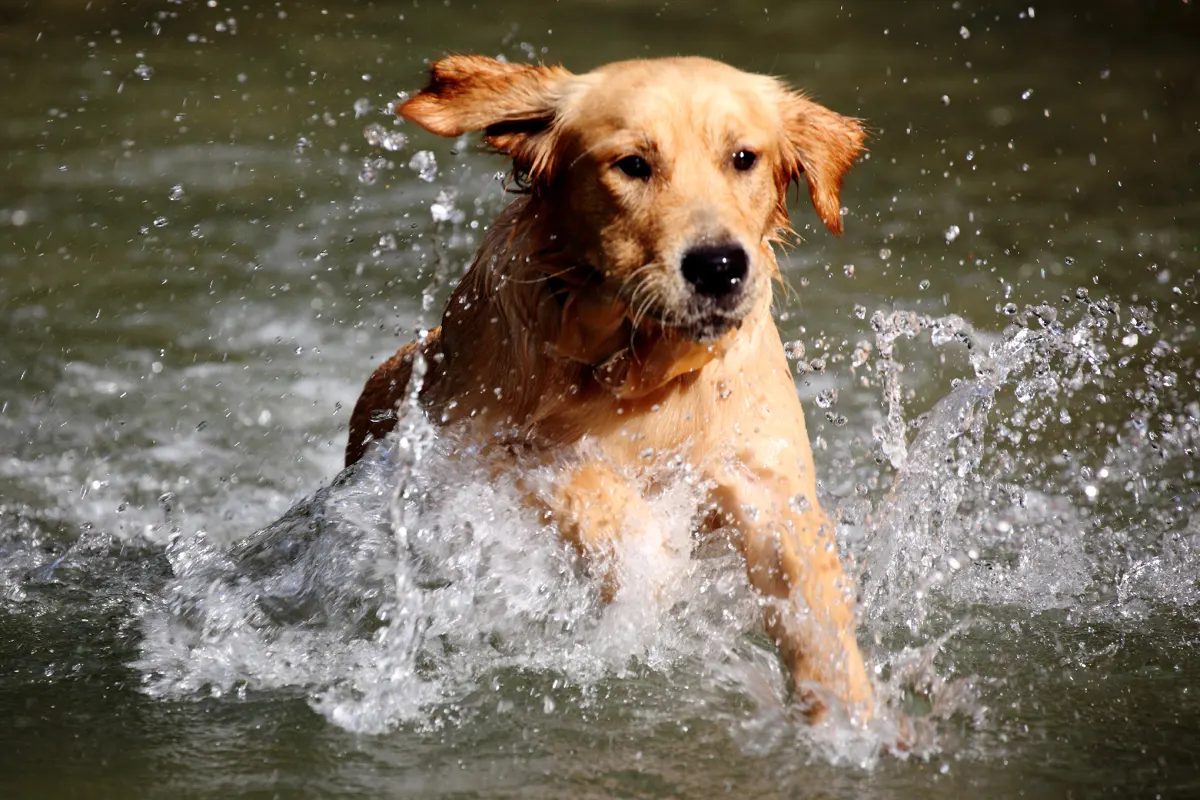
Photo: Franco Vannini via Wikimedia Commons, CC BY 2.0
🐾 Getting ready for a puppy? Grab the free Golden Retriever Puppy Checklist (PDF) — no email required.
Golden retrievers are the happy-go-lucky athletes of the dog world, bred to retrieve game birds all day, over land and through cold water. That heritage explains the tennis-ball obsession, the love of swimming and the “zoomies” that tear through the living room at 9 p.m. It also raises a question every new owner asks: how much exercise does a golden retriever actually need?
The honest answer is that it depends on your dog’s age, health and personality. This guide gives you age-by-age guidance based on veterinary and breed sources, plus ideas for exercising the brain as well as the body.
What the experts say about goldens and activity
VCA Animal Hospitals describes the golden as a calm housedog “but only if given adequate exercise.” They need daily walks, jogs, hikes or play sessions, with swimming and retrieving as favorite activities, and obedience training or mental games are also important. PetMD points out that goldens have a moderate amount of energy, even in their senior years, and enjoy running, long walks, retrieving and swimming.
The AKC breeders interviewed for its golden puppy timeline put it this way: families say they want a calm golden that will sit on the couch with them at night, but that only happens if the owners meet the puppy’s “intellectual, physical, and social needs daily.”
You may see “recommendations” online such as “exactly 90 minutes a day.” We couldn’t find an authoritative source for a one-size-fits-all number. For reference, the ASPCA suggests at least 30 minutes of aerobic activity daily (for example running or swimming) in its advice for dogs prone to anxiety when alone. Treat that as a floor, since many goldens do best with more. Instead of watching the clock, watch your dog. A well-exercised golden is relaxed at home, sleeps well and is able to settle. A golden who destroys the couch, barks at the wall or can’t settle probably needs more, either physical or mental.
Exercise for golden retriever puppies
Puppies have bursts of energy, but their bodies are growing, and large breeds like goldens have bones and joints that need protection.
The walking guideline
The AKC reports that veterinary researchers recommend puppies walk for about five minutes multiplied by their age in months, once or twice a day. A 3-month-old would walk about 15 minutes; a 6-month-old about 30. Treat that as a rough guide, not a rule, and let your puppy set the pace. Grass and packed sand are the best surfaces, and the AKC says to avoid walking on sidewalks and blacktop until a puppy’s paws are used to concrete.
Let them play at their own pace
The AKC also notes that the best exercise for puppies is safe free running. If you have a fenced yard, let your puppy wander and choose their own speed and direction while you supervise, since they naturally regulate their activity and rest when tired. If you don’t have a fenced yard, a long line of about 15 feet in a safe space works well.
Hold off on jogging and repetitive jumping
The AKC advises waiting on leashed running or jogging until a dog is mature: about 12 to 18 months for large breeds. The reason is that bones’ growth plates are still soft, and “too much sustained vigorous exercise before this age may lead to musculoskeletal malformations later on,” especially on hard surfaces. Skip repeated jumping, such as tossing a ball straight up in the air or dock diving, until the puppy is fully grown. Your vet can tell you when your individual puppy is ready.
This fits with what veterinary sources say about large-breed puppy growth in general: moderate, steady growth and sensible activity are better for developing joints than pushing hard. Our guide to golden retriever hip dysplasia covers why.
Brain games for puppies
The AKC suggests going beyond a walk to activities that provide enrichment:
- A “sniffari”: toss kibble in the yard and let your puppy hunt for it
- Tug games, hide-and-seek and chasing a flirt pole
- Food puzzles and scavenger boxes (hide treats in a rolled towel or egg carton)
- Learning a new trick or skill
Short training sessions count as exercise too, and they can tire a puppy out faster than you’d expect. See our golden retriever puppy training guide.
Exercise for adult golden retrievers
Adult goldens, typically from about two years old, are fully grown and ready for more. A good adult routine mixes several things.
Daily walks
At least one good walk a day, ideally two. Vary your route to give your dog new smells and sights. Sniffing is real mental work and tires dogs out.
Fetch and retrieving
Retrieving is what the breed was built for. Many goldens will play fetch until you drop. Try to vary the game: have your dog sit and wait, hide the ball, or throw to different spots. If you can, avoid constant sharp stops and twists on hard ground.
Swimming
Many goldens love the water, and swimming is a great low-impact workout. VCA lists swimming and retrieving as favorite methods of exercise for the breed. Always supervise, introduce water gradually, and rinse and dry your dog’s coat afterward. PetMD recommends cleaning the ears with a vet-approved drying product after swimming or bathing to reduce infection risk. If the water is a lake or pond, be aware that stagnant water can contain harmful algae or bacteria, so check local advisories.
Hiking and jogging
Once your golden is mature and cleared by your vet, a hike or jog can be a great shared hobby. Build up gradually, carry water, and pay attention to your dog’s feet and energy.
Dog sports and jobs
Goldens love having a task. The AKC timeline suggests trying tricks, rally, agility, field work, dock diving, obedience, scent work or barn hunt. Even a simple job, like carrying the newspaper or finding your keys, makes a golden feel useful.
Mental exercise
Mental exercise matters as much as physical exercise. Try food puzzles, scent games (hide treats around the house), learning new tricks and rotating toys. On a rainy day, 15 minutes of brain games can make a restless golden much calmer.
Exercise for senior golden retrievers
Goldens don’t stop wanting to play when they get older, but their bodies change. AAHA lists arthritis as one of the most common chronic diseases of senior dogs, with signs like difficulty rising or lying down, limping and reluctance to walk, play, jump or use stairs.
For seniors:
- Shorter, more frequent walks rather than one long outing
- Low-impact exercise such as swimming or gentle hikes on soft ground
- Warm-ups and cool-downs at the start and end of walks
- Watch the next day. If your dog is stiff or sore after exercise, scale back
- Keep moving. Complete rest isn’t usually the answer, and the OFA notes that controlled exercise helps maintain muscle tone and keeps joints comfortable
Any change in mobility is worth mentioning to your vet. They can suggest pain relief, weight management or physical therapy. Our golden retriever lifespan and senior care guide covers more.
Exercise and hip problems
If your golden has been diagnosed with hip dysplasia or arthritis, exercise is still important, but it needs to be controlled. The OFA says the key is weight control and exercise, starting with short leash walks and gradually increasing, and scaling back if signs of pain or stiffness reappear. Swimming is especially useful because it is non-weight-bearing and can maintain muscle tone and range of motion without placing concussive forces on the joint. Work with your vet on a plan.
Exercising your golden safely in hot weather
Goldens wear a thick double coat, so heat is a real concern. Based on AKC guidance:
- Exercise during the coolest parts of the day, such as early morning and evening
- Always provide cool water and shade
- Never leave your dog in a parked car, even for a few minutes
- Don’t shave the coat; it provides insulation and helps protect from sunburn (see our guide on golden retriever shedding)
- Watch for excessive panting, drooling, weakness or collapse, and call your vet immediately if you suspect heatstroke
Also, the AKC advises waiting at least an hour after a meal before a walk, to give the body time to digest.
Signs your golden needs more (or less) exercise
Needs more: destructive chewing or digging, nonstop barking, restlessness, pestering you to play, weight gain.
Needs less (or a break): limping, stiffness, heavy panting that doesn’t settle, lagging behind, reluctance to walk, sore feet.
When in doubt, check in with your vet, especially for puppies, seniors and dogs with health conditions.
Quick sample schedule for an adult golden
- Morning: 30-minute walk with plenty of sniffing
- Midday: a short training session or food puzzle (10 to 15 minutes)
- Afternoon or evening: fetch, swim or play session (20 to 40 minutes)
- Evening: a calm walk and relaxed time together
Adjust it to your dog and your life. What matters most is that your golden gets regular activity, mental challenges and time with you.
The bottom line
Golden retrievers need daily exercise, but how much depends on age, health and personality. Be gentle on growing puppies, give healthy adults a mix of physical and mental activity, and slow down with comfort and care for seniors. When your dog is happily tired at the end of the day, you’re doing it right. Share your golden’s favorite way to burn off energy in our Facebook group. We’d love to see the splash photos.
Frequently asked questions
How much exercise does a golden retriever need a day?
There is no single number that fits every golden, and puppies and seniors need different amounts. VCA says goldens need daily walks, jogs, hikes or play sessions, and the ASPCA, in its advice for anxious dogs, suggests at least 30 minutes of aerobic activity a day. Many goldens do best with more, plus mental exercise. Watch your dog: a well-exercised golden is relaxed, not frantic, at home.
How much should I walk a golden retriever puppy?
The AKC cites veterinary researchers who recommend about five minutes of walking for each month of age, once or twice a day. For example, a four-month-old might walk for about 20 minutes. Let your puppy set the pace and save longer outings for when they are older.
When can my golden retriever start running or jogging with me?
The AKC advises holding off on leashed jogging or running until a dog is mature, which is about 12 to 18 months for large breeds. Growing bones and ligaments need time to harden. Talk to your vet before starting a running routine.
Is swimming good exercise for goldens?
Yes, for most dogs. Swimming and retrieving are favorite activities for the breed according to VCA, and the OFA notes swimming is a non-weight-bearing exercise that can maintain muscle tone and joint range of motion in dogs with hip problems. Always supervise near water.
Can a golden retriever get too much exercise?
Yes. Sustained hard exercise on hard surfaces can be a problem for growing puppies, and overdoing it can aggravate joint pain in dogs with arthritis or hip dysplasia. Signs of overdoing it include heavy panting that doesn't settle, limping, stiffness the next day or reluctance to move.
How do I exercise my golden when it's hot?
The AKC advises exercising during the coolest parts of the day, providing water and shade, and never leaving a dog in a vehicle. Don't shave the coat to cool a golden, because the double coat helps insulate against heat.
A quick note: this guide is general information from published sources, written by dog lovers, not a veterinarian. Your own vet knows your dog's history, so check with them before changing food, exercise or treatment.
Sources
- AKC: How Much Mental and Physical Exercise Do Puppies Need?
- VCA Animal Hospitals: Golden Retriever
- PetMD: Golden Retriever Dog Breed Health and Care
- AKC: Golden Retriever Puppy Training Timeline
- OFA: Hip Dysplasia
- ASPCA: Separation Anxiety
- AKC: Is It OK to Shave Your Dog's Coat in Summer?
- AAHA: A Watchful Eye, Recognizing Senior Pet Health Problems
Keep reading
How to Stop a Golden Retriever Pulling on the Leash
Why goldens pull and how to teach loose-leash walking with positive reinforcement. Step-by-step training, gear that helps, common mistakes and a practice plan.

Golden Retriever Heatstroke: Warning Signs, First Aid and Prevention
Heatstroke is a veterinary emergency. Learn the signs in golden retrievers, what to do while getting to the vet, who is most at risk and how to keep your dog safe in hot weather.
Golden Retriever Hip Dysplasia: Signs, Causes, Treatment and Prevention
What golden retriever owners should know about hip dysplasia: early signs, how it's diagnosed, treatment options, prevention and questions to ask a breeder.

Best Harness for Golden Retrievers: Fit, Style and No-Pull Features Explained
How to choose the best harness for a golden retriever: front-clip vs. back-clip, no-pull features, sizing and fitting steps, and picks for puppies, pullers and car travel.