Home › Training, Behavior & Exercise
Golden Retriever Crate Training: A Calm, Step-by-Step Plan

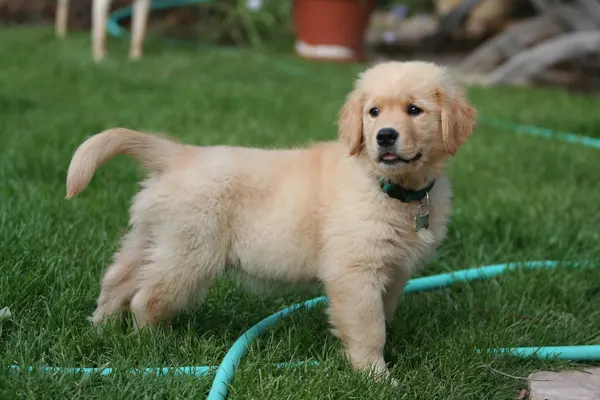
Photo: Johannnes89 via Wikimedia Commons, CC BY-SA 4.0
🐾 Getting ready for a puppy? Grab the free Golden Retriever Puppy Checklist (PDF) — no email required.
A crate can become a comfortable resting place, but that comfort has to be learned. It is not an essential test your golden must pass, a punishment, or a treatment for separation anxiety. The goal is a dog who can choose to enter and remain relaxed during manageable practice—not a dog who has stopped protesting after a frightening experience.
Illness, pain, panic or self-injury needs veterinary assessment. For equipment dimensions, use our crate size guide; this guide focuses on the learning process.
Set up a space your dog can use comfortably
Cornell’s veterinary guidance explains that positive acclimation can help with travel, hospitalization and emergencies as well as everyday management. It also warns against forcing a stressed dog to remain crated alone.
Your dog needs room to stand without ducking, turn, lie down and stretch comfortably. A suitable divider can adapt an adult-sized crate for a growing puppy. Check the dog’s actual fit rather than choosing only from breed, sex or weight.
Choose a ventilated location away from direct sun, heat and constant disturbance. Let your dog rest near people without placing the crate in the middle of every activity. Secure the door open during introductions so it cannot swing unexpectedly. Choose bedding and toys the dog cannot shred or swallow, supervise their introduction, and reassess anything that becomes damaged. Keep water available; do not restrict drinking to make confinement easier. The AKC’s crate guide also advises removing the collar for safety.
Use the puppy preparation checklist to organize supplies, not to set a deadline for training.
Begin with an open door and a real choice
The AVSAB humane-training statement recommends reward-based methods and rejects force, pain and intimidation. Apply that principle to the crate from the start.
- Put a few pieces of your dog’s usual food or suitable rewards near the entrance. Let the dog approach or leave.
- Offer rewards just inside when the dog is comfortable. Do not push, drag, carry or shut them in to complete the exercise.
- Gradually place a meal farther inside if the dog willingly follows. Start with the bowl outside if necessary.
- Let the dog walk out again. Practice can end while the door is still open.
The RSPCA’s step-by-step guide describes building positive associations and progressing in small steps. Its individual time examples are not deadlines for your dog. Voluntary entry matters more than how quickly you advance.
Introduce the moving door separately
A dog who eats with the door open may not yet feel comfortable when it closes. Stay nearby, move the door a little, and reward comfortable behavior. Progress toward a brief closure only when the easier version is uneventful. Reopen before your dog becomes worried.
Do not jump from this practice to a household errand. Keep sessions manageable, change one challenge at a time, and return to an easier step after difficulty. There is no required number of seconds, repetitions or days.
If your dog stops eating, stiffens, repeatedly tries to leave or seems increasingly unsettled, make the task easier. Food is not a reason to keep a worried dog shut in. A dog can need help even without dramatic barking.
Add distance without turning practice into a test
When the dog remains comfortable with the door briefly closed and you beside it, try a small movement away and return. Build distance and time gradually rather than increasing both at once.
Practice while you are home, not only when you must leave. Meet toilet, activity, social contact and rest needs first. Do not exercise a puppy to exhaustion to make confinement possible. An open resting place, gated safe area or supervised pen may be a better management option while training develops.
Keep a simple note of what happened: door open or closed, where you stood, and whether the dog stayed relaxed.
Respond to crying by checking needs
Whining alone does not tell you whether a puppy needs the toilet, company, relief from discomfort or a different training step. Do not label it “demand barking” from a timer or insist on silence before helping a distressed dog.
Check promptly and calmly. Offer an appropriate toilet opportunity and assess comfort. If your dog is panicking, safely end the confinement and seek help; waiting for them to give up is not a training goal. Cornell lists excessive vocalizing, pacing, panting, drooling and eliminating among reasons not to force continued crating alone.
At night, stay close enough to notice needs. The first-night guide provides context, but your puppy’s welfare and your vet’s advice take priority over any sample schedule. Do not assume every cry is a toilet request or that every recently toileted puppy should be ignored.
Plan breaks, not a universal holding-time formula
Crates do not replace supervision, movement, social interaction or opportunities to relieve themselves. Age-in-months formulas cannot establish how long your individual puppy can comfortably stay confined. Health, waking activity and the situation matter.
Arrange suitable care when an absence exceeds the dog’s current comfort and needs. A larger area alone does not solve separation distress. Our potty-routine guide can help organize observations; it is not a reason to postpone a needed outing.
Know when the crate is the wrong approach
Repeated escape attempts, biting bars, heavy drooling, frantic behavior or injury mean stop escalating confinement and contact your veterinarian. Sudden house soiling, vomiting, diarrhea, lethargy or a change in tolerance also deserves assessment rather than a training explanation.
For an older dog with painful joints, a larger safe resting area may be more comfortable. A vet can assess pain, health and separation-related problems and refer you to a qualified reward-based professional. See our separation-anxiety guide for questions to bring, not a self-diagnosis. Keep ordinary puppy learning and enjoyable rest in the plan. A comfortable open crate can remain useful even when closed-door confinement is not appropriate.
Frequently asked questions
How long does crate training take?
There is no fixed deadline. Progress only while your dog remains comfortable, and return to easier practice if they become worried.
How long can my puppy stay in a crate?
No age formula establishes an individual safe duration. Plan toilet breaks, movement, social contact and care around your puppy’s health and comfort.
Should I ignore crying until my puppy is quiet?
Check needs calmly. Do not wait out panic or withhold help until silence. End distressing confinement safely and ask your vet for guidance.
Will a crate cure separation anxiety?
No. Confinement can worsen distress for some dogs. Ask your veterinarian about assessment and an individualized plan rather than increasing crate time.
A quick note: this guide is general information from published sources, written by dog lovers, not a veterinarian. Your own vet knows your dog's history, so check with them before changing food, exercise or treatment.
Sources
Keep reading
What Size Crate Does a Golden Retriever Need? Puppy to Adult Guide
What size crate for a golden retriever? Adult sizes, how to use a divider for puppies, how to measure your dog, wire vs. plastic vs. soft crates and what to look for when you buy.

Golden Retriever Puppy's First Night Home: A Realistic Plan
How to get through a golden retriever puppy's first night home: where they should sleep, what to do about crying, how many potty trips to expect and a simple evening routine.
Golden Retriever Puppy Potty Training Schedule: A Step-by-Step Plan That Works
A practical golden retriever puppy potty training schedule: how often to go out, how to use the crate, what to do after accidents and how long house training really takes.


Golden Retriever Separation Anxiety: Signs, Causes and How to Help
Is your golden panicking when you leave? Learn the signs of separation anxiety, what to rule out, and a gentle plan based on ASPCA and AVSAB guidance.
New Golden Retriever Puppy Checklist: What to Do Before, During and After Pickup
A step-by-step new golden retriever puppy checklist: what to arrange before pickup, what to do on day one, and what to tackle in weeks 2 to 12. Free printable PDF included.