Home › Training, Behavior & Exercise
Why Is My Golden Retriever Barking So Much? Causes and How to Help
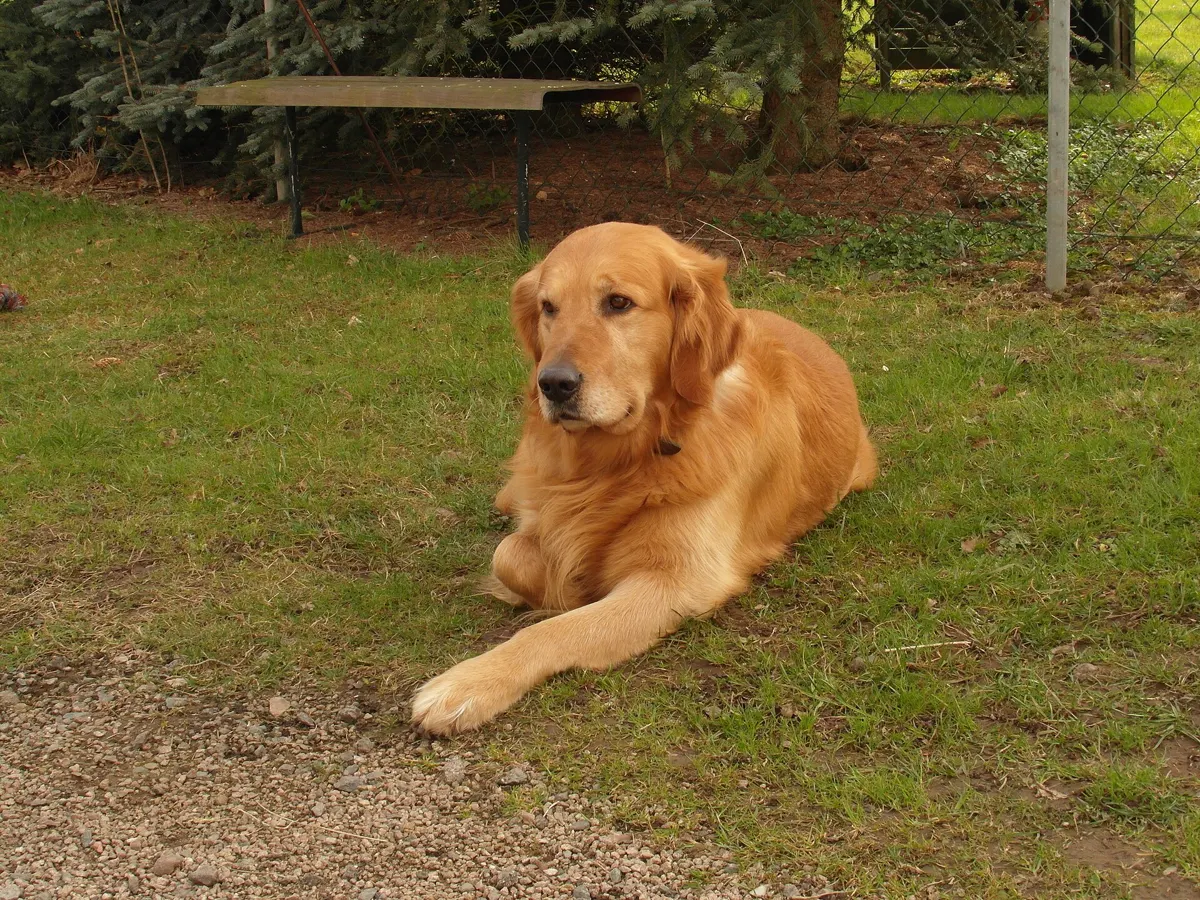
Photo: Barras via Wikimedia Commons, CC BY 3.0
🐾 Getting ready for a puppy? Grab the free Golden Retriever Puppy Checklist (PDF) — no email required.
Golden retrievers aren’t known as yappy dogs, so when yours starts barking at the window, at you during dinner or all night long, it can be confusing. The good news: barking almost always has a reason, and once you know it, you can usually make a real dent in it.
This guide covers why goldens bark, how to work out what your dog is telling you, and gentle, reward-based fixes, drawing on the ASPCA, VCA Animal Hospitals’ veterinary behaviorists, Cornell’s College of Veterinary Medicine and the AKC.
General education only. If your golden’s barking is new, sudden or comes with other changes in behavior, talk to your veterinarian first to rule out pain or illness.
Do golden retrievers bark a lot?
As a breed, not really. The AKC’s golden retriever profile puts the breed’s barking level at the low end of its scale, the setting labeled “Only To Alert.” That fits the golden’s reputation, but it’s a breed generalization, not a promise about your dog.
Every dog barks sometimes. The ASPCA points out that barking is a normal form of canine communication and that it’s not realistic to expect a dog to stop barking altogether. A better goal is to reduce barking, not eliminate it. And because goldens are energetic, social, people-loving dogs, the things that tend to make them bark more are often the things they’re missing: exercise, mental work and company.
Why goldens bark: the common types
Cornell’s College of Veterinary Medicine says dogs always have a reason for barking, “You just might not consider the reason worthy.” Their list, together with the ASPCA’s, covers most of what owners hear at home:
| Type of barking | What it often looks like |
|---|---|
| Alert or alarm | Barking at a doorbell (even one on TV), a car door or a noise outside |
| Territorial | Barking at people or dogs passing the house, yard or car |
| Greeting and excitement | Barking with a wagging tail and loose body when you come home or a friend visits |
| Attention-seeking or demand | Barking at you for food, play, a walk or to be let out |
| Boredom | Barking when there’s nothing else to do, common in high-energy dogs without enough exercise |
| Frustration | Barking when your dog can’t reach something they want, like a dog across the street |
| Fear and anxiety | A shrill bark at something scary, often with other signs of stress |
| Lonely or left behind | Barking when separated from you |
| Socially facilitated | Barking because other dogs nearby are barking |
| Compulsive | Repetitive barking, often with pacing or running the same path |
The ASPCA also flags two problems that can show up as barking: illness or injury, since dogs sometimes bark in response to pain, and separation anxiety, where barking happens only when the dog is alone and usually comes with other signs like pacing, destruction or house soiling. For anxiety-related barking, see our golden retriever separation anxiety guide.
Step 1: Rule out a medical cause
Before you start training, check in with your vet, especially if the barking is new or your golden is a senior. The ASPCA recommends a veterinary exam to rule out medical causes before trying to solve a barking problem, and VCA’s veterinary behaviorists note that medical problems can contribute to vocalization, especially in older dogs.
Step 2: Figure out what your golden is saying
You can’t fix barking until you know why it’s happening. Both the ASPCA and Cornell suggest watching for patterns. For a week or so, jot down:
- When and where the barking happens (time of day, which room, yard or car)
- What or who it’s aimed at
- What sets it off (sounds, sights, people, other dogs, you picking up your keys)
- What your dog’s body is doing. The ASPCA notes that greeting barks tend to come with a relaxed body and wagging tail, while alarm barking often comes with stiffer body language.
- What happens next. Does the barking get your dog attention, a treat, a thrown ball or the door opened?
Cornell notes that barking at the same time every day may point to a recurring event, like a jogger passing the house.
Step 3: Meet your golden’s needs first
A lot of barking gets quieter when a golden simply has less pent-up energy and boredom. The AKC recommends making sure your dog gets enough physical and mental exercise before you leave, and Cornell notes that boredom barking is especially common in high-energy dogs.
- Daily exercise that fits your dog’s age and health. See how much exercise a golden needs.
- Mental work. Cornell suggests short training games (sit, stand, down, repeat) and quick practice sessions whenever you get up from the couch or desk.
- Chews and food puzzles. A long-lasting, safe chew or a puzzle toy gives your golden a job.
- Company. Goldens are social. Don’t leave your dog alone in the yard as a substitute for time with you. The AKC notes that dogs left on their own outside often bark at every squirrel, passerby or neighboring dog.
- A predictable routine. VCA says a consistent daily routine can help a dog be calmer and more settled through the day.
Step 4: Fix the most common types of barking
Barking at the window, the door or passersby
This kind of barking is often self-rewarding: from your dog’s point of view, barking makes the mail carrier go away. That’s why the AKC calls blocking the view the most effective solution.
- Manage the view. Use window film, close blinds or block access to the front windows. Cornell suggests translucent window clings.
- Mask outside noise with music, the TV or white noise.
- Teach “go to your spot.” The ASPCA and AKC both recommend teaching your dog to go to a mat, bed or crate when someone comes to the door, and rewarding them for staying there calmly.
- Use a gate to keep your golden away from the entryway when guests arrive, then let them greet once they’re calm.
- Don’t join in. The ASPCA warns against saying “Who’s there?” or rushing to the window, which encourages the barking.
Barking for attention
This is the barking we accidentally teach. VCA’s behaviorists say attention-seeking barking is often reinforced by owners giving in, and that even going to a barking dog to quiet them can count as a reward. Their advice: “Never reward barking with any type of attention, even occasionally.”
- Ignore the bark. Turn away, look at the ceiling or leave the room. The AKC notes that if barking stops working, dogs try something else.
- Reward the quiet. The instant your golden stops, ask for a sit and then give them what they wanted.
- Teach a better way to ask. The AKC suggests teaching your dog to lie at your feet or sit and make eye contact for attention. Cornell suggests teaching a bell at the door for going outside.
- Stay consistent. If barking used to work, your dog may try harder at first.
Excited greeting barking
Goldens love people, so greeting barks are common. The ASPCA suggests keeping greetings low key, teaching a sit-stay at the door, and keeping a favorite toy by the door so your golden has something to carry. Many goldens find it hard to bark with a toy in their mouth, though they may still whine.
Barking on walks
The ASPCA suggests offering soft, tasty treats before your dog starts barking at a passing person or dog, and rewarding every time they choose not to bark. Some dogs do better sitting while others pass, and some do better keeping moving. If walks are a struggle overall, see our guide to golden retriever leash pulling.
Frustration barking
If your golden barks because they want something they can’t have, like playing with the dog next door, the ASPCA and AKC recommend impulse-control training. Games like “wait at the door” and “leave it” teach your dog that patience, not noise, gets results. A good reward-based training class can help, and our puppy training guide covers the basics.
How to teach a “quiet” cue
A “quiet” cue is one of the most useful things you can teach a golden. Here’s a reward-based method based on the AKC’s and VCA’s instructions:
- Wait for a pause. When your dog stops barking, even for a second, mark it (“Yes!”) and give a tasty treat.
- Lure quiet if needed. VCA and the AKC both suggest holding a smelly treat by your dog’s nose, since most dogs stop barking to sniff it. Reward once they’re quiet.
- Add the word. Once you can predict when the barking is about to stop, say “quiet” (or “hush”) just before, then reward the silence.
- Build duration slowly. Ask for a little more quiet time before each reward.
- Practice before real life. Practice when things are calm first, then with mild triggers.
VCA also describes teaching “speak” on cue first, so you can practice turning barking on and off. Keep your voice calm: VCA notes that yelling may only add to the noise and anxiety.
What about barking when you’re gone?
If your golden barks when left alone, start with the basics above: a good walk and some mental work before you leave, a chew or puzzle toy, and background sound to mask outdoor noise. VCA also recommends teaching dogs gradually to spend longer periods away from you.
If the barking comes with drooling, pacing, destruction, accidents in the house or escape attempts, it may be separation anxiety, which needs a different plan and often a vet’s help. Read our guides to how long a golden can be left alone and separation anxiety, and talk to your vet.
Are bark collars and punishment a good idea?
Generally not as a first step. The ASPCA calls anti-bark collars punishment devices and says they aren’t recommended as a first choice, especially when barking is driven by fear, anxiety or compulsion. It also notes that almost all dogs become “collar-wise,” barking again once the collar comes off. The AKC says punishment can harm a dog’s physical and mental health and is no more effective than positive reinforcement. Cornell recommends addressing the cause of the barking instead.
When to get professional help
Talk to your vet, and ask about a qualified behavior professional, if:
- The barking is new, sudden or your golden is a senior
- It seems fearful or aggressive, or comes with growling, lunging or snapping
- It looks repetitive or compulsive, like barking at shadows or running the same path
- It happens only when your dog is alone and comes with other signs of distress
- It isn’t improving despite weeks of consistent training
The ASPCA recommends a Certified Applied Animal Behaviorist, a board-certified veterinary behaviorist or a qualified Certified Professional Dog Trainer for these cases.
Start early with puppies
VCA’s behaviorists say the keys to preventing barking problems are socialization and habituation: getting puppies used to as many new people, animals, situations and noises as possible. The AKC adds that dogs with lots of positive experiences with different kinds of people are less likely to bark at them. Bringing home a golden puppy? Our free puppy checklist helps you plan socialization, training and vet visits from day one.
Related
Frequently asked questions
Do golden retrievers bark a lot?
Not usually, as a breed. The AKC's breed profile rates the golden retriever's barking level at the lowest end of its scale, labeled "Only To Alert." Individual dogs vary, though, and a golden who is bored, under-exercised, anxious or rewarded for barking can become very vocal.
Why is my golden retriever suddenly barking more?
A sudden change in behavior is a reason to call your vet. The ASPCA notes that dogs sometimes bark in response to pain, and VCA's veterinary behaviorists say medical problems can contribute to vocalization, especially in older dogs. Once your vet has ruled out a medical cause, look for new triggers or changes in routine.
Should I yell at my golden to stop barking?
No. The AKC points out that yelling is still attention and may sound to your dog like you're barking too. VCA adds that yelling or punishing a dog who barks from anxiety or territorial behavior is likely to increase barking and anxiety.
Are bark collars a good idea for a golden retriever?
They aren't a first choice. The ASPCA calls anti-bark collars punishment devices that aren't recommended as a first option, especially for fear, anxiety or compulsive barking, and the AKC advises talking to a certified professional dog trainer or behaviorist before using one. Most dogs also learn to bark when the collar is off.
How do I stop my golden from barking when I leave?
Start with exercise and enrichment before you go, a predictable routine and gradual alone-time training. If the barking comes with pacing, house soiling, destruction or other signs of distress, it may be separation anxiety, so talk to your vet.
When should I get professional help?
If the barking is fear-based, aggressive, compulsive, getting worse or not improving with consistent training, see your vet first, then a qualified professional such as a board-certified veterinary behaviorist, a Certified Applied Animal Behaviorist or a Certified Professional Dog Trainer.
A quick note: this guide is general information from published sources, written by dog lovers, not a veterinarian. Your own vet knows your dog's history, so check with them before changing food, exercise or treatment.
Sources
Keep reading

Golden Retriever Separation Anxiety: Signs, Causes and How to Help
Is your golden panicking when you leave? Learn the signs of separation anxiety, what to rule out, and a gentle plan based on ASPCA and AVSAB guidance.

How Long Can a Golden Retriever Be Left Alone? Puppies, Adults and Seniors
How many hours can you leave a golden retriever alone? What the AKC and RSPCA say, puppy limits, signs of separation anxiety, and how to make alone time easier.

Golden Retriever Exercise Needs: How Much Is Enough at Every Age
How much exercise does a golden retriever need? Age-by-age guidance for puppies, adults and seniors, plus swimming, mental games and hot-weather safety.


Golden Retriever Puppy Training: A Step-by-Step Guide for the First Year
How to train a golden retriever puppy: socialization, biting, crate and potty training, and what to expect from the angel stage through the teenage months.