Home › Training, Behavior & Exercise
How to Stop a Golden Retriever Pulling on the Leash
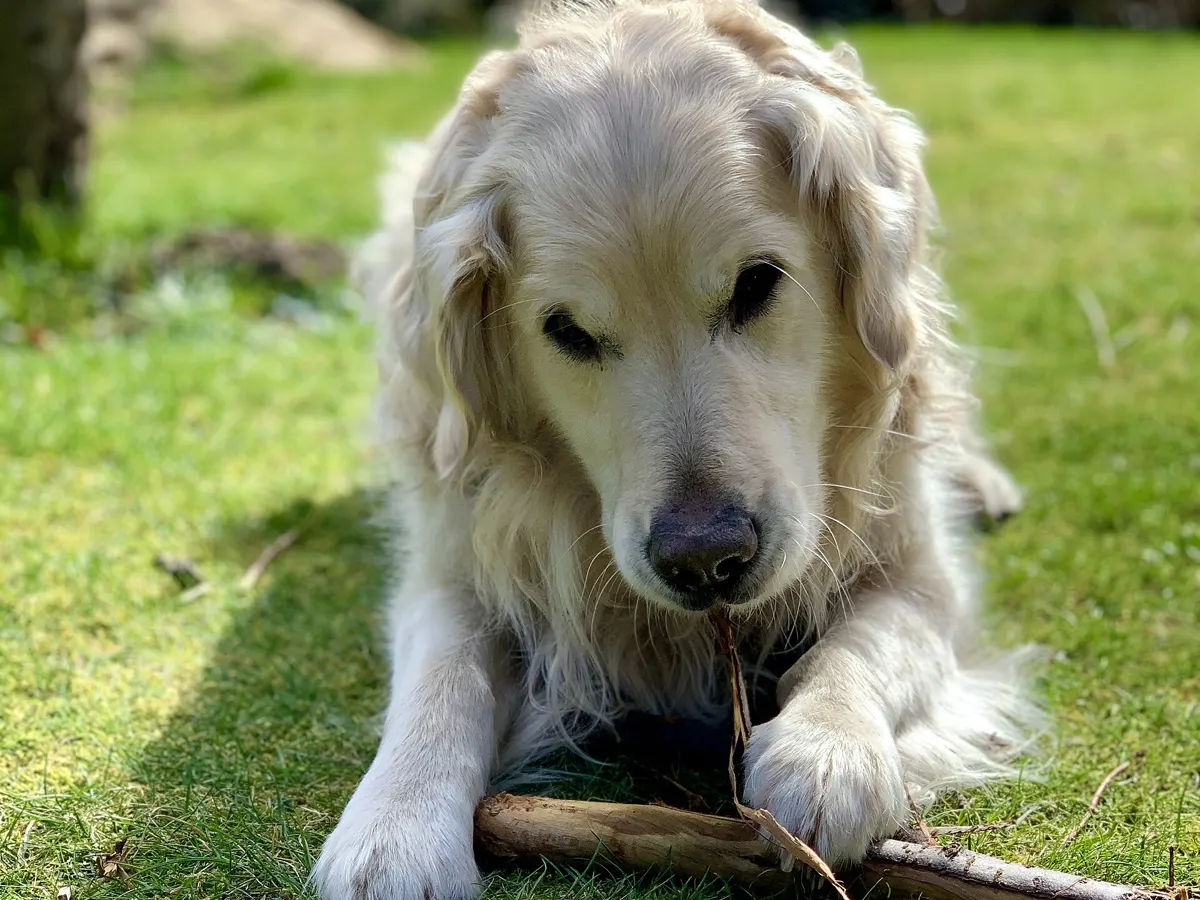
Photo: Johannnes89 via Wikimedia Commons, CC BY-SA 4.0
🐾 Getting ready for a puppy? Grab the free Golden Retriever Puppy Checklist (PDF) — no email required.
A 65-pound golden who wants to say hello to every dog on the block can turn a walk into a tug of war. The good news: loose-leash walking is a learnable skill, and goldens are food-motivated, social and eager to work with you.
Why goldens pull
- They walk faster than we do. Our pace is slow for dogs.
- The world is exciting. Smells, squirrels, dogs, people.
- It works. Every time a pulling dog gets to the sniff or the friend, pulling is rewarded. VCA and the AKC both point out that dogs pull because it’s effective.
- Excitement and energy. An under-exercised dog is more likely to pull. See puppy milestones.
- Lack of practice. Walking politely is a skill that must be taught and practiced.
The core principle
Make loose leash pay and a tight leash get you nowhere. Reward your dog for being next to you or with slack in the leash, and stop moving forward when the leash gets tight.
Step-by-step
1. Gear up
- A flat collar or well-fitted harness and a standard 4 to 6 foot leash. See harness guide and collar or harness?
- Small, tasty treats your dog loves, kept at your side.
- Start in a quiet place such as the house or yard.
2. Teach “stay with me” in the house
- Stand with your dog beside you. Mark (say “yes” or click) and treat for being next to you.
- Take one step. If your dog follows, mark and treat at your side.
- Gradually add steps, turns and speed. Treat often at first.
3. Add the leash outdoors
- Start in a low-distraction area.
- Reward your dog regularly for walking with slack in the leash and staying near you.
- If the leash goes tight, stop. Stand still like a tree. When your dog looks back or the leash loosens, mark and reward, then move forward.
- Alternatively, turn and walk the other way calmly. When your dog catches up, reward.
4. Use rewards for what you want
- Reward your dog for checking in with you.
- Use life rewards: a sniff, greeting a friend or going forward are rewards for a loose leash. “Let’s go say hi” after the leash is slack.
- Gradually reduce the treats, but keep rewarding unpredictably.
5. Increase distractions slowly
Go from the yard to the quiet street, then busier areas. If your dog is too excited to take treats, you’re too close to the distraction. Add distance.
Troubleshooting
| Problem | What to try |
|---|---|
| Pulls toward other dogs | Increase distance, reward calm looks at the other dog, then pass at a distance |
| Lunges at squirrels | Increase distance. Practice “look at me” and reward. Walk at quieter times |
| Won’t take treats outside | Try better treats, walk before meals or practice in lower-distraction places |
| Drags on the way home | Make parts of the walk fun, with a sniff break and treats in the middle |
| Zigzags or sniffs constantly | Build in sniff breaks as a reward. Sniffing is enrichment |
| Regression in adolescence | Return to easier settings and keep rewarding |
Gear that can help
- Front-clip harness. Redirects when the dog pulls, which can make walking easier while training.
- Head halter. Can help for some strong pullers but needs gradual introduction. Ask a trainer.
- Avoid choke, prong and shock collars. The American Veterinary Society of Animal Behavior’s position is that reward-based methods are preferred and aversive methods risk fear, anxiety and aggression.
- Leash. A 4 to 6 foot standard leash gives more control than a retractable one.
Common mistakes
- Moving forward when the leash is tight. You reward the pulling.
- Inconsistency. Letting the dog pull “just this once.”
- Training only on walks. Practice in short sessions at home too.
- Too hard, too soon. Raise difficulty gradually.
- Skipping exercise. A tired dog is easier to train. Add play and sniff time.
- Punishing. Yanking the leash or yelling doesn’t teach what to do.
When to get help
If your dog is reactive (barking, lunging at people or dogs), pulling is dangerous or you’re not seeing progress, consider a certified, reward-based trainer. If sudden changes in behavior occur, check with your vet in case pain is involved.
Related
Frequently asked questions
Why does my golden pull on the leash?
Walking faster than you is natural for dogs, the world is exciting and pulling often works, since it gets them where they want to go. Dogs repeat what is rewarded.
At what age can I teach loose-leash walking?
Puppies can start learning right away in short, easy sessions. Adolescents may regress, so plan to keep practicing.
Will a harness stop pulling?
A front-clip harness or head halter can make it easier to manage pulling, but gear doesn't teach the skill. Combine it with training. See our harness guides.
Should I use a choke, prong or shock collar?
The American Veterinary Society of Animal Behavior recommends reward-based training and advises against aversive methods because of welfare risks. A qualified trainer can help with a gentler plan.
How long does it take?
It varies with the dog and how consistent you are. Short, frequent sessions and rewarding the right behavior every time build the habit. Expect weeks to months, not days.
A quick note: this guide is general information from published sources, written by dog lovers, not a veterinarian. Your own vet knows your dog's history, so check with them before changing food, exercise or treatment.
Sources
Keep reading
Best Harness for Golden Retrievers: Fit, Style and No-Pull Features Explained
How to choose the best harness for a golden retriever: front-clip vs. back-clip, no-pull features, sizing and fitting steps, and picks for puppies, pullers and car travel.
Collar or Harness for a Golden Retriever? When to Use Each (and How to Size Them)
Is a collar or harness better for a golden retriever? When to use each, which collar types to consider or avoid, how to measure a golden's neck and chest and what the fit should feel like.

Golden Retriever Puppy Biting: Why It Happens and How to Stop It
Why golden retriever puppies bite and mouth, when it usually fades, and a calm, step-by-step plan to teach bite inhibition without yelling or punishment.