Collar or Harness for a Golden Retriever? When to Use Each (and How to Size Them)
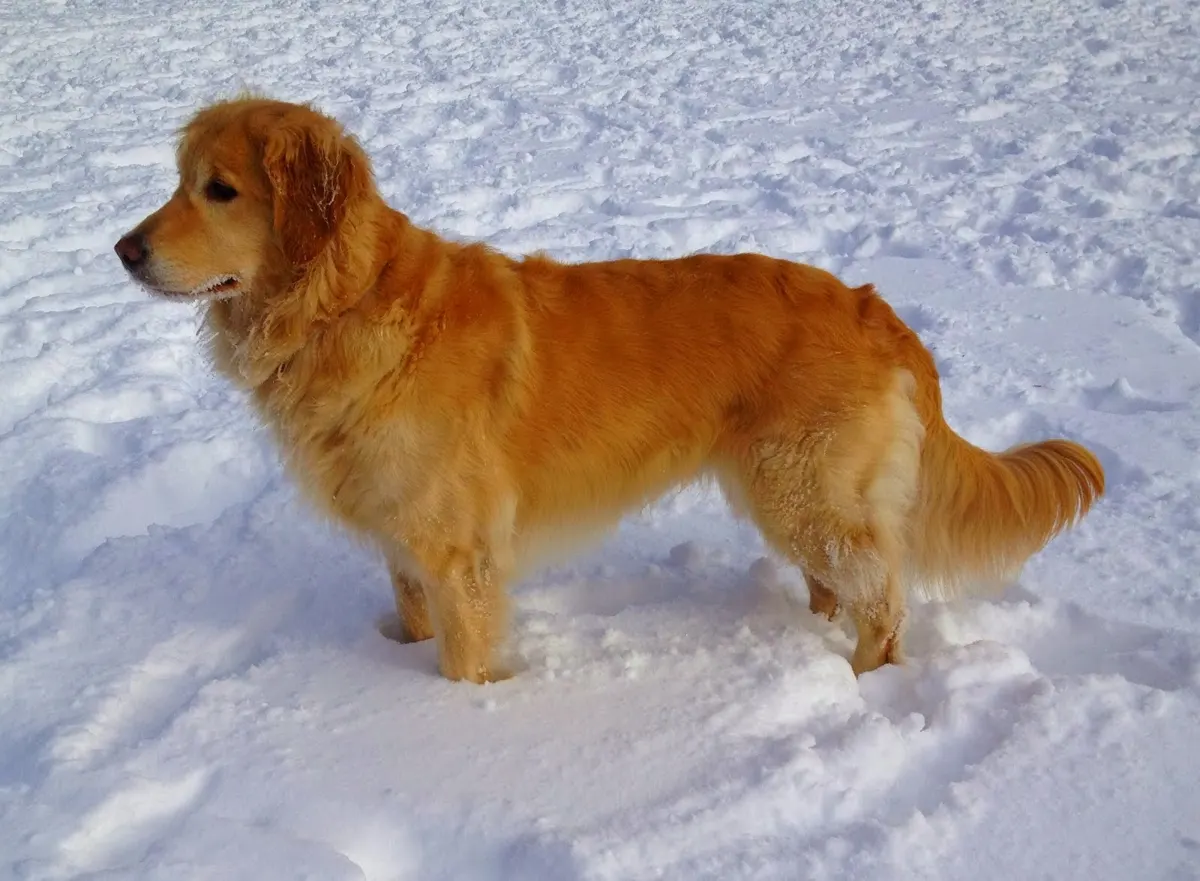
Photo: Newyorker10021 via Wikimedia Commons, CC BY-SA 4.0
🐾 Getting ready for a puppy? Grab the free Golden Retriever Puppy Checklist (PDF) — no email required.
Collar or harness? The answer for most goldens is both: a flat collar for ID tags, and a harness for walking. Here is how to decide, how to size each and what to avoid.
The quick answer
| Situation | Best choice |
|---|---|
| Everyday ID and tags | Flat collar |
| Walks with a puller | Front-clip or dual-clip harness |
| Walks with a calm walker | Either, based on your dog’s comfort |
| Dog who slips collars | Martingale collar or well-fitted harness |
| Car travel | Crash-tested harness or a secured crate (harness guide) |
| Dogs with neck or throat problems | A harness, as advised by your vet |
| Training a puppy | Lightweight harness or collar, with treats |
Why a harness for walking?
A harness takes pressure off the neck. If a strong golden lunges to chase a squirrel, a collar takes the force on the throat, while a harness spreads it across the chest. That is why many vets and trainers prefer harnesses for walking, especially for dogs who pull or have neck issues. A harness is not a cure for pulling, though. See leash pulling in goldens.
Why keep a collar?
- It holds ID tags. Even a microchipped dog should wear a tag, since a tag can be read immediately.
- It’s quick to clip on for a trip to the yard.
- Some places require a license tag on the collar.
Remove the collar when your dog is in a crate or playing with another dog if there is any risk of it catching.
Collar types
| Type | Good for | Cautions |
|---|---|---|
| Flat buckle | Everyday ID | Dogs can slip out of loose ones |
| Martingale | Slippery heads | Must be sized so it can’t tighten fully |
| Breakaway | Cats, not usually dogs | Too weak to hold a strong golden |
| Rolled leather or fabric | Long coats, since it reduces matting on the neck | Can be hard to find in large sizes |
| Prong, choke, shock | Not recommended | Can injure the neck and damage trust |
The American Veterinary Society of Animal Behavior’s position statement recommends reward-based training and says aversive tools should not be used. Goldens are eager to please and respond well to rewards.
How to measure
Collar:
- Wrap a soft tape around the neck where the collar sits, high on the neck behind the ears.
- Add about two fingers’ width of space.
- Choose the size range that includes that number. If you are between sizes, go bigger and adjust.
Harness:
- Measure around the widest part of the chest, just behind the front legs.
- Compare with the manufacturer’s chart.
- Check that straps don’t rub and that you can fit two fingers under them.
Goldens have thick fur, so feel the actual neck and chest, not just the coat.
Puppies
Puppies grow fast. Buy an adjustable collar and check it every week or two. A too-tight collar is dangerous, and a too-loose one can slip over the head. Our puppy shopping guide covers other essentials: what to buy.
Fit test
- Two fingers can slide under the collar or harness straps
- It doesn’t rotate, chafe or leave marks
- Your dog moves freely, with no coughing or gagging
- You can see the skin under the strap with no sores
Tags
Put your phone number on the tag and keep your microchip registration up to date.
Related
What to look for
We describe what to look for in each type of product. Specific product links are being added, and every link here will be marked as a sponsored link.
Pick 1
Flat buckle collar for ID tags
Best for: Everyday wear and identification
What to look for:
- Adjustable, with a sturdy buckle
- Soft edges and breathable material
- A place for ID tags or an embroidered phone number
Pick 2
Martingale collar
Best for: Dogs who slip their collar
What to look for:
- Limited-slip design so it can't choke
- Wide enough to be comfortable for a large neck
- Fits snugly when tightened
Pick 3
Padded walking harness
Best for: Walks, training and dogs who pull
What to look for:
- Y-shaped front
- Padding
- Four adjustment points
Prices and availability change, so we do not list them here. Check the retailer's page for current details.
Frequently asked questions
Should a golden retriever wear a collar all the time?
Many owners keep a flat collar with ID tags on at all times for safety, then use a harness for walks. Take it off during crate time if it could catch, and check the fit often.
What collar size does an adult golden need?
It depends on the individual dog. Measure the neck where the collar sits, add enough room for two fingers, and choose the size range that fits. A thick golden neck ruff can hide the real measurement, so feel for it.
Are prong or choke collars okay for goldens?
Veterinary behavior organizations recommend reward-based training and advise against aversive tools. Goldens are eager to please, and rarely need harsh equipment. Ask a qualified trainer.
What is a martingale collar?
A martingale has a loop that tightens slightly if the dog pulls back, but only to a set limit. It prevents slipping out and is not a choke collar when sized properly.
How do I get my puppy used to a collar?
Put it on for short periods with treats and play. Most puppies ignore it within a few days.
A quick note: this guide is general information from published sources, written by dog lovers, not a veterinarian. Your own vet knows your dog's history, so check with them before changing food, exercise or treatment.
Sources
Keep reading
Best Harness for Golden Retrievers: Fit, Style and No-Pull Features Explained
How to choose the best harness for a golden retriever: front-clip vs. back-clip, no-pull features, sizing and fitting steps, and picks for puppies, pullers and car travel.
How to Stop a Golden Retriever Pulling on the Leash
Why goldens pull and how to teach loose-leash walking with positive reinforcement. Step-by-step training, gear that helps, common mistakes and a practice plan.

What to Buy for a Golden Retriever Puppy: The Must-Haves vs. Nice-to-Haves List
What to buy for a golden retriever puppy, sorted into must-haves, nice-to-haves and things to skip, with what to look for in each item, plus a free printable checklist.