Undercoat Rake vs. Slicker Brush vs. Deshedding Tool: Which Does a Golden Retriever Need?
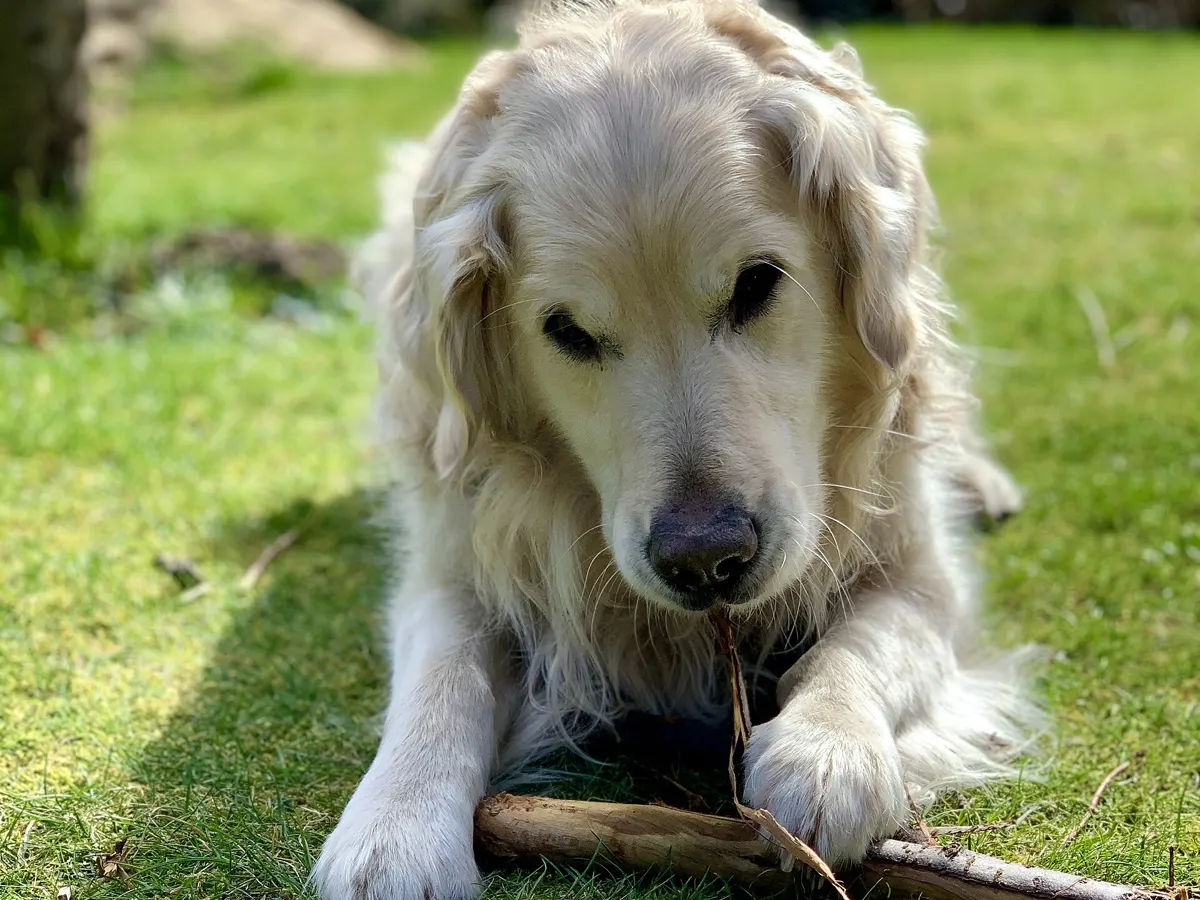
Photo: Johannnes89 via Wikimedia Commons, CC BY-SA 4.0
🐾 Getting ready for a puppy? Grab the free Golden Retriever Puppy Checklist (PDF) — no email required.
When your golden starts “blowing coat,” tufts of fur fly everywhere, and the pet store aisle fills with tools that promise to fix it. Three of the most popular are the slicker brush, the undercoat rake and the deshedding tool. They look similar but do different jobs. Using the wrong one, or overusing the right one, can leave a golden with a thin, damaged coat.
Your golden’s coat in 30 seconds
A golden has a topcoat of longer, water-resistant guard hair and a soft, dense undercoat that insulates. The AKC’s golden retriever breeders note the double coat acts as nature’s way of cooling in summer and keeping the dog warm in winter and say the coat blows about twice a year. Because the undercoat sheds in clumps, you need tools that reach it. See our shedding guide.
What each tool does
| Tool | What it reaches | How it works | Best use | Risks |
|---|---|---|---|---|
| Slicker brush | Topcoat and some undercoat | Fine bent pins catch loose hair and tangles | Daily or several times a week | Hard pressure can scratch skin |
| Undercoat rake | Deeper into the undercoat | Wider-spaced teeth pull out dead undercoat | Shedding season, once or twice a week | Overuse can thin the coat; don’t force it through mats |
| Deshedding tool (blade-style) | Undercoat | Fine teeth in a fixed blade pull out loose undercoat | Occasional, as the manufacturer instructs | Can cut or break guard hairs and irritate skin if overused |
| Metal comb | Whole coat, down to the skin | Finds tangles | After brushing | Pulls on mats |
When to use which
| Situation | Choose |
|---|---|
| Normal week | Slicker brush and comb |
| Shedding season, clumps of undercoat | Rake (and slicker afterwards) |
| Heavy blowout and the rake isn’t enough | A deshedding tool, sparingly and gently |
| Tangles behind ears and on the “pants” | Comb and slicker, a bit of detangling spray |
| Puppy | Soft slicker or glove only |
How to use an undercoat rake safely
- Brush the coat first with a slicker so it is free of tangles.
- Use short, light strokes in the direction of hair growth. Let the teeth do the work.
- Work in sections: back, sides, chest, thighs.
- Stop if you see skin redness or your dog flinches.
- Finish with a slicker and comb.
How to use a deshedding tool safely
- Follow the manufacturer’s instructions on how often and for how long.
- Use light pressure and work only on a dry, tangle-free coat.
- Stop when you stop getting much undercoat. Overworking can remove healthy guard hair.
- Avoid delicate areas such as the face, belly and ears.
- Don’t use it to shave down or thin the topcoat.
If you see bare patches, redness, or your golden dislikes it, stop and ask your groomer or vet.
What not to do
- Don’t shave a golden to stop shedding. The AKC says it is generally not recommended since the coat helps regulate temperature, and a shaved coat may grow back differently. See should you shave a golden.
- Don’t rely on one tool. You will get a better result with a short routine and several tools.
- Don’t brush a matted coat dry and fast. Detangle gently, or ask a groomer.
A simple routine
| Frequency | Tools | Time |
|---|---|---|
| 3 or more times a week | Slicker and comb | 5 to 10 minutes |
| Daily in shedding season | Rake, then slicker | 10 to 15 minutes |
| Every 4 to 8 weeks | Bath, then dry and brush | Ongoing |
Buying tips
- Choose sizes made for large, long-haired dogs.
- Look for rounded teeth and comfortable handles.
- Check reviews of coat damage from owners of double-coated breeds, not just overall ratings.
- Read the maker’s instructions and follow them.
For a full toolkit see our best brush guide.
Tools to compare
We describe what to look for in each type of product. Specific product links are being added, and every link here will be marked as a sponsored link.
Pick 1
Undercoat rake with rounded teeth
Best for: Regular seasonal shedding with thick undercoat
What to look for:
- Rounded teeth that glide through the coat
- Suitable width for a large dog
- Comfortable handle
Pick 2
Blade-style deshedding tool
Best for: Occasional use during heavy shedding, with caution
What to look for:
- Manufacturer instructions that say how often to use it
- Size labeled for large, long-coated dogs
- Ejector button for fur
Pick 3
Slicker brush
Best for: Daily smoothing and light detangling
What to look for:
- Bent pins with protected tips
- Cushioned pad
- Good grip
Prices and availability change, so we do not list them here. Check the retailer's page for current details.
Frequently asked questions
Which is better for a golden retriever, a slicker brush or an undercoat rake?
They do different jobs. A slicker smooths the topcoat and feathering, while an undercoat rake reaches through to lift dead undercoat. Most goldens benefit from both, with the rake used mainly in shedding seasons.
Can a deshedding tool damage my golden's coat?
It can if used too often or too hard. These tools have blade-like teeth that can cut or break the topcoat and irritate skin. Use as directed, with light pressure, and take breaks.
How do I know if the undercoat is ready to come out?
During a blowout, tufts of soft fur come out easily when you brush or pet. Pull gently on a tuft. If it comes away easily, it is loose. If it resists, stop.
Should I use these on a wet dog?
Many groomers brush a wet, shampooed and conditioned dog with a high-velocity dryer. At home, a dry, well-brushed coat is safer for beginners.
Do these tools reduce shedding?
They remove hair that was going to fall anyway, which means less on your furniture. They don't stop shedding.
A quick note: this guide is general information from published sources, written by dog lovers, not a veterinarian. Your own vet knows your dog's history, so check with them before changing food, exercise or treatment.
Sources
Keep reading

Best Brush for Golden Retrievers: Slicker, Pin, Rake and Comb Compared
How to choose the best brush for a golden retriever: slicker vs. pin vs. undercoat rake vs. comb, what each does, how to brush step by step and what to look for before you buy.


Golden Retriever Shedding: What's Normal, When It Peaks and How to Manage It
Goldens shed year-round and heavily in spring and fall. Learn why, which brushes work, why you should never shave a golden, and when to call the vet.
Should You Shave a Golden Retriever in Summer? Why Vets and Breeders Say No
Should you shave a golden retriever? Why a double coat protects against heat and sun, what can go wrong with shaving, the rare medical exceptions and safer ways to keep your golden cool.