Golden Retriever Teething: Timeline, Signs and What Actually Helps

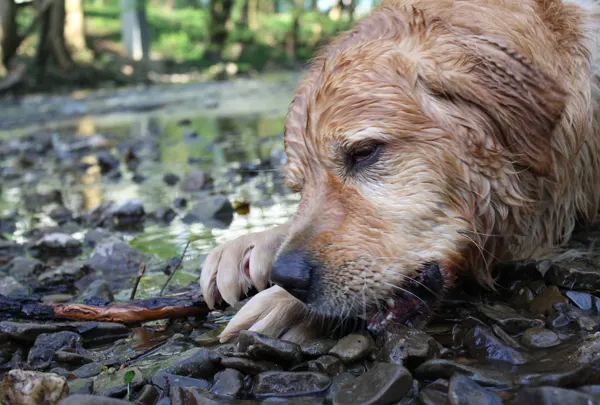
Photo: Johannnes89 via Wikimedia Commons, CC BY-SA 4.0
🐾 Getting ready for a puppy? Grab the free Golden Retriever Puppy Checklist (PDF) — no email required.
Teething is when your golden puppy swaps baby teeth for adult ones, and it explains a lot: the chewed shoes, the nipping, the drool on the sofa. Understanding the timeline helps you know what is normal and how to help your puppy through it.
Timeline
| Age | What is happening |
|---|---|
| Birth to 2 weeks | No teeth yet |
| 2 to 8 weeks | 28 baby (deciduous) teeth come in |
| 8 to 12 weeks | Needle-sharp baby teeth, lots of mouthing |
| 3 to 4 months | Baby teeth start to loosen and fall out, incisors first |
| 4 to 6 months | Canines and premolars change, chewing peaks, gums can be sore |
| 6 to 7 months | Most or all of the 42 adult teeth are in |
The AKC’s golden retriever timeline notes that mouthiness is “exacerbated by teething” in the first months and that teething usually finishes around six months. Individual puppies vary by a few weeks either way.
Signs your puppy is teething
- Chewing everything in sight
- Red, swollen or slightly bleeding gums
- Drooling more than usual
- Small spots of blood on toys
- Picky eating or chewing hard food more slowly
- Whining or restlessness
- Mild bad breath
Missing a tooth now and then is normal. You may find small teeth on the floor, or never see them, as puppies swallow them.
How to help
- Offer lots of safe chews. Rubber toys, stuffed frozen rubber toys and soft rope toys can be great. See our guide to the best teething toys for golden retriever puppies.
- Rotate toys. Hide some and bring them back later so they feel new.
- Freeze it. A frozen stuffed toy or a wet, frozen washcloth soothes gums. Supervise.
- Redirect biting. When teeth touch you, offer a toy and praise. See puppy biting.
- Puppy-proof. Pick up shoes and cords, spray or block furniture legs and use gates to limit access.
- Keep up gentle handling. Touch their lips and gums daily so they are used to mouth checks and brushing.
Chews to be careful with
Hard chews are a leading cause of broken teeth in dogs. A common test used by veterinary dentists is that if you would not want to be hit on the knee with it, do not give it to your dog. That rules out real bones, antlers and hard nylon. Rawhide can be a choking and blockage risk for some dogs. The Veterinary Oral Health Council lists products that have met its standards for plaque and tartar control, which is a helpful starting point for dental chews once your puppy is older. Ask your vet before introducing new chews to a puppy.
Start dental care early
Puppies who get used to having their teeth touched make future dental care easier. Start with a finger or a soft cloth, then a puppy toothbrush and dog toothpaste (never human toothpaste). The AAHA dental care guidelines emphasize regular home care and professional dental checks. Read our guide to dental care products for golden retrievers.
Retained baby teeth
If you see two teeth in the same spot, usually a baby canine next to a new adult canine, call your vet. Retained teeth can crowd the adult teeth and trap food, and they may need to be removed. Your vet can check at the six-month visit.
When to call the vet
- Bleeding that does not stop, or a broken tooth
- Swollen face or pus around a tooth
- Refusing food for more than a day
- Persistent bad breath, or any sign of pain when chewing
- A baby tooth that has not fallen out by around seven months
Teething ends. In the meantime, keep your patience, a stash of chew toys and a good sense of humor.
Frequently asked questions
When do golden retriever puppies start teething?
Baby teeth usually begin to fall out at around three to four months of age, as adult teeth start to come in. Puppies are born without teeth, and their 28 baby teeth come through at roughly two to eight weeks.
When does teething stop?
Most puppies have all 42 adult teeth by about six to seven months of age. The most uncomfortable phase is often between four and six months.
Is it normal to find baby teeth?
Sometimes. Puppies often swallow them, and that is not usually a concern. A tooth that is still in place when the adult tooth has erupted next to it (a retained baby tooth) should be checked by your vet.
Can I give my teething puppy ice cubes or frozen toys?
Many owners use frozen, stuffed rubber toys or wet washcloths to soothe sore gums. Avoid anything hard enough to chip a tooth, and supervise. Ask your vet if you are unsure.
What should I avoid giving a teething puppy?
Avoid very hard chews such as antlers, real bones and hard nylon that does not give a little, since they can fracture teeth. Avoid anything small enough to swallow and rawhide unless your vet approves.
A quick note: this guide is general information from published sources, written by dog lovers, not a veterinarian. Your own vet knows your dog's history, so check with them before changing food, exercise or treatment.
Sources
Keep reading
Golden Retriever Puppy Biting: Why It Happens and How to Stop It
Why golden retriever puppies bite and mouth, when it usually fades, and a calm, step-by-step plan to teach bite inhibition without yelling or punishment.

Best Teething Toys for Golden Retriever Puppies: Safe Chews That Actually Help
How to pick safe teething toys for a golden retriever puppy: rubber, frozen, rope and soft chews compared, what to avoid and how to protect your furniture during teething.


Dental Care for Golden Retrievers: Toothbrushes, Toothpaste and Chews That Meet Vet Standards
How to care for a golden retriever's teeth: brushing step by step, which dental chews and products to look for (VOHC seal), what to avoid and signs of dental disease.