Home › Training, Behavior & Exercise
Golden Retriever Recall Training: How to Teach Your Golden to Come When Called
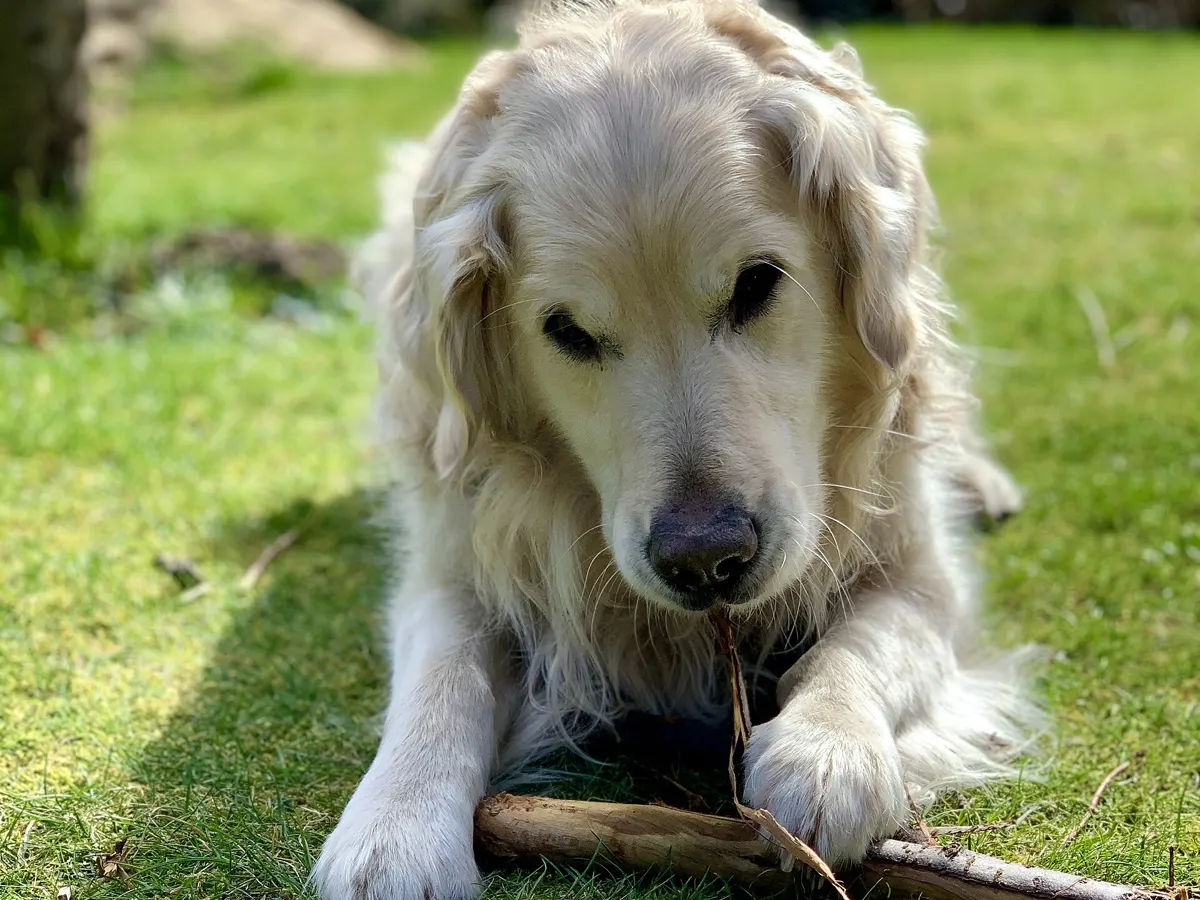
Photo: Johannnes89 via Wikimedia Commons, CC BY-SA 4.0
🐾 Getting ready for a puppy? Grab the free Golden Retriever Puppy Checklist (PDF) — no email required.
Golden retrievers are people-loving dogs, so it surprises a lot of owners when their golden happily ignores “Come!” the moment a squirrel, a duck pond or a friendly stranger appears. That isn’t stubbornness. As the San Francisco SPCA puts it, dogs don’t automatically come when called, no matter how much they love you. The only way to get a reliable recall is to train it.
It’s worth the effort. The AKC calls a reliable recall potentially lifesaving, and the RSPCA lists the situations where it matters most: avoiding traffic, calling your dog away from wildlife or another dog acting aggressively, and making sure your dog doesn’t run off and get lost. This guide walks through a step-by-step plan drawn from the AKC, VCA Animal Hospitals’ veterinary behaviorists, the San Francisco SPCA, the RSPCA and Dogs Trust, plus the mistakes that quietly undo good training.
General education only. If your golden suddenly stops responding when called, seems not to hear you, or is slow to come because they’re stiff or sore, talk to your veterinarian before assuming it’s a training problem.
Why goldens ignore “come”
The AKC describes the golden as a Scottish gundog, and the breed is still a serious worker in hunting and field work. That heritage is part of what makes goldens such fun companions, and part of why recall is hard. Birds, water, tennis balls and interesting smells are genuinely exciting to a retriever. Dogs Trust notes that once a dog is off leash, chasing a squirrel or playing with another dog can simply seem more exciting than coming back to you, and some dogs aren’t even sure you want them to come back.
Most recall problems come down to a few things:
- Coming back doesn’t pay well enough. The AKC says the key is being the most exciting thing in your dog’s environment.
- “Come” has been ruined. If “come” usually means a bath, nail trim, being scolded or the end of playtime, your golden learns to avoid it.
- The cue was practiced too hard, too soon. A dog who has been called again and again while ignoring you has learned that the word doesn’t mean much.
- Normal development. VCA explains that young puppies, especially between 7 and 14 weeks, naturally follow their people, which creates the illusion of a perfect recall. From around 14 to 16 weeks, many puppies start exploring more and seem to forget it.
Before you start: what you need
- Rewards your golden loves. Small pieces of a favorite food, or a special toy that only comes out for training. The RSPCA suggests keeping that toy put away so it stays exciting.
- A recall cue. VCA recommends a unique word your dog won’t hear in other contexts, such as “come” or “here.” You can add a whistle later. Dogs Trust also suggests a visual signal, like opening your arms wide, in case your dog can’t hear you.
- One cue for the whole household. Dogs Trust says to make sure everyone uses the same word and movement.
- A long line and a harness for outdoor practice. VCA and Dogs Trust both suggest attaching the long line to a harness. If you’re choosing gear, see our collar vs. harness guide.
- ID. VCA’s off-leash guidance stresses a permanent microchip and a collar or harness tag with your phone number, because even well-trained dogs can get separated from their people.
The San Francisco SPCA suggests a second, everyday phrase such as “let’s go” for routine moments, and saving your main recall word for when you really need it.
Step-by-step: teaching a reliable recall
Keep sessions short and fun, and only move to the next step when your golden is succeeding at the current one. VCA suggests practicing at least 10 times every day, and the San Francisco SPCA suggests about ten minutes two or three times a day.
1. Make your dog’s name mean “look at me”
The AKC starts with the name game. In a quiet room, wait until your golden is looking at something else, then say their name in a happy voice. The moment they turn to look at you, mark it with a clicker or a word like “yes,” then praise and reward. Once they’re turning to you every time, add small distractions.
VCA describes a fun version called ping pong: sit on the floor with treats or part of a meal, toss a treat a few feet to one side, and as soon as your puppy picks it up, say their name and toss the next treat to your other side so they run past you. Over many repetitions you can toss further. The goal is a dog who whips around the instant they hear their name.
2. Start with “follow me” before you add the word
VCA suggests walking around the house or yard with a treat or toy in your pocket, quietly moving a few steps away when your puppy looks away, and rewarding them for catching up, with no cue yet. The RSPCA’s version is similar: drop a treat, walk away a few steps, and when your dog finishes the treat and heads toward you, mark it and reward when they arrive.
This teaches your golden that being close to you is where good things happen.
3. Add your recall cue
Once your golden is reliably heading your way, VCA says to say “come” just as they start moving toward you, in a cheerful, not stern, voice and only once. Then practice the full sequence the AKC describes:
- With your dog a few feet away, say their name, then “come,” and encourage them in. Clap, pat your legs or make happy noises.
- Mark the moment they approach, then praise and give a favorite reward.
- Add distance gradually, for example by letting your dog wander to the end of the leash before calling.
- Practice off leash in a quiet room, then in different rooms of the house. Running backward as you call often helps, since most dogs love a chase.
Be generous. The AKC says coming when called should earn plenty of praise, pets and play as well as treats or toys, and that this isn’t the time to be stingy.
4. Teach the collar grab (“gotcha”)
A recall isn’t finished until you can gently take hold of your dog. The AKC points out that most dogs dart away when you reach for their collar, which is the last thing you want in an emergency. VCA’s collar-touch exercise:
- Call your puppy and give a treat.
- Keep feeding several treats in a row, and while your puppy is eating, briefly and gently touch their collar.
- Release the collar while there are still a treat or two left.
- Gradually hold the collar a little longer, until you can take hold first and then feed while you hold gently.
VCA suggests practicing the collar touch at least twice a day. The AKC also recommends asking for a sit when your dog arrives so they don’t bounce away again as soon as the treat is gone, then adding a “gotcha” every so often. If your golden seems worried about being handled or held, VCA advises consulting a positive-reinforcement trainer.
5. Add games that build speed
- Round robin. The AKC and San Francisco SPCA both describe two or more people taking turns calling your dog and rewarding them.
- Find me. The AKC suggests hiding in another room before calling.
- Restrained recall. In VCA’s version, a helper gently holds your puppy’s harness or leash while you show a reward and walk away, then you call cheerfully as the helper lets go. Start at a short distance and keep each session to a few repetitions.
- Calling away from “magnets.” The San Francisco SPCA suggests calling your dog away from something they want but can’t reach yet, such as the front door before a walk or the dog park gate, then giving them access to that thing as the reward.
6. Take it outside on a long line
The AKC warns that even a dog who comes every time indoors will find outdoors “a whole new ballgame.” Start on a regular leash, then move to a longer training line and gradually give your golden more room. The RSPCA suggests letting your dog sniff and explore on the long line and calling them back at random times, rewarding, and then letting them go again.
The long line is a safety belt, not a fishing line. VCA notes that pulling a dog in with the leash usually makes them lean backward, which is the opposite of what you want, and Dogs Trust says never to pull your dog toward you. If your golden doesn’t respond, gather up the line as you walk closer, or go and collect them, then make the next attempt easier.
7. Add distractions slowly
Change one thing at a time: a new place, more distance, or a mild distraction such as someone tossing a ball. The San Francisco SPCA adds that dogs don’t generalize well, so practicing in many places matters. When your golden comes back against the odds in a tough situation, the RSPCA suggests a jackpot of extra-special rewards so they learn it was the right choice.
The emergency recall word
VCA describes an emergency recall: a separate, rarely used word or phrase for moments when you urgently need your dog back. Their example is “surprise!”
- Say the word in a loud, cheerful, happy voice.
- Immediately scatter a big handful of your dog’s very favorite treats around your feet.
- While your dog is eating, practice taking hold of their collar or clipping on the leash.
Start close to your dog in a quiet place, then gradually practice at greater distances and with more going on. VCA suggests practicing it a few times a week when there’s no emergency so it stays powerful, and notes that needing it more than once every few months is a sign your everyday recall needs a tune-up.
Recall mistakes that quietly ruin “come”
- Calling for things your dog dislikes. The San Francisco SPCA’s first rule of recall is never to call your dog for anything they won’t like. For baths, nail trims or medicine, go and get your dog instead.
- Calling when you know they won’t come. The SPCA and RSPCA both say to avoid it during training. Wait until you have your dog’s attention, or go and get them.
- Repeating the cue. The SPCA says to say it once and then make yourself interesting with clapping, a happy voice or crouching down. Dogs Trust suggests giving your dog at least five seconds to respond before calling again.
- Scolding a dog who finally comes back. VCA says never to call your puppy and then scold them, for any reason. The RSPCA warns that punishment makes it less likely your dog will come next time. Dogs Trust says to praise your dog for coming back no matter how long it takes.
- Ending all the fun every time. VCA says to avoid calling your puppy from play and immediately putting them inside and leaving. The RSPCA suggests sometimes calling your dog, rewarding them and letting them go play again before you clip on the leash to go home.
- Chase games where you chase the dog. The RSPCA warns that a dog who thinks being chased is a game may run straight into danger in an emergency. Run away from your dog and let them chase you instead.
- Stopping the rewards. Asked when you can stop giving treats, VCA’s answer is “never.” Dogs Trust says you won’t need to treat every recall once your dog improves, but should keep rewarding often enough to keep them motivated.
Shock collars and other shortcuts
Recall is the reason many people consider an electronic collar. The evidence doesn’t support it. In a 2020 study in Frontiers in Veterinary Science, 63 dogs with off-leash problems such as poor recall were trained by one of three groups of trainers. Dogs trained by reward-focused trainers responded better to a single “come” command than dogs in the e-collar group, and the authors concluded that an e-collar is unnecessary for effective recall training. The RSPCA also notes that research shows dogs learn recall more effectively with positive reinforcement, and the AVSAB’s position statement on humane dog training recommends reward-based methods over aversive ones.
Is your golden ready to go off leash?
Off-leash time is wonderful for a retriever, but only when it’s safe. VCA’s off-leash guidance says a dog needs a solid recall around tempting distractions, a habit of checking in with you, an emergency “stop” cue, and reliable “leave it” and “drop it” cues so they don’t eat something unsafe they find. Test each skill in a securely fenced area first.
Some practical guardrails:
- The RSPCA suggests your golden’s recall should be at least 80% reliable on a long leash in highly distracting situations before you try off-leash training in public, starting with low-distraction areas.
- Only go off leash where it’s legal and safe. VCA says it’s never acceptable near cars, roads, playgrounds or construction areas, or around horses, sheep or other livestock.
- VCA suggests an honest test: if a squirrel ran across your dog’s path, could you stop them? If not, keep the leash on.
- Make sure your golden has had enough exercise. The RSPCA notes that under-exercised dogs may take their chance when they get off leash and be harder to call back. See how much exercise a golden needs.
Even then, no recall is 100% reliable. VCA and the RSPCA both point out that a sudden noise, a frightening dog or wildlife can make even a well-trained dog bolt.
Puppies and teenage goldens
Recall training belongs in the first week home. Our puppy training guide covers the other foundation skills, and our milestones by age guide explains what to expect as your puppy grows. Bringing home a new puppy? The free puppy checklist helps you plan training from day one, and the Puppy Care Log has an “Other observation” entry where you can note how recall practice is going, which is handy if you work with a trainer.
Expect a wobble during adolescence. VCA notes that puppies who seemed to have a perfect recall often start exploring more from around 14 to 16 weeks, and that most dogs aren’t fully mature until 2 to 3 years old. Keep a long line handy, go back a step when you need to, and keep rewarding. As the RSPCA puts it, recall is a lifelong skill, not a one-time exercise.
If your golden tends to drag you toward every distraction on walks, our loose-leash walking guide pairs well with recall practice, and our swimming guide covers water safety for dogs who head straight for the nearest pond.
When to get help
Talk to your veterinarian if your golden:
- Suddenly stops responding when called, startles easily or seems not to hear you
- Comes slowly or reluctantly because they seem stiff, sore or tired
- Seems fearful of being handled or having their collar touched
- Runs off in panic at noises or other triggers
Your vet can check for medical problems and refer you to a qualified professional, such as a board-certified veterinary behaviorist or a certified trainer who uses reward-based methods. If training simply isn’t progressing, Dogs Trust suggests contacting a qualified trainer or behaviorist.
The short version
- Teach your golden’s name first, then add one cheerful recall cue.
- Start indoors, keep sessions short and reward generously every time.
- Practice the collar grab so coming to you ends with you safely holding on.
- Go outside on a long line, add distance and distractions one at a time, and never reel your dog in.
- Never call for something unpleasant, never repeat the cue over and over, and never punish a dog who comes back.
- Keep an emergency recall word in reserve, and only go off leash where it’s legal and safe.
Frequently asked questions
How do I teach my golden retriever to come when called?
Start somewhere quiet with tasty treats. Say your dog's name, give your recall cue once in a cheerful voice, move away a few steps and reward generously when your golden reaches you. The AKC, VCA Animal Hospitals and the San Francisco SPCA all recommend building up distance and distractions slowly, practicing on a long line outdoors, and only making things harder once your dog is succeeding.
At what age should I start recall training a golden retriever puppy?
Right away. VCA's veterinary behaviorists say recall training should begin the moment you bring your puppy home, inside the house or in a safely fenced area or on a leash outdoors. They also warn that many puppies who follow you everywhere at first start exploring more and seem to forget their recall from around 14 to 16 weeks, so keep practicing through adolescence.
Why does my golden come when called at home but not at the park?
Dogs don't generalize well, so a recall that works in the kitchen hasn't been taught yet at the park, where smells, people, dogs and wildlife compete for attention. Go back to easier steps in the new place, use a long line, call only when you're fairly sure your golden will come, and use better rewards for harder situations.
Should I punish my dog for not coming back?
No. VCA, the RSPCA, the San Francisco SPCA and Dogs Trust all advise against scolding or punishing a dog for being slow to come, because it makes them less likely to come next time. Calmly go and get your dog instead, and always reward a dog who comes to you, even if they took their time.
Do I need an e-collar (shock collar) to train a recall?
No. In a 2020 study in Frontiers in Veterinary Science, dogs with recall problems trained by reward-focused trainers responded better to a single "come" command than dogs trained with electronic collars, and the authors concluded e-collars were unnecessary for effective recall training. The AVSAB also recommends reward-based training over aversive methods.
When can my golden retriever go off leash?
Only when they come reliably on a long line around strong distractions, and only in safe, legal, enclosed or low-risk areas. The RSPCA suggests waiting until recall is at least 80% reliable on a long leash in highly distracting situations. Even then, no recall is perfect, so VCA and the RSPCA say never to let your dog off leash near roads or other dangers.
A quick note: this guide is general information from published sources, written by dog lovers, not a veterinarian. Your own vet knows your dog's history, so check with them before changing food, exercise or treatment.
Sources
- AKC: How to Train Your Dog to Come When Called, Step-by-Step Recall
- VCA Animal Hospitals: Training Your Puppy to Come or Recall on Cue
- VCA Animal Hospitals: Off-Leash Training for Dogs
- San Francisco SPCA: Recall Command
- RSPCA Knowledgebase: How can I teach my dog recall (to come when called)?
- Dogs Trust: How to train your dog to come back when called
- China, Mills and Cooper (2020): Efficacy of Dog Training With and Without Remote Electronic Collars vs. a Focus on Positive Reinforcement, Frontiers in Veterinary Science
- AKC: Golden Retriever breed information
- AVSAB Position Statement on Humane Dog Training
Keep reading
Golden Retriever Puppy Training: A Step-by-Step Guide for the First Year
How to train a golden retriever puppy: socialization, biting, crate and potty training, and what to expect from the angel stage through the teenage months.
How to Stop a Golden Retriever Pulling on the Leash
Why goldens pull and how to teach loose-leash walking with positive reinforcement. Step-by-step training, gear that helps, common mistakes and a practice plan.
Golden Retriever Exercise Needs: How Much Is Enough at Every Age
How much exercise does a golden retriever need? Age-by-age guidance for puppies, adults and seniors, plus swimming, mental games and hot-weather safety.

Collar or Harness for a Golden Retriever? When to Use Each (and How to Size Them)
Is a collar or harness better for a golden retriever? When to use each, which collar types to consider or avoid, how to measure a golden's neck and chest and what the fit should feel like.


Golden Retriever Puppy Timeline: What to Expect From 8 Weeks to 2 Years
A flexible golden retriever puppy timeline covering homecoming, early learning and adolescence, with humane training, safe socialization and individualized health planning.