Golden Retriever Vomiting: Causes, What the Color Means and When to Call the Vet
Please see your vet. This guide is general education, not a diagnosis or treatment plan. If your golden seems unwell, call your veterinarian. If it looks like an emergency, go to an emergency vet right away.
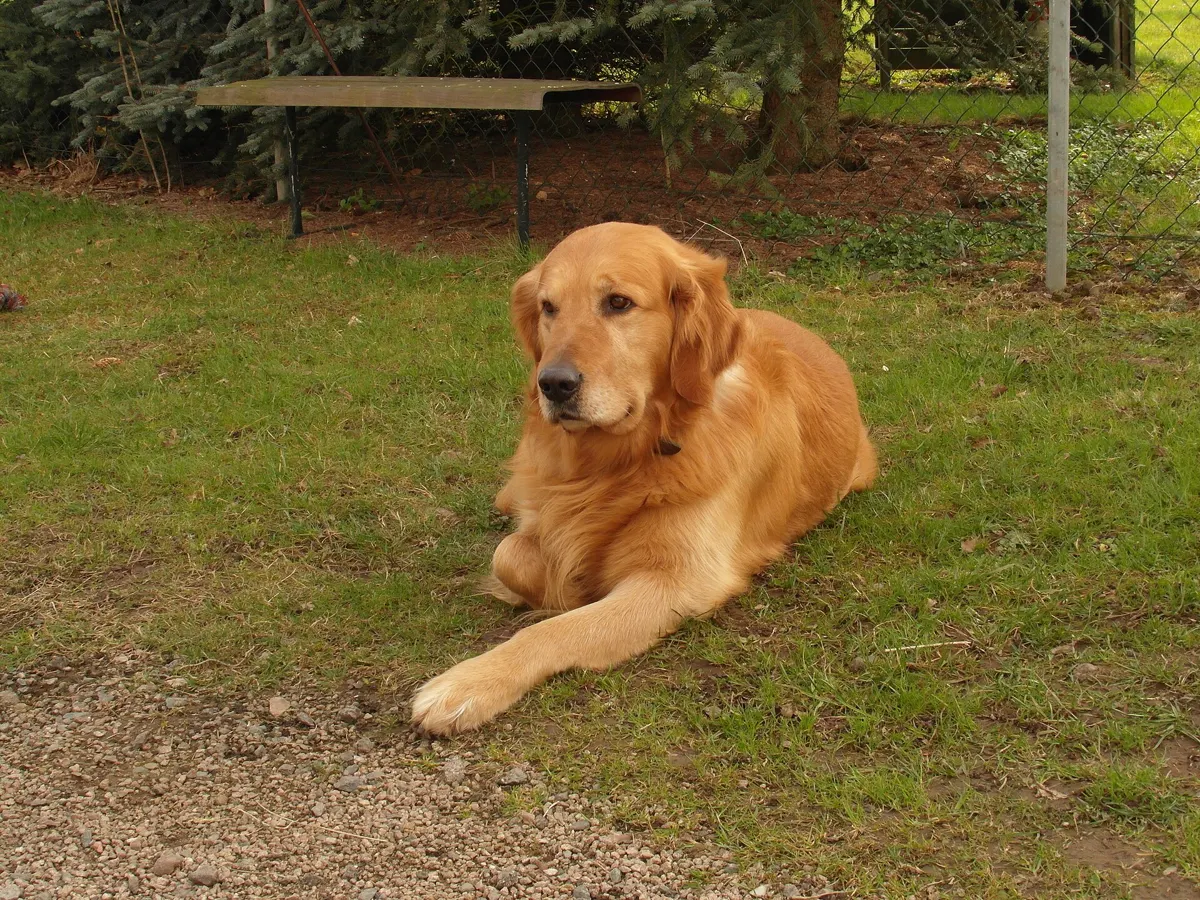
Photo: Barras via Wikimedia Commons, CC BY 3.0
🐾 Getting ready for a puppy? Grab the free Golden Retriever Puppy Checklist (PDF) — no email required.
Few things get an owner off the couch faster than the sound of a golden retriever about to throw up. Goldens are enthusiastic eaters and natural retrievers who love to carry, chew and sometimes swallow things they shouldn’t, so an upset stomach is a common worry. Most single episodes are mild and pass quickly, but vomiting can also be the first sign of something serious, such as a swallowed object, a toxin, bloat or parvovirus in a puppy.
This guide explains how to tell real vomiting from regurgitation, what the vomit itself can hint at, the warning signs that mean you should call your vet now, and what to tell your vet. It’s general information, not a diagnosis. If you’re worried about your dog, call your veterinarian.
Call your vet right away if you see any of these
VCA Animal Hospitals, the AKC, AAHA and Cornell’s College of Veterinary Medicine flag the same red flags. Contact your veterinarian or an emergency clinic promptly if your golden is vomiting and you notice any of the following:
- Repeated vomiting, or vomiting so often that your dog can’t keep water down.
- Blood in the vomit, or dark material that looks like coffee grounds, which Cornell notes can be digested blood. Black, tarry stools are another sign of possible bleeding in the digestive tract.
- Lethargy, weakness or collapse, or your dog just isn’t acting like themselves.
- Diarrhea, loss of appetite, fever or belly pain along with the vomiting.
- Signs of dehydration, such as dry or sticky gums, thick saliva or low energy.
- Retching without bringing anything up, especially with a swollen or tight belly, restlessness or drooling. In a large, deep-chested dog like a golden, this can be a sign of bloat (GDV), which is a life-threatening emergency.
- A possible toxin, medication or swallowed object, such as a sock, toy, corn cob or pieces of a chew. Seeing foreign material in the vomit is a red flag for a possible blockage, according to the AKC.
- A puppy, especially one who hasn’t finished their vaccines, or a senior dog or a dog with an existing health condition. The AKC lists a history of other illness as a reason to call promptly.
AAHA’s specialists also point out that how often a dog vomits doesn’t always match how sick they are. A dog with a serious intestinal blockage may only vomit a few times, while a dog who raided the trash may vomit repeatedly and recover quickly. That’s why your vet looks at the whole dog, not just the number of episodes.
If your golden may have eaten something toxic
Don’t wait for symptoms, and don’t try to make your dog throw up on your own. The ASPCA Animal Poison Control Center warns that home attempts to induce vomiting can be dangerous: salt can cause dangerously high blood sodium, oils can cause pancreatitis or be inhaled into the lungs, and gagging a dog can injure the throat. Call your vet, an emergency clinic or the ASPCA Animal Poison Control Center at (888) 426-4435 (a consultation fee may apply), and follow their instructions. Our human foods guide lists common toxic foods to keep out of reach.
How long is too long?
There’s no single safe waiting period that fits every dog, so treat these timelines as reasons to call, not reasons to wait:
- The AKC says to contact your vet right away if vomiting is frequent or severe, comes with other signs of illness, or has continued for more than 4 to 6 hours.
- Cornell advises calling your vet for vomiting that lasts more than 24 hours, and the Merck Veterinary Manual’s general “when to see a veterinarian” table lists vomiting for more than 24 hours as a reason to be seen within a day.
- VCA notes that many sudden cases settle within 24 hours, but says to see your vet if your dog continues to vomit for more than one to two days, even if they otherwise seem well.
- Any of the red flags above means call now, however long it has been going on.
Cornell also adds that vomiting shouldn’t become routine. Infrequent vomiting, such as after eating grass, is likely a one-off, but vomiting even once a week may point to an underlying disease. AAHA’s experts agree that recurring episodes over weeks or months should never be dismissed as “just a sensitive stomach.”
Vomiting or regurgitation?
Before anything else, your vet will want to know whether your golden was truly vomiting. The two look similar on the floor, but they come from different places and lead to different tests and treatment, according to AAHA.
| Vomiting | Regurgitation | |
|---|---|---|
| Warning signs | Often nausea first: restlessness, lip licking, drooling, repeated swallowing | Little or no warning |
| Effort | Active heaving with strong belly contractions | Passive; food or fluid just comes up |
| Timing | Can happen any time | Often right after eating or drinking |
| Where it comes from | Stomach or upper small intestine | Usually the esophagus (food pipe) |
The Merck Veterinary Manual describes regurgitation as effortless, with few warning signs, and links it to problems with the esophagus, including trouble swallowing. Sometimes a hard cough can also bring up stomach contents, which is something else again. If you can safely take a short video of an episode, AAHA’s specialists say it can speed up the diagnosis. Repeated regurgitation, or regurgitation with coughing or breathing changes, is a reason to see your vet.
What the vomit itself can tell you
It isn’t pleasant, but a quick look (and a photo for your vet) can help. The AKC and AAHA describe a few common patterns:
- Yellow or green fluid or foam. This usually contains bile. AAHA notes that yellow bile confirms your dog is truly vomiting rather than regurgitating. Bile vomiting is often linked to an empty stomach, but it can also happen with several different digestive problems.
- White foam or froth. The AKC lists white foam alongside yellow and green foam as something owners commonly see. On its own it doesn’t tell you the cause, so judge it by how often it happens and how your dog is acting.
- Undigested food. The AKC says this can mean your dog ate too fast, but it can also mean food isn’t leaving the stomach normally. Food that comes up with no effort right after a meal may be regurgitation.
- Grass or plant material. Many dogs eat grass, and the AKC notes that most dogs who eat grass don’t vomit afterward. Researchers don’t know exactly why dogs do it.
- Worms. Intestinal parasites such as roundworms can sometimes show up in vomit. Your vet can advise on testing and deworming.
- Foreign material, such as fabric, plastic or pieces of a squeaker or chew. This is a red flag for a possible blockage. Call your vet.
- Red blood or “coffee grounds.” Blood is a warning sign, and dark, grainy material can be digested blood. Call your vet promptly.
Color alone can’t diagnose your dog. It’s one clue, alongside how often it’s happening and how your golden is behaving.
Common causes of vomiting in golden retrievers
VCA, the AKC and AAHA describe a long list of possible causes. Some are minor, others are serious:
- Dietary indiscretion. Eating garbage, table scraps, spoiled food, plants or something found on a walk. Goldens’ love of food and carrying things around makes this a familiar story.
- Eating too fast. Gulping a meal can bring it straight back up. Our slow feeder bowl guide covers one way to slow down an enthusiastic eater; ask your vet if fast eating seems to be a pattern.
- A sudden food change, or an intolerance or allergy to an ingredient.
- Bilious vomiting. The AKC describes bilious vomiting syndrome as intermittent, often early-morning vomiting of yellow fluid in a dog who otherwise has a good appetite, normal energy and no weight loss or diarrhea. Veterinarians diagnose it only after ruling out other problems.
- Intestinal parasites.
- Swallowed objects (foreign bodies). Socks, toy stuffing, chew pieces and corn cobs can get stuck in the stomach or intestines. VCA lists intestinal obstruction among the serious causes. Choosing durable, appropriately sized toys helps; see our toy guide.
- Toxins and medications, including toxic foods, household chemicals and human or pet medicines.
- Infections, including viral infections such as parvovirus in puppies.
- Pancreatitis, which can follow a fatty meal or table scraps.
- Problems outside the gut. AAHA notes that kidney disease, diabetes and other metabolic conditions can cause nausea and vomiting, which is why your vet may recommend blood tests as well as X-rays.
- Liver disease, inflammatory bowel disease or cancer, among the more serious causes VCA lists.
Vomiting in golden retriever puppies
Puppies dehydrate faster and have fewer reserves, so call your vet about a vomiting puppy rather than waiting it out, and right away if your puppy also has diarrhea, is lethargic, won’t eat or hasn’t finished their vaccines. Cornell’s Baker Institute notes that canine parvovirus commonly causes acute gastrointestinal illness in puppies, most often between six and 20 weeks old, with signs that can include vomiting and diarrhea, and stresses that vaccinating your dog is of the utmost importance. See our puppy vaccine schedule for how the core vaccines are timed, and our new puppy checklist and free printable puppy checklist for planning the first vet visit and puppy-proofing your home.
What to tell your vet
AAHA’s specialists say the history you give is often as valuable as the physical exam. Before you call, try to note:
- When the vomiting started, how many times it has happened and whether it’s getting more frequent or severe.
- What the vomit looked like: food, foam, bile, blood, grass or foreign material. A photo helps.
- Whether it looked like active vomiting or passive regurgitation, and when it happened relative to meals.
- Whether your golden is still bright, eating and drinking, and whether there’s diarrhea, coughing, belly pain, extra thirst or changes in urination.
- Anything your dog might have eaten: trash, toys, socks, plants, toxic foods or medications, including the package if you have it.
- Recent diet changes, new treats, travel, boarding or contact with other dogs.
- Your dog’s age, weight, medical history and current medications, and anything you’ve already tried.
Writing things down as they happen makes it easier to answer accurately. The free Puppy Care Log lets you add a dated “Other observation” for each episode and a “Meal observation” for food changes. It’s a notebook that stays on your device, not a diagnostic tool, and you can share the notes with your vet.
What your vet may do
Depending on your dog’s history and exam, VCA explains that your vet may start with a minimal workup for a dog who seems well, or run more tests if there are other signs of illness, such as:
- Blood and urine tests
- X-rays or ultrasound of the belly
- Endoscopy and biopsies of the stomach and intestines
- Surgery, especially if a foreign body or blockage is suspected
Treatment depends on the cause. For a simple upset, vets may recommend a short break from food, then a bland or prescription diet in small portions, with water freely available. Your vet may also prescribe anti-nausea medicine, antacids or medicine to coat the stomach. More serious cases, such as pancreatitis, a blockage or kidney or liver disease, may need hospital care with intravenous fluids. VCA notes that you should expect improvement within a couple of days; if your dog isn’t improving within 48 hours of treatment, keep in touch with your clinic.
Caring for a mildly upset golden at home, with your vet’s OK
If your golden vomited once or twice but is otherwise bright and acting normally, veterinary sources describe some common first steps for mild cases. The details vary from source to source, so call your vet first and follow their advice for your dog:
- Keep fresh water available and watch closely. Dehydration is the main worry with repeated vomiting.
- Ask your vet whether to pause food, and for how long. Don’t fast a puppy, a senior or a dog with a health condition such as diabetes unless your vet tells you to.
- Ask about a bland diet. The AKC and Cornell mention plain boiled chicken (and Cornell mentions white rice) for mild cases, and VCA says vets may recommend a bland or prescription diet in small, frequent portions. Your vet can tell you what to offer, how much and for how long, then how to move gradually back to normal food.
- No other food or treats while your dog’s stomach settles, according to VCA.
- Don’t give human medicine for nausea or an upset stomach unless your vet specifically tells you to, and use only the drug and dose they give you.
- Call again if the vomiting returns, any red flag appears, or your golden isn’t back to normal soon.
This approach is only for mild cases. The AKC is clear: if there’s ongoing vomiting or anything else abnormal, don’t wait it out. Go to your vet.
How to lower the odds of another episode
You can’t prevent every upset stomach, but these habits help:
- Keep trash, food and medications secured, and pick up socks, kids’ toys and other items goldens like to carry and chew.
- Supervise chewing, and replace toys and chews that are breaking into swallowable pieces.
- Go easy on table scraps and rich treats. See our safe and toxic human foods list.
- Change foods gradually, and talk to your vet before big diet changes. Our feeding guide covers measured, individual feeding with your vet’s input.
- Slow down fast eaters if your vet thinks speed is part of the problem.
- Keep up with vaccines and parasite control. Our flea, tick and heartworm guide covers building a prevention plan with your vet.
- Know the signs of bloat and where your nearest emergency clinic is before you need it.
If vomiting comes with loose stools, our golden retriever diarrhea guide covers those warning signs too.
The short version
- Vomiting is a sign, not a disease. A single episode in a bright, healthy adult may only need watching, but some causes are serious.
- Call your vet right away for repeated vomiting, blood or “coffee grounds,” lethargy, diarrhea, belly pain, dehydration, unproductive retching, possible toxins or swallowed objects, or vomiting in a puppy, senior or dog with health problems.
- Don’t try to make your dog vomit at home. Call your vet or the ASPCA Animal Poison Control Center first.
- Tell vomiting (active heaving) from regurgitation (passive, little warning), and take a photo or video for your vet.
- Ask your vet before fasting or changing food, keep water available and never give human medicine without your vet’s OK.
- Recurring vomiting, even once a week, deserves a vet visit rather than being written off as a sensitive stomach.
Frequently asked questions
When should I worry about my golden retriever throwing up?
Call your veterinarian right away if your golden vomits repeatedly, can't keep water down, has blood or "coffee grounds" material in the vomit, or also has diarrhea, lethargy, loss of appetite, fever, belly pain or signs of dehydration. Call immediately, too, if your dog may have eaten a toxin, medication or an object such as a sock or toy, or keeps retching without bringing anything up. VCA Animal Hospitals advises seeing your vet if vomiting continues for more than one to two days even in a dog who otherwise seems well.
Why does my golden retriever throw up yellow foam in the morning?
Yellow or green vomit usually contains bile. The AKC describes bilious vomiting syndrome, in which an otherwise healthy dog brings up yellow fluid or froth, often early in the morning on an empty stomach. Because many other stomach and intestinal problems can also cause bile vomiting, ask your veterinarian to check your dog before you assume that's the reason, and go in promptly if there are any other signs of illness.
My golden threw up once but is acting normal. What should I do?
A single episode in an otherwise healthy dog who is bright, eating and drinking may simply need close monitoring, according to veterinary specialists quoted by AAHA. Keep fresh water available, watch for more vomiting or any other signs of illness, and call your vet for advice before fasting your dog or offering a bland diet. Puppies, seniors and dogs with health conditions should be checked sooner.
Is it vomiting or regurgitation?
Vomiting is active. Dogs often look nauseous first, with lip licking, drooling and swallowing, then heave with strong belly contractions. Regurgitation is passive and happens with little or no warning, often right after eating or drinking, and usually points to the esophagus rather than the stomach. Both deserve a call to your vet if they repeat, and a short video can help your vet tell them apart.
Should I make my golden retriever vomit if they ate something bad?
Not on your own. The ASPCA Animal Poison Control Center warns that trying to make a pet vomit at home can be dangerous, and that salt, oils, gagging and other home remedies can cause serious harm. Call your veterinarian or the ASPCA Animal Poison Control Center at (888) 426-4435 (a consultation fee may apply) right away, and follow their instructions.
A quick note: this guide is general information from published sources, written by dog lovers, not a veterinarian. Your own vet knows your dog's history, so check with them before changing food, exercise or treatment.
Sources
- VCA Animal Hospitals: Vomiting in Dogs
- AKC: Dog Vomiting, Causes, Diagnosis and Treatment
- AKC: Bilious Vomiting Syndrome in Dogs
- AAHA: Why Is My Dog Throwing Up? Vets Explain When It's Serious
- Cornell University College of Veterinary Medicine, Riney Canine Health Center: Vomiting
- Merck Veterinary Manual: When to See a Veterinarian
- Merck Veterinary Manual (Pet Owner Version): Disorders of the Esophagus in Dogs
- Cornell University College of Veterinary Medicine, Baker Institute: Canine Parvovirus
- ASPCA: Is It Ever Safe to Induce Vomiting?
- ASPCA: People Foods to Avoid Feeding Your Pets
Keep reading

Golden Retriever Diarrhea: Common Causes, Warning Signs and When to Call the Vet
Why golden retrievers get diarrhea, which warning signs mean you should call the vet right away, what vets usually do, and how to lower the odds of another upset stomach.

Bloat (GDV) in Golden Retrievers: Warning Signs, Emergency Steps and Prevention
Bloat (gastric dilatation-volvulus) is a life-threatening emergency in deep-chested dogs like golden retrievers. Learn the warning signs, what to do and what vets say about prevention.

What Human Foods Can Golden Retrievers Eat? Safe, Risky and Toxic Lists
Which human foods are safe for golden retrievers and which are dangerous: apples, bananas, carrots and peanut butter vs. grapes, chocolate, xylitol, onions and more, with emergency numbers.

Best Slow Feeder Bowls for Golden Retrievers: Do They Help and How to Choose One
Do slow feeder bowls help golden retrievers who gulp their food? Types compared, size and material tips, bloat context and when to ask your vet about fast eating.


Golden Retriever Puppy Vaccine Schedule: What to Expect (Core and Optional Shots)
A plain-English golden retriever puppy vaccine schedule based on AAHA guidelines: core vs. non-core vaccines, typical timing, and the questions to ask your vet.