Bloat (GDV) in Golden Retrievers: Warning Signs, Emergency Steps and Prevention
Please see your vet. This guide is general education, not a diagnosis or treatment plan. If your golden seems unwell, call your veterinarian. If it looks like an emergency, go to an emergency vet right away.
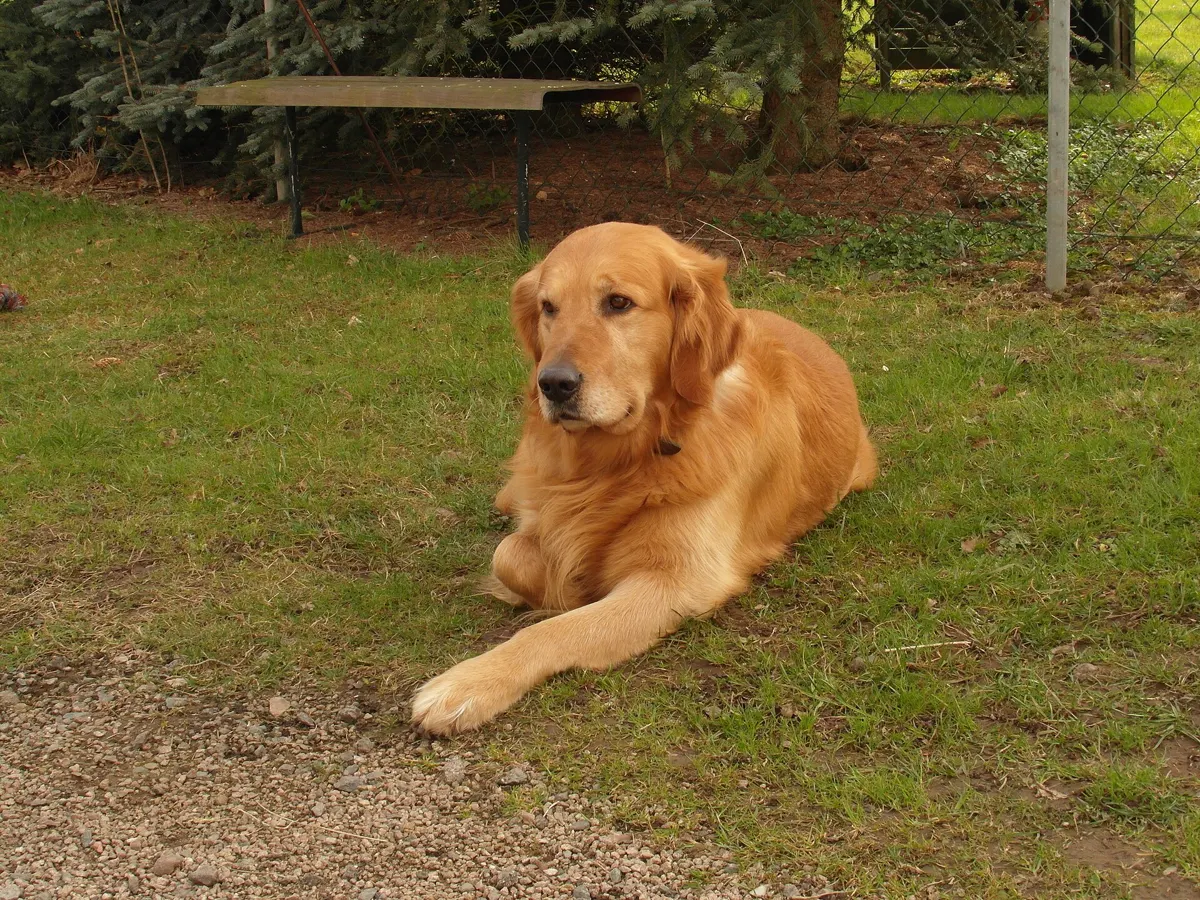
Photo: Barras via Wikimedia Commons, CC BY 3.0
🐾 Getting ready for a puppy? Grab the free Golden Retriever Puppy Checklist (PDF) — no email required.
If you own a golden, you should know the signs of bloat. It is one of the true emergencies in veterinary medicine, and minutes matter.
If you think your dog has bloat, go to an emergency vet now. Call on the way so they can prepare. Do not wait until morning.
What is bloat?
Gastric dilatation-volvulus (GDV), commonly called bloat, happens when the stomach fills with gas, food or fluid (dilatation) and may rotate on itself (volvulus). The twist traps the contents, blocks blood flow, and can cause shock, tissue death and collapse. The American College of Veterinary Surgeons and VCA Animal Hospitals describe it as a life-threatening emergency that requires immediate treatment.
Who’s at risk?
Large, deep-chested breeds are most at risk. Veterinary sources list risk factors that include:
- Large, deep-chested body shape (goldens are in this group)
- Older age
- Having a close relative with bloat
- Eating very fast
- Stress or anxious temperament in some reports
- Being thin or underweight in some studies
Not every dog with risk factors gets bloat, and it can occur in dogs with none. Evidence about feeding habits is mixed.
Warning signs
| Sign | Notes |
|---|---|
| Unproductive retching or trying to vomit | A classic sign: they retch but little or nothing comes up |
| Swollen, tight or painful belly | May look like a drum |
| Restlessness, pacing, can’t settle | May try to lie down and get up again |
| Drooling or excessive salivation | |
| Rapid or labored breathing | |
| Pale or gray gums | Sign of shock |
| Weakness, collapse | An emergency |
| Anxious look or whining | Pain |
What to do
- Go to the nearest emergency vet immediately. Don’t wait.
- Call ahead and tell them you suspect bloat in a large dog.
- Keep your dog calm. Don’t give food, water or medication.
- Don’t try to “pop” or relieve the stomach yourself.
- Know where the nearest 24-hour clinic is before you need it. Save the number in your phone.
Treatment usually involves stabilizing the dog, decompressing the stomach and emergency surgery to untwist and secure the stomach. Outcomes are better when treatment is quick.
Can you prevent it?
No method is guaranteed. Common veterinary discussions include:
- Preventive gastropexy. A surgery that tacks the stomach to the abdominal wall. Many vets recommend discussing it for high-risk breeds, and some do it with a spay or neuter. Talk to your vet. See neuter and spay timing.
- Feeding habits. Measured meals instead of one huge meal, and slowing fast eaters. See feeding guide and slow feeders.
- Exercise timing. Many vets suggest avoiding vigorous exercise right before and after meals.
- Calm mealtimes.
- Know your dog’s family history. Ask your breeder about bloat in relatives. See how to choose a breeder.
Don’t rely on any product to prevent bloat, and talk to your vet about what makes sense for your dog.
Bloat vs. an upset stomach
Not every retching episode is bloat. But because bloat is so dangerous and progresses fast, any combination of retching with nothing coming up, a swollen belly and restlessness should be treated as an emergency until a vet says otherwise.
Related
Frequently asked questions
What is bloat in dogs?
Bloat, or gastric dilatation-volvulus (GDV), is when the stomach fills with gas and may twist. It cuts off blood flow and can lead to shock and death within hours without emergency treatment.
What are the first signs of bloat?
Unproductive retching or attempts to vomit, a swollen or tight belly, restlessness or pacing, drooling, rapid breathing, pale gums and weakness or collapse. If you see them, go to an emergency vet immediately.
Can I treat bloat at home?
No. Bloat requires emergency veterinary care. Don't wait to see if it passes. Call the clinic while you're on the way.
Can bloat be prevented?
There's no guaranteed prevention. Veterinary sources discuss measures such as feeding smaller measured meals, avoiding vigorous exercise around mealtimes and, in some dogs, a preventive surgery called gastropexy. Ask your vet about your dog's risk.
What is a gastropexy?
A surgery that tacks the stomach to the body wall to prevent it from twisting. It doesn't stop gas from building up, but it lowers the chance of the life-threatening twist. Some owners have it done at the time of spay or neuter. Ask your vet.
A quick note: this guide is general information from published sources, written by dog lovers, not a veterinarian. Your own vet knows your dog's history, so check with them before changing food, exercise or treatment.
Sources
Keep reading
Best Slow Feeder Bowls for Golden Retrievers: Do They Help and How to Choose One
Do slow feeder bowls help golden retrievers who gulp their food? Types compared, size and material tips, bloat context and when to ask your vet about fast eating.
How Much Should I Feed My Golden Retriever? Feeding Schedule by Age and How to Measure
How much to feed a golden retriever puppy, adult or senior: meals per day by age, how to use the label and a kitchen scale, adjusting by body condition and the biggest feeding mistakes.


Golden Retriever Heatstroke: Warning Signs, First Aid and Prevention
Heatstroke is a veterinary emergency. Learn the signs in golden retrievers, what to do while getting to the vet, who is most at risk and how to keep your dog safe in hot weather.