Golden Retriever Allergies and Itchy Skin: Causes, Signs and What Your Vet Will Do
Please see your vet. This guide is general education, not a diagnosis or treatment plan. If your golden seems unwell, call your veterinarian. If it looks like an emergency, go to an emergency vet right away.
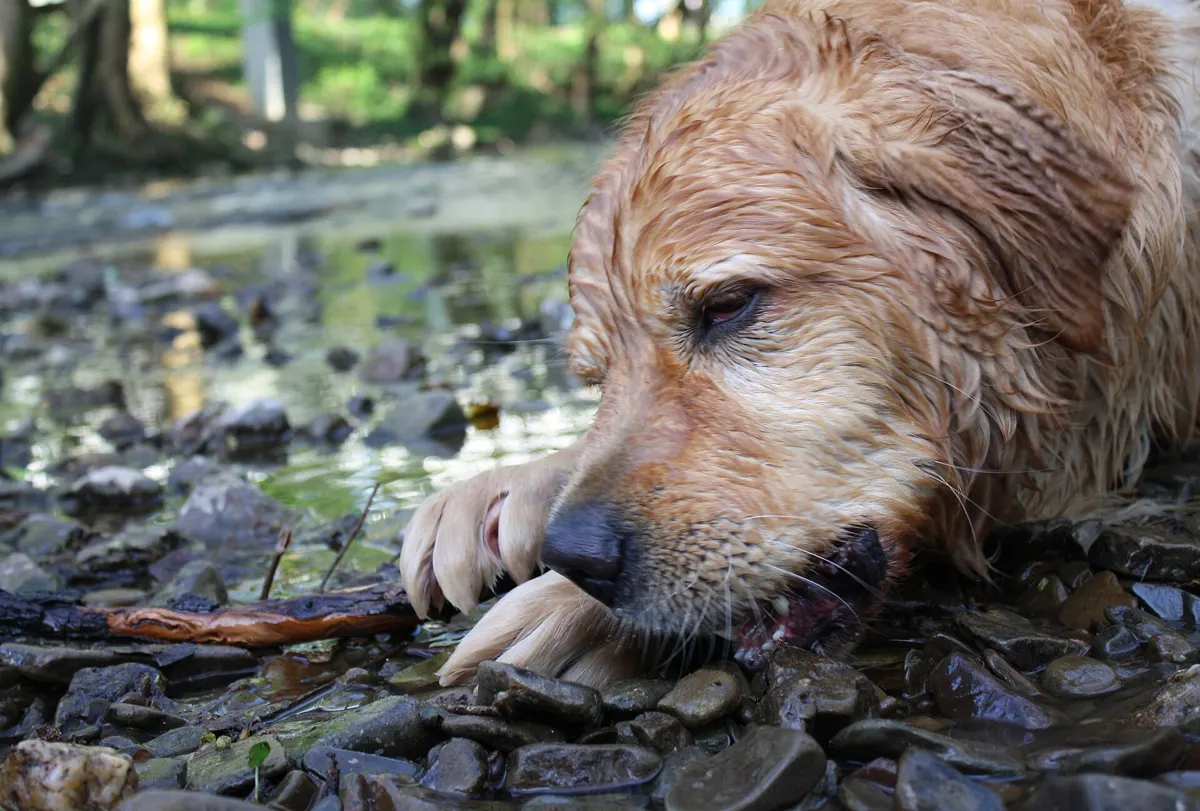
Photo: User:Jo!Hannes via Wikimedia Commons, CC BY-SA 4.0
🐾 Getting ready for a puppy? Grab the free Golden Retriever Puppy Checklist (PDF) — no email required.
Itchy skin is one of the most common reasons goldens visit the vet. It can be miserable for your dog and exhausting for you, with scratching at night, licking paws, red ears and hot spots. Allergies are a leading cause, but not the only one, so a vet visit is the first step.
This guide is general education, not a diagnosis. Please see your vet for itching that lasts more than a few days or comes with sores, odor or ear problems.
Common signs
- Scratching, chewing or licking, especially paws, belly, armpits and groin
- Rubbing the face or ears on the floor
- Red, irritated or darkened skin
- Recurrent ear infections (ear infections)
- Hot spots (hot spots)
- Hair loss or thinning
- Greasy, flaky or smelly skin
- Sometimes vomiting or loose stool with food allergies
Main causes
| Cause | What it is | Clues |
|---|---|---|
| Environmental allergy (atopy) | Reaction to pollen, dust mites, molds | Often seasonal at first, then year-round. VCA notes it typically starts in young dogs |
| Flea allergy | Reaction to flea saliva | Intense itching at the base of the tail, even from one bite |
| Food allergy or intolerance | Reaction to a food ingredient, often a protein | Year-round itching, ears, and sometimes digestive signs |
| Contact allergy | Reaction to a shampoo, plant or cleaning product | Irritation where the skin touched it |
| Skin infections | Bacterial or yeast, often secondary to allergy | Odor, redness, scabs, pimples |
| Other | Mange mites, hormonal disease, pain | Your vet can test |
Goldens are among the breeds commonly affected by allergic skin disease, along with many others.
What your vet may do
- Exam and history. When did it start? Where is the itch? Season? Diet changes?
- Rule out parasites. Fleas, mites and other skin parasites. Your vet may recommend year-round flea control.
- Check for infection. Skin or ear cytology to look for bacteria and yeast.
- Food trial. If a food allergy is suspected, your vet may recommend a strict elimination diet for several weeks, using a prescribed diet and no treats or extras. This is the standard way to diagnose food allergy.
- Allergy testing. Skin or blood tests can help choose immunotherapy (allergy shots or drops) for environmental allergies.
- Treatment. May include medications to control itch and inflammation, medicated shampoos, treatment of infections, omega-3 fatty acids and allergen management.
What you can do at home (with your vet’s OK)
- Bathe with a gentle shampoo or the medicated product your vet recommends. See shampoo guide.
- Wipe paws and belly after walks to remove pollen.
- Keep fleas away with a vet-approved preventive.
- Wash bedding weekly.
- Keep your dog lean. Extra weight can make skin fold irritation worse. See weight guide.
- Keep a diary of itch level, food, season and treatments.
What not to do
- Don’t switch foods repeatedly. It makes diagnosing a food allergy harder.
- Don’t jump to grain-free. The FDA is investigating a link between certain diets (many grain-free) and dilated cardiomyopathy, a heart disease.
- Don’t use human medications or creams without asking your vet.
- Don’t let your dog scratch raw. Use a cone or a recovery suit and call your vet if sores develop.
- Don’t wait. Chronic itch can lead to infections.
When to go to the vet urgently
- Face swelling, hives or difficulty breathing (possible severe allergic reaction, an emergency)
- Raw, bleeding or oozing skin
- Head shaking, ear pain or discharge
- Your dog is miserable or not sleeping
- Itching with lethargy, fever or loss of appetite
Related
Frequently asked questions
What are the signs of allergies in golden retrievers?
Itching, scratching, chewing or licking paws, rubbing the face, red or inflamed skin, recurrent ear infections, hot spots, hair loss and sometimes digestive upset. Signs can be seasonal or year-round.
Is it a food allergy or environmental?
It's hard to tell by looking. Food allergies are less common than environmental allergies, and they can look alike. Your vet may recommend an elimination diet trial and flea control to sort it out.
Should I switch to grain-free food?
Not as a first step. True food allergies are often to proteins, such as chicken or beef, not grains, and the FDA has investigated a link between certain diets and a heart condition. Talk to your vet before changing food.
Can I give my dog Benadryl?
Do not give human medication without checking with your vet first. Doses vary and some products contain ingredients that are harmful to dogs.
Can allergies be cured?
Environmental allergies are usually managed, not cured. Your vet can recommend a plan that may include medication, medicated baths, diet and, for some dogs, allergy testing and immunotherapy.
A quick note: this guide is general information from published sources, written by dog lovers, not a veterinarian. Your own vet knows your dog's history, so check with them before changing food, exercise or treatment.
Sources
Keep reading

Golden Retriever Hot Spots: Causes, What They Look Like and How Vets Treat Them
What are hot spots on golden retrievers? Causes (allergies, moisture, fleas, mats), what they look like, why you should see a vet and how to prevent them.

Golden Retriever Ear Infections: Signs, Causes, Treatment and Prevention
Why golden retrievers get ear infections, the signs to watch for, what a vet will do, how to clean ears safely and how to reduce the chance they come back.

Best Shampoo for Golden Retrievers: Ingredients, Skin Types and How to Choose
How to choose the best shampoo for a golden retriever: dog-specific pH, oatmeal and moisturizing formulas, itchy or sensitive skin, puppies, and when a medicated shampoo needs your vet.