Is My Golden Retriever Overweight? Body Condition Chart and a Safe Weight-Loss Plan
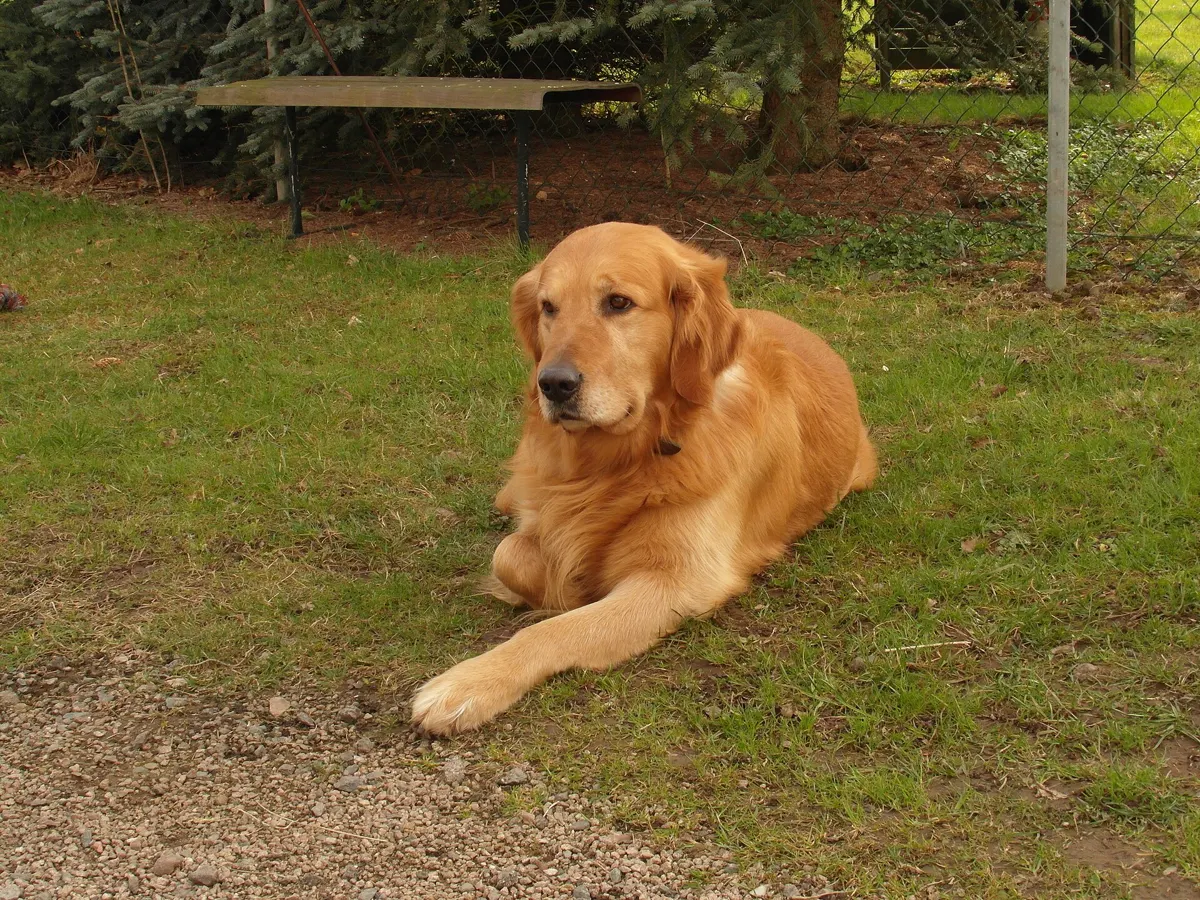
Photo: Barras via Wikimedia Commons, CC BY 3.0
🐾 Getting ready for a puppy? Grab the free Golden Retriever Puppy Checklist (PDF) — no email required.
Goldens are food lovers, and extra weight creeps up on them. A few extra pounds don’t look like much on a 65-pound dog, but they add stress to joints, can make heart and breathing problems worse and can shorten life. The good news: excess weight is one of the most fixable health problems in dogs.
Why it matters for goldens
- Joints. The OFA lists weight control as an important part of managing hip dysplasia. Extra weight increases stress on hips, elbows and knees. See hip dysplasia.
- Lifespan. In a famous 14-year study of Labrador retrievers, dogs fed about 25 percent less lived a median of nearly two years longer and had arthritis later. See lifespan.
- Heat tolerance and exercise. Overweight dogs overheat and tire more easily.
- The AKC golden timeline notes that goldens “must be kept trim their entire lives.”
The three-step home check
- Ribs. Run your hands along your dog’s side. You should feel the ribs easily, like the back of your hand with a thin layer of fat. If you need to press hard, your dog is likely overweight.
- Waist. Look down from above. There should be a visible waist behind the ribs.
- Tuck. Look from the side. The belly should rise from the chest toward the back legs.
The 9-point body condition score
Veterinarians use a scale from 1 to 9.
| Score | Description |
|---|---|
| 1 to 3 | Too thin. Ribs and bones easily visible |
| 4 to 5 | Ideal. Ribs easily felt, visible waist and tuck |
| 6 to 7 | Overweight. Ribs hard to feel, waist hard to see |
| 8 to 9 | Obese. Ribs can’t be felt, no waist, fat deposits and a rounded belly |
VCA Animal Hospitals and other sources aim for a score of 4 to 5. Ask your vet to show you what your dog’s score looks like.
Why goldens gain weight
- Eating too much. Treats, scraps and generous scoops
- Neutering can change metabolism, as the AKC notes
- Less exercise as they age
- Free feeding
- Medical causes, such as thyroid disease
A vet-guided plan
- See your vet. Rule out medical causes, set a target weight and decide on a plan.
- Weigh food. Use a kitchen scale. See how much to feed.
- Cut extras. Count treats. Replace some with carrots or green beans. See safe foods in what human foods goldens can eat.
- Change the food only with your vet’s advice. Some weight-management diets help keep dogs full.
- Add exercise gradually. Walking, swimming and play. For dogs with joint problems, low-impact is best.
- Track weight. Weigh every two to four weeks and record.
- Be patient. Weight loss in dogs is slow. Your vet will adjust the plan.
Making it fun
- Use part of their daily kibble for training
- Use puzzle feeders (slow feeders)
- Add a daily walk with sniffing, which is mental exercise too
- Get the family on board so no one slips extra treats
When to call the vet
- Rapid weight gain or loss
- Panting, tiring easily or coughing
- Swollen belly
- Increased thirst or urination
Related
Frequently asked questions
How can I tell if my golden is overweight?
Feel along the ribs: you should feel them easily with light pressure, under a thin layer of fat. From above you should see a waist, and from the side the belly should tuck up. If you can't feel ribs or see a waist, your dog is probably overweight.
What is a healthy weight for a golden?
The AKC lists adult females at about 55 to 65 pounds and males at 65 to 75 pounds, but a healthy weight depends on frame and condition. Your vet can tell you your dog's ideal weight.
How fast should my dog lose weight?
Gradually. Your vet will set a target and monitor progress. Crash diets are not safe.
Does weight really affect lifespan?
A well-known long-term study in Labradors found that dogs kept lean lived a median of about two years longer and developed chronic disease later than dogs fed freely.
Could a medical condition cause weight gain?
Yes, for example hypothyroidism and other hormone conditions can contribute. If your dog gains weight on a normal diet, ask your vet to check.
A quick note: this guide is general information from published sources, written by dog lovers, not a veterinarian. Your own vet knows your dog's history, so check with them before changing food, exercise or treatment.
Sources
- VCA Animal Hospitals: Obesity in Dogs
- AAHA: 2021 Nutrition and Weight Management Guidelines
- Kealy et al. (2002), Effects of diet restriction on life span and age-related changes in dogs, JAVMA (PubMed)
- OFA: Hip Dysplasia
- AKC: Golden Retriever Puppy Training Timeline, From 8 Weeks to 2 Years
- AKC: How Much Should I Feed My Dog?
Keep reading

How Much Should I Feed My Golden Retriever? Feeding Schedule by Age and How to Measure
How much to feed a golden retriever puppy, adult or senior: meals per day by age, how to use the label and a kitchen scale, adjusting by body condition and the biggest feeding mistakes.

Golden Retriever Hip Dysplasia: Signs, Causes, Treatment and Prevention
What golden retriever owners should know about hip dysplasia: early signs, how it's diagnosed, treatment options, prevention and questions to ask a breeder.


Golden Retriever Lifespan: How Long They Live and How to Help Yours Live Longer
Most golden retrievers live about 10 to 12 years. Here is what the research says about lifespan, what shortens it, and how to care for your golden as a senior.