Best Puppy Food for Golden Retrievers: Large-Breed Formula Checklist (No Brand Hype)
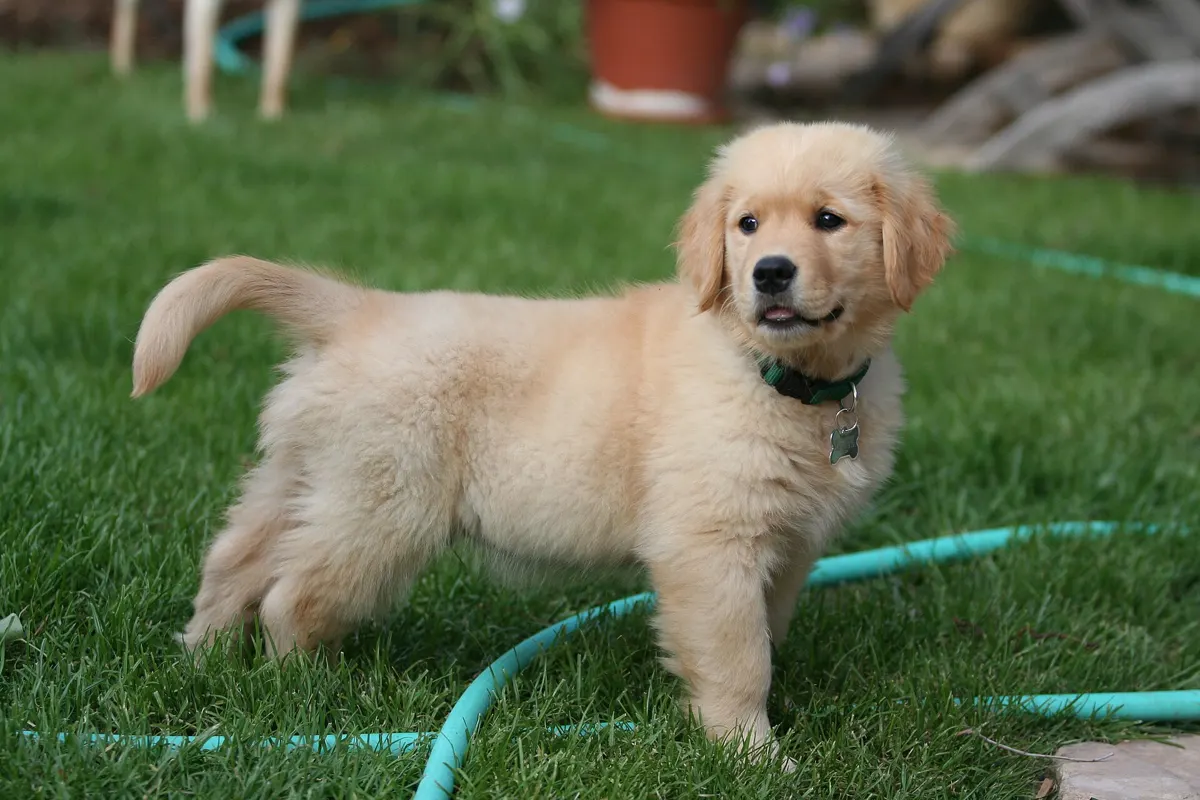
Photo: Scott via Wikimedia Commons, CC BY 2.0
🐾 Getting ready for a puppy? Grab the free Golden Retriever Puppy Checklist (PDF) — no email required.
Choosing food for your golden puppy can feel overwhelming. There are hundreds of brands and plenty of marketing. The good news is that veterinary nutritionists give clear guidance on what matters. This guide gives you a checklist, not a brand ranking, because the best food depends on your dog, and your vet should be part of the decision.
Why large-breed puppy formulas?
Goldens will reach 55 to 75 pounds. Large-breed puppies grow fast, and if they get too many calories or too much calcium, their skeletons can grow at an uneven rate. VCA Animal Hospitals explains that overfeeding in this period can lead to developmental orthopedic disease, and that large-breed puppy diets have carefully controlled calcium and phosphorus. Tufts University’s nutrition team also recommends a large-breed puppy food for puppies expected to reach more than about 50 pounds as adults.
The checklist
| Check | What to look for |
|---|---|
| AAFCO statement | “Formulated to meet the nutritional levels established by AAFCO for growth, including growth of large-size dogs (70 lb or more as an adult)” or a similar statement |
| Complete and balanced | Not “intermittent or supplemental feeding only” |
| Manufacturer | Meets WSAVA guidelines: employs a qualified nutritionist, tests its foods and shares information |
| Calories | Listed per cup or per kilogram so you can measure |
| Calcium | Large-breed puppy formulas control calcium. Don’t add extra |
| No unproven claims | Be skeptical of “ancestral,” “human-grade” or “holistic” without evidence |
| Your vet’s view | Ask what they see work in goldens |
Dry, wet, fresh or raw?
| Type | Pros | Cons |
|---|---|---|
| Dry (kibble) | Convenient, affordable, easy to measure | Quality varies |
| Canned/wet | Tasty, helps picky eaters | More expensive, more calories per volume |
| Fresh/cooked | Palatable | Cost, storage, must be complete and balanced for growth |
| Raw | Popular with some owners | Risk of bacteria and nutritional imbalance. Veterinary groups caution about raw diets, so discuss with your vet |
Whatever type you choose, confirm that it is complete and balanced for growth, particularly large-breed growth.
What about grain-free?
The FDA has investigated reports of dilated cardiomyopathy (DCM) in dogs eating certain diets, many labeled grain-free. Goldens were among the breeds in the reports. The FDA says an association has been found but a cause has not been proven. Veterinary schools generally advise against choosing grain-free diets without a medical reason. Talk to your vet.
How to start
- Start with the breeder’s food for the first few days at home.
- Switch slowly over 7 to 10 days if you want to change. Mix in a bit more of the new food each day.
- Measure portions. Use a scale if you can. See how much to feed a golden.
- Feed puppy-sized meals several times a day. Your vet can set the schedule.
- Check body condition every week or two. Our weight chart explains how.
- Count treats. They should be a small part of daily calories.
What not to do
- Free-feed. Leaving food out all day leads to overeating.
- Add calcium or vitamins unless your vet says so.
- Chase fast growth. Slow, steady growth is healthier for large breeds.
- Switch foods repeatedly. Your puppy’s stomach needs time.
- Feed table scraps that can unbalance the diet.
When to move to adult food
Many large-breed puppies switch somewhere between 12 and 18 months. The AKC’s golden retriever timeline notes that the switch happens around two years in some breeders’ practices. Your vet can tell you when your puppy is ready. Read our guide on what’s best for adult goldens.
When to call the vet
- Vomiting or diarrhea that lasts more than a day, or blood in stool
- Refusing food
- Skin or ear problems that start after a change in diet
- Weight gain or loss that doesn’t make sense
Related
What to look for in puppy food
We describe what to look for in each type of product. Specific product links are being added, and every link here will be marked as a sponsored link.
Pick 1
Large-breed puppy dry food
Best for: Most golden puppies under about a year
What to look for:
- AAFCO statement for growth including large-size dogs
- Manufacturer meets WSAVA selection guidelines (qualified nutritionist, testing)
- Calcium and phosphorus controlled for large breeds
- Your vet agrees
Pick 2
Large-breed puppy wet or fresh food (as a topper or main)
Best for: Picky puppies or owners who prefer wet food
What to look for:
- Same AAFCO growth statement for large dogs
- Complete and balanced, not 'intermittent or supplemental'
- Count calories when mixing
Pick 3
Training treats (small, low calorie)
Best for: Training sessions
What to look for:
- Pea-sized pieces
- Soft
- Count toward daily calories
Prices and availability change, so we do not list them here. Check the retailer's page for current details.
Frequently asked questions
Do golden retriever puppies need large-breed puppy food?
Usually yes. VCA Animal Hospitals and Tufts University nutritionists explain that large-breed puppies need controlled calcium and calories for steady growth. Look for a food labeled for growth including large-size dogs. Ask your vet to confirm.
When should I switch from puppy to adult food?
Many goldens switch somewhere between about 12 and 18 months, but the timing depends on your dog's growth and condition. Your vet can advise. The AKC's golden timeline suggests around two years for transition in some cases.
Is grain-free food good for puppies?
The FDA investigated a possible link between certain diets, many of them grain-free, and a heart condition called dilated cardiomyopathy (DCM), with goldens among the reported breeds. Talk to your vet before choosing a grain-free or boutique diet.
Should I add supplements to puppy food?
Generally no. A complete and balanced large-breed puppy food should not need extra calcium or vitamins, and too much can harm growing bones. Ask your vet before adding anything.
How do I switch puppy foods?
Mix the new food into the old over about a week to ten days, increasing the share of new food gradually. If your puppy has vomiting or diarrhea, slow down and call the vet.
A quick note: this guide is general information from published sources, written by dog lovers, not a veterinarian. Your own vet knows your dog's history, so check with them before changing food, exercise or treatment.
Sources
- VCA Animal Hospitals: Nutritional Considerations for Large and Giant Breed Dogs
- VCA Animal Hospitals: Feeding Growing Puppies
- Tufts Petfoodology: Confused About What to Feed Your Large Breed Puppy? New Rules May Help!
- Tufts Petfoodology: What's the Best Food for Your New Puppy?
- WSAVA: Global Nutrition Guidelines
- FDA: Investigation into Potential Link between Certain Diets and Canine Dilated Cardiomyopathy
- AKC: Golden Retriever Puppy Training Timeline, From 8 Weeks to 2 Years
Keep reading

Best Food for Golden Retrievers: How to Choose for Puppies, Adults and Seniors
How to pick the best food for a golden retriever: reading the AAFCO label, large-breed puppy rules, portions, foods to avoid and the grain-free question.
How Much Should I Feed My Golden Retriever? Feeding Schedule by Age and How to Measure
How much to feed a golden retriever puppy, adult or senior: meals per day by age, how to use the label and a kitchen scale, adjusting by body condition and the biggest feeding mistakes.
Golden Retriever Weight and Size by Age: Growth Chart for Males and Females
A golden retriever growth chart with typical weight ranges by age for males and females, adult size standards, how to tell if your puppy is on track and when to call the vet.