Golden Retriever Hypothyroidism: Signs, Thyroid Testing and Treatment
Please see your vet. This guide is general education, not a diagnosis or treatment plan. If your golden seems unwell, call your veterinarian. If it looks like an emergency, go to an emergency vet right away.

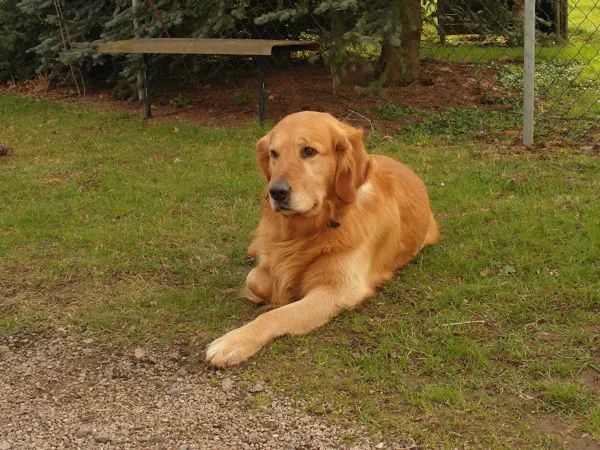
Photo: Johannnes89 via Wikimedia Commons, CC BY-SA 4.0
🐾 Getting ready for a puppy? Grab the free Golden Retriever Puppy Checklist (PDF) — no email required.
If your golden has been slowly getting heavier on the same food, sleeping more and losing the feathering on that big plume of a tail, it’s easy to blame age. Sometimes, though, the cause is an underactive thyroid. Hypothyroidism is common in golden retrievers, it’s easy to miss because it creeps in slowly, and the good news is that it’s very treatable once your vet confirms it.
General education only. If any of these signs sound familiar, book a visit with your vet. Only blood tests can confirm a thyroid problem.
What hypothyroidism is
The thyroid is a small two-lobed gland in the neck, next to the windpipe. Its hormones set the body’s metabolic rate, so when it makes too little, nearly every organ slows down.
VCA Animal Hospitals and Cornell both say that more than 90% of cases come from one of two processes:
- Lymphocytic (autoimmune) thyroiditis: the immune system attacks the thyroid. This is the most common cause and is heritable.
- Idiopathic thyroid atrophy: normal thyroid tissue is replaced by fat and connective tissue, for reasons that are poorly understood.
Thyroid cancer and pituitary disease are rare causes.
Why goldens should know about it
- Goldens are a predisposed breed. Cornell lists the golden retriever among the breeds most commonly diagnosed, and AAHA’s 2023 endocrine guidelines name goldens as a breed predisposition.
- It’s common in the breed. The Golden Retriever Club of America (GRCA) reports that in its first national health survey (1998-1999), about one in four members’ goldens developed hypothyroidism over their lifetime. That was a survey of club members’ dogs, not a study of every golden, but it shows how often owners run into it.
- Middle age is the usual window. Cornell says it most often appears between 4 and 10 years old (on average 6-7). The OFA notes the autoimmune form often becomes noticeable at 2 to 5 years.
- Spay/neuter status may matter. Cornell and VCA say it may be more common in spayed females and neutered males, and GRCA mentions the same association. That’s one factor among many in the spay/neuter timing decision, not a reason on its own.
Signs to watch for
Because thyroid hormone affects the whole body, signs show up in many places. The FDA points out that they usually develop gradually and are easy to miss at first.
| Area | What you might notice |
|---|---|
| Weight and energy | Weight gain without eating more, tiring easily on walks, sleeping more, seeming dull |
| Temperature | Seeking warm spots, getting cold easily |
| Coat | Dull, dry or brittle coat, more shedding, thinning hair on the trunk, slow regrowth after clipping |
| Tail | Losing tail feathering until the tail looks almost bald, often called “rat tail” |
| Skin | Darker skin, thickened skin (especially in the armpits, groin and face), scaly or smelly skin |
| Infections | Skin or ear infections that keep coming back |
| Behavior | GRCA notes some trainers report lower trainability, and a few dogs become “grumpy” |
The hair loss is usually not itchy unless there’s also a skin infection, which is one clue that sets it apart from allergies. Cornell lists less common signs too, including a slow heart rate, weakness, vomiting or diarrhea, and fat deposits on the cornea.
Many of these signs overlap with other everyday golden problems, so it’s worth comparing notes with our guides to an overweight golden, shedding, ear infections and why your golden smells. The point is not to diagnose at home. It’s to have a useful list for your vet.
How vets diagnose it
Diagnosis takes blood work and a vet’s judgment:
- Exam and history. Your vet looks at the whole picture: signs, age, weight trend and any medications.
- Routine blood work. Cornell notes it may show anemia or high cholesterol, both common in hypothyroid dogs.
- Thyroid tests. VCA says a total T4 (TT4) is the most common screening test. To confirm, vets may add free T4 (ideally by equilibrium dialysis), TSH and thyroglobulin autoantibodies, which point to the autoimmune form.
A low thyroid number on its own doesn’t always mean hypothyroidism:
- Other illnesses can lower thyroid levels. This is called “euthyroid sick syndrome” or nonthyroidal illness. AAHA recommends waiting until a sick dog has recovered before further thyroid testing when possible.
- Some medications lower thyroid levels. The FDA lists phenobarbital, prednisone and other steroids, some NSAIDs, propranolol, clomipramine and sulfa antibiotics. Tell your vet about everything your dog takes.
That’s why GRCA stresses that interpreting thyroid tests “can really be quite complex” and should be done by a veterinarian. Sometimes repeat testing is needed.
How it’s treated
Hypothyroidism isn’t curable, but it’s very manageable:
- Daily prescription levothyroxine for life. This synthetic thyroid hormone is given once or twice a day, as your vet prescribes. The FDA notes there are two FDA-approved levothyroxine tablets for dogs and advises against unapproved products.
- Give it the same way every time. Food changes how much is absorbed, so the FDA recommends consistently giving it either with food or without.
- Recheck blood tests. The FDA says levels are usually checked every 4 to 8 weeks at first while the dose is adjusted. After that, VCA says rechecks are often needed about every six months.
- Be patient with the coat. Energy usually improves within a few weeks, but the FDA says hair regrowth typically takes at least 4 months. Skin and ear problems may need their own treatment.
Call your vet if signs come back, or if your dog shows signs that the dose may be too high: restlessness, panting, a racing pulse, drinking and urinating more, or losing weight despite a bigger appetite.
GRCA sums up the outlook: almost all hypothyroid dogs can be treated successfully and live a full lifespan.
Can it be prevented?
There’s no proven way to prevent it in an individual dog. What helps:
- Choose a breeder who health-tests. The OFA runs a thyroid database for breeding dogs, using free T4, TSH and thyroglobulin autoantibody tests. Because the autoimmune form can show up years later, OFA recommends retesting at ages 2, 3, 4, 6 and 8. GRCA suggests minimizing the use of affected dogs in breeding. See how to choose a golden retriever breeder.
- Keep up with yearly wellness visits and mention any slow changes in weight, energy or coat.
- Track your dog’s weight. A steady climb on the same food is worth a conversation with your vet.
Bringing home a golden puppy? Our free puppy checklist helps you set up vet visits and health records from day one, so slow changes are easier to spot later.
When to see your vet
Make an appointment if your golden has:
- Gained weight without eating more
- Become noticeably less active or sleeps far more than usual
- Lost hair on the tail, trunk or around the collar, especially if it isn’t itchy
- Skin or ear infections that keep coming back
- Started seeking heat or seems cold all the time
Go right away if your dog is very weak, disoriented, has a seizure, collapses, or feels unusually cold to the touch.
Related
Frequently asked questions
Are golden retrievers prone to hypothyroidism?
Yes. Cornell's College of Veterinary Medicine and AAHA's endocrine guidelines both list the golden retriever among breeds predisposed to hypothyroidism. In the Golden Retriever Club of America's first breed health survey, about one in four members' goldens developed it over their lifetime.
What are the first signs of hypothyroidism in a golden?
Signs usually come on slowly: weight gain without eating more, less energy, seeking warm spots, a dull or thinning coat, hair loss on the tail ('rat tail') and repeat skin or ear infections. These signs overlap with many other problems, so see your vet rather than guessing.
At what age do goldens get hypothyroidism?
Cornell says it most often shows up between 4 and 10 years of age, with an average of 6 to 7. The OFA notes that the autoimmune form often becomes noticeable at 2 to 5 years, so younger dogs can be affected too.
How do vets test for it?
With blood tests. A total T4 is a common screening test, and your vet may add free T4, TSH or thyroglobulin autoantibodies to confirm. Other illnesses and some medications can lower thyroid levels, so results need a vet's interpretation.
Is hypothyroidism in dogs curable?
No, but it is very treatable. Dogs take a prescription thyroid hormone (levothyroxine) for life, with regular blood tests to check the dose. Most dogs do well with treatment.
Can I give my dog a thyroid supplement without a diagnosis?
No. Too much thyroid hormone causes its own problems, and the FDA advises avoiding unapproved levothyroxine products. Treatment should only be started and adjusted by your vet.
A quick note: this guide is general information from published sources, written by dog lovers, not a veterinarian. Your own vet knows your dog's history, so check with them before changing food, exercise or treatment.
Sources
- Golden Retriever Club of America: Hypothyroidism
- Cornell University College of Veterinary Medicine (Riney Canine Health Center): Hypothyroidism
- VCA Animal Hospitals: Hypothyroidism in Dogs
- FDA: Hypothyroidism in Dogs, There are FDA-Approved Drugs to Treat It
- AAHA: 2023 Selected Endocrinopathies of Dogs and Cats Guidelines, Canine Hypothyroidism Diagnosis
- OFA: Thyroid (Autoimmune Thyroiditis Database)
Keep reading
Is My Golden Retriever Overweight? Body Condition Chart and a Safe Weight-Loss Plan
How to tell if your golden retriever is overweight: the rib and waist test, the 9-point body condition score, why weight matters for joints and lifespan, and a vet-guided plan.

Golden Retriever Shedding: What's Normal, When It Peaks and How to Manage It
Goldens shed year-round and heavily in spring and fall. Learn why, which brushes work, why you should never shave a golden, and when to call the vet.


Golden Retriever Ear Infections: Signs, Causes, Treatment and Prevention
Why golden retrievers get ear infections, the signs to watch for, what a vet will do, how to clean ears safely and how to reduce the chance they come back.