Best Dog Crate for Golden Retrievers: Wire, Heavy-Duty, and Travel Crates Compared

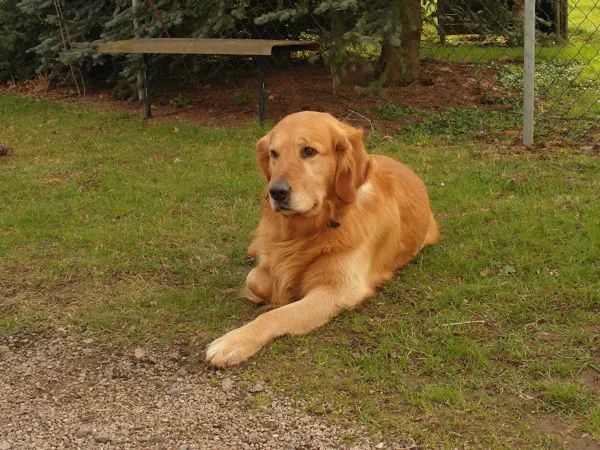
Photo: Johannnes89 via Wikimedia Commons, CC BY-SA 4.0
🐾 Getting ready for a puppy? Grab the free Golden Retriever Puppy Checklist (PDF) — no email required.
The short answer: the best dog crate for most golden retrievers at home is a 42-inch folding wire crate with a divider panel, such as the MidWest iCrate or the heavier-gauge MidWest Ultima Pro. Wire crates offer good airflow for a thick double coat, the divider lets the same crate work for a puppy from eight weeks to adulthood, and they fold flat for storage. For vehicle travel, however, standard wire crates aren’t crash-tested: look for a kennel on the Center for Pet Safety’s certified list, like the Gunner G1 Intermediate or the Lucky Duck Lucky Kennel, used with the straps it was tested with. The RuffLand Performance Kennel is a lighter rigid option that isn’t CPS Certified. For dogs that bend wire bars or damage plastic, a heavy-duty aluminum crate like the Impact Collapsible Dog Crate provides rigid containment.
Choosing the right crate comes down to where you will use it, how your golden behaves inside it and how well it ventilates their coat. Before you buy, measure your dog (or plan for full adult proportions) using our golden retriever crate size guide and review our step-by-step crate training plan.
We haven’t tested these crates ourselves. Dimensions and features come from the manufacturers’ pages, CPS certification comes from the Center for Pet Safety’s own list, and we checked each Amazon listing on November 27, 2026. Models and size charts change, so confirm details with the maker before you buy.
Quick comparison: top dog crates for golden retrievers
| Crate model | Crate type | Key dimensions (L x W x H, maker) | Material | Best for | Divider included? |
|---|---|---|---|---|---|
| MidWest iCrate (42-inch, double door) | Folding wire | 42.13” x 28.04” x 30.2” | Metal wire, plastic pan | Everyday home use and puppies | Yes |
| MidWest Ultima Pro (42-inch) | Heavy-gauge wire | 42.92” x 28.71” x 31.5” | Professional-gauge steel | Strong adult goldens at home | Not listed by MidWest |
| Impact Collapsible Dog Crate | Heavy-duty aluminum | Intermediate: 34.5” x 23” x 29”; Large: 40.5” x 23” x 29”; XL: 40.5” x 27” x 33” | Aluminum | Chewers, escape artists and portable strength | No |
| Gunner G1 Kennel (Intermediate / Large) | Rotomolded travel kennel | Int: 34” x 23” x 28.5”; Large: 40.25” x 28” x 33.25” (exterior) | Double-wall rotomolded shell | Vehicle travel (Intermediate is CPS Certified) | No |
| Lucky Duck Lucky Kennel (Intermediate / Large) | Rotomolded travel kennel | Int: 32.5” x 22.5” x 24.5”; Large: 38” x 24” x 29” (exterior) | One-piece rotomolded shell | Truck beds and road travel (CPS Certified sizes) | No |
| RuffLand Performance Kennel (Large / XL) | Rotomolded travel kennel | Large: 35” x 22” x 27”; XL: 40.25” x 23” x 29.5” (exterior) | One-piece UV-stabilized polyethylene | Everyday SUV travel, hunting and easy hosing out | No |
How to choose the right crate style for a golden retriever
Golden retrievers have three traits that directly affect crate selection: a dense double coat, a puppy chewing phase and a long body that needs room to stretch out at home.
1. Wire crates (best for home and puppies)
Wire crates are the standard choice for indoor sleeping and housebreaking. The AKC says metal crates provide good air circulation and visibility, and Cornell’s veterinarians note that wire crates often come with dividers so young dogs can grow into the size they’ll need as adults.
The trade-off: wire crates are designed for the home, not for car accidents. None are on the Center for Pet Safety’s certified list, and they don’t have built-in tie-down points. They can also be bent by dogs with severe confinement anxiety.
2. Heavy-duty aluminum crates (best for determined chewers and escape artists)
Aluminum crates replace thin wire grids with solid metal walls and round ventilation holes, so there are no bars for a dog to pry at or hook their teeth around.
The trade-off: solid walls let less air through than an open wire crate, so placement in a cool, well-ventilated room matters. Also, if your golden is panicking, chewing bars or hurting themselves trying to escape a crate, a stronger crate alone is not a complete solution. Talk to your veterinarian or a qualified veterinary behaviorist to rule out separation anxiety or confinement distress before locking your dog in a heavy-duty kennel.
3. Rotomolded travel crates (best for cars, SUVs and trucks)
Rotomolded polyethylene kennels are molded as a single rigid shell (or a double-walled shell) and are built for vehicle travel. They are also sized differently from home crates: Lucky Duck says its kennel measurements are for traveling use and recommends going up one size for in-home use only.
The trade-off: travel crates are heavier, bulkier and do not fold flat. One practical setup is a 42-inch wire crate in the house and a rotomolded kennel anchored in the vehicle.
Best wire crates for golden retrievers (home and puppy training)
MidWest Homes for Pets iCrate (42-inch)
The MidWest iCrate is a folding wire crate for golden retriever puppies and calm adult dogs.
Dimensions (MidWest): 42.13” L x 28.04” W x 30.2” H (42-inch double-door model)
Key specs: sets up in seconds and folds flat for storage, includes a divider panel to adjust living space, removable leak-proof plastic pan, rubber feet to protect floors and slide-bolt latches with MidWest’s patented Paw Block. Available in single-door and double-door styles.
Why it works for goldens: the 42-inch size gives most adult goldens room to stand up, turn around and lie down comfortably, while the included divider lets you start with a small potty-training zone on day one. The open wire design lets air move around a double-coated dog during naps.
Limitations: it’s a standard home crate, so a strong, determined dog may be better suited to a heavier-gauge model like the Ultima Pro below.
MidWest Homes for Pets Ultima Pro (42-inch)
If you want the airflow and convenience of a wire crate with sturdier construction, the MidWest Ultima Pro steps up to professional-gauge steel.
Dimensions (MidWest): 42.92” L x 28.71” W x 31.5” H
Key specs: professional-gauge, heavy-duty steel construction, two doors, a low threshold and large opening, slide-bolt latches, a removable leak-proof pan, no-tool assembly and detachable handles. MidWest’s feature list doesn’t mention a divider, so confirm whether one comes with the listing you buy.
Why it works for goldens: at 31.5 inches tall it has about an inch more headroom than the 42-inch iCrate, which can help a tall golden, and the heavier steel suits enthusiastic leaning, stretching and adult movement. MidWest says the low threshold and large opening let a pet easily enter and exit, which can help as your golden enters their senior years. If your older dog has mobility changes, check with your veterinarian about comfortable sleeping setups and see our senior golden retriever care guide.
Limitations: it’s heavier to carry and fold than the standard iCrate, making it better suited to a permanent spot in your home.
Best heavy-duty aluminum crate for golden retrievers
Impact Dog Crates Collapsible Dog Crate (Intermediate, Large or XL)
For owners who need rigid containment that still packs down for road trips or storage, the Impact Collapsible Dog Crate is built from aluminum and folds flat.
Dimensions and weights (Impact):
- Intermediate (34-inch): 34.5” L x 23” W x 29” H (35 lb)
- Large (40-inch): 40.5” L x 23” W x 29” H (38 lb)
- XL (40-inch+): 40.5” L x 27” W x 33” H (43.5 lb)
Key specs: aluminum construction, 0.817-inch ventilation holes, a folding design that collapses for transport and storage, no-tool setup and carry handles.
Why it works for goldens: Impact’s own size chart lists the golden retriever under the 34-inch Intermediate, while the XL provides more width and 33 inches of height for larger adult goldens, so measure your dog against each size. The smooth aluminum walls give a dog no plastic to chew through and no wire to hook their jaws on. Because it collapses flat, it works well for travel and home use.
Note on severe anxiety: Impact says that for dogs with a history of escaping crates it recommends its separate High Anxiety Crate, which has solid aluminum panels, reinforced door hardware and half-inch round ventilation openings. However, as the American Kennel Club (AKC) notes, you should never crate a dog if it causes stress or panic. If your golden shows signs of severe stress, drooling or self-injury in a crate, consult your veterinarian before continuing confinement.
Best travel crates for golden retrievers (car, SUV and truck)
Standard wire crates and soft-sided fabric crates aren’t built to protect a dog in a vehicle collision. When shopping for a car kennel, look for independent crash-test certification from the Center for Pet Safety (CPS), and check the exact product and size on CPS’s own certified list. CPS lists each certified kennel together with the straps it was tested with.
Gunner Kennels G1 Kennel (Intermediate or Large)
Gunner says the G1 is the only double-walled kennel on the market. The Intermediate G1 is CPS Certified: CPS lists the “Gunner G1 Kennel with Strength Rated Anchor Straps” in Intermediate with a 5 Star rating (the Small and Medium are also listed). The Large is not on CPS’s certified list, and Gunner’s own page says the Small, Medium and Intermediate are the 5 Star crash-tested sizes.
Dimensions (Gunner, exterior; interior floor in parentheses):
- Intermediate: 34” L x 23” W x 28.5” H (30” x 18” x 25”; 48 lb)
- Large: 40.25” L x 28” W x 33.25” H (33.25” x 21” x 29”; 72 lb)
Key specs: double-wall rotomolded construction, a custom-welded, powder-coated frame system reinforced with aluminum, a reversible door with a key-lock paddle latch, top and bottom backup latches, built-in tie-down pins for anchoring in an SUV cargo area or truck bed, and an oversized removable drain plug. Made in the USA.
Why it works for goldens: Gunner says the double-wall shell stays cooler than leading single-wall and aluminum crates. Gunner sizes by weight (Intermediate up to 70 lb, Large 71 lb and up), and the AKC breed standard puts adult goldens at 55 to 75 lb, so many goldens fall near the line between the two sizes. Measure both your dog and your vehicle’s cargo hatch before ordering, and remember that only the Intermediate is CPS Certified.
Limitations: the double-wall build makes the G1 heavy to lift in and out of a vehicle (48 lb for the Intermediate and 72 lb for the Large). It is best treated as a semi-permanent vehicle kennel.
Lucky Duck Lucky Kennel (Intermediate or Large)
From waterfowl decoy maker Lucky Duck, the Lucky Kennel is another CPS Certified rotomolded travel kennel. CPS lists the “Lucky Kennel with Lucky Ratchet Strap Kit” in Medium, Intermediate and Large, each with a 5 Star rating, and Lucky Duck says the rating applies with that strap kit and no other accessories.
Dimensions (Lucky Duck, exterior; interior in parentheses):
- Intermediate: 32.5” L x 22.5” W x 24.5” H (30.25” x 20.5” x 22”; 38 lb). Lucky Duck recommends it for average-sized labs and retrievers under 70 lb, about 24 inches at the shoulder and 32.25 inches or shorter from front of chest to base of tail.
- Large: 38” L x 24” W x 29” H (35.75” x 22” x 26.5”; 45 lb). Recommended for dogs 70 to 110 lb.
Key specs: patented one-piece rotomolded construction, an injection-molded reversible door, a locking paddle latch, corner locking pins, an elevated, pitched floor that runs water into drain channels, drain holes for easy cleanup, powder-coated tie-downs, non-slip rubber feet and stainless steel hardware. The Medium (for dogs under 50 lb) is too small for most adult goldens.
Why it works for goldens: goldens love water and mud, and the drain holes and raised floor make post-hike or post-swim cleanup faster. Like the Gunner, it is designed to be strapped down securely in a truck bed or SUV cargo area; Lucky Duck recommends using the straps inside and outside the vehicle.
Limitations: it doesn’t fold, and its door is injection-molded rather than metal-framed.
RuffLand Performance Kennel (Large or XL)
The RuffLand Performance Kennel suits owners who need a lighter, easy-to-clean one-piece kennel.
Dimensions (RuffLand):
- Large: 35” L x 22” W x 27” H exterior (33.5” x 21.5” x 25.5” interior; approx. 30 lb)
- XL: 40.25” L x 23” W x 29.5” H exterior (38.5” x 22.75” x 27.5” interior; approx. 42 lb)
Key specs: one-piece UV-stabilized polyethylene, Ruff-Flex walls that RuffLand says absorb energy that would otherwise be transferred to your pet, SureVent tapered walls (so vent holes stay open even when pushed against a flat surface), an UpSide raised interior floor that channels liquids away from the dog, a 2-way swinging door and an optional SlantBack design on select sizes to fit against angled SUV rear seats.
Why it works for goldens: at roughly 30 to 42 pounds depending on size, it is much easier to load solo than a double-wall kennel. The raised floor helps keep wet coats out of puddles after swimming.
Important safety note: RuffLand kennels are not on the Center for Pet Safety’s certified list as of November 27, 2026. Always anchor any travel kennel with rated tie-down straps so it cannot become a projectile during a sudden stop.
For more on packing, securing your dog and planning rest stops, read our guide to car travel with a golden retriever.
Essential crate safety rules for golden retrievers
Even the best crate can become hazardous if used improperly. Follow these core safety habits from day one:
- Always remove collars inside the crate. The AKC says to remove your dog’s collar whenever they’re in the crate, because collars can become a danger if they get stuck in the bars.
- Watch bedding with puppies and chewers. The AKC says many puppies prefer to potty on soft, porous surfaces like beds and blankets, so wait until your dog consistently doesn’t have accidents or shred fabric. If your golden shreds bedding, leave the crate bare until they outgrow the habit. Swallowed fabric can cause an intestinal blockage, which Cornell’s veterinarians describe as an emergency that often needs surgery.
- Keep the crate cool and ventilated. Place the crate away from direct sunlight, radiators and heat vents. If you use a crate cover to create a den-like feel, Cornell’s veterinarians recommend one that still leaves one or two sides open. Know the warning signs of golden retriever heatstroke.
- Never use the crate as punishment. The crate should be a calm, predictable resting space, never a time-out zone.
- Check with your vet if your dog panics or has joint stiffness. Sudden reluctance to enter a crate can signal pain (such as hip or elbow discomfort in older dogs) or anxiety. Your veterinarian can help you evaluate both physical comfort and behavioral stress.
If you are preparing for a new puppy, you can track crate naps, potty breaks and milestones with our free puppy checklist and Puppy Care Log.
This guide is general information, not veterinary advice. Ask your vet about crate time for a puppy, a senior or a dog with a health condition, and get urgent care if your dog may have swallowed bedding or was hurt trying to escape a crate.
Dog crate picks for golden retrievers
We describe what to look for in each type of product. Affiliate product links, when present, are marked as sponsored.
Pick 1
MidWest iCrate (42-inch, double door)
Best for: Most goldens at home, from puppy to adult
What to look for:
- Includes a divider panel to adjust living space
- Slide-bolt latches with MidWest's Paw Block
- Removable leak-proof plastic pan and rubber feet
- Linked listing is the 42-inch double-door model
Pick 2
MidWest Ultima Pro (42-inch)
Best for: Strong adult goldens who lean on or rattle a standard wire crate
What to look for:
- Professional-gauge, heavy-duty steel
- Two doors with a low threshold and large opening
- About an inch taller than the 42-inch iCrate (MidWest: 31.5 in)
- Linked listing is the 42-inch double-door model
Pick 3
Impact Collapsible Dog Crate
Best for: Chewers and dogs who damage wire or plastic, and owners who need a crate that folds flat
What to look for:
- Aluminum construction with 0.817-inch ventilation holes
- Folds flat for travel and storage
- Impact's chart lists goldens under its 34-inch Intermediate; measure your dog
- Linked listing is the 40-inch+ Extra Large (40.5 x 27 x 33 in); choose the size that fits your dog
Pick 4
GUNNER G1 Kennel (Intermediate)
Best for: Frequent car travel with a dog up to about 70 lb
What to look for:
- Intermediate is CPS Certified (5 Star) with Gunner's strength-rated anchor straps
- Double-wall rotomolded shell and reversible door with key lock
- Built-in tie-down pins and removable drain plug
- Gunner sizes by weight: Intermediate up to 70 lb
Pick 5
Lucky Duck Lucky Kennel (Intermediate or Large)
Best for: Car and truck travel when you want a lighter CPS Certified kennel
What to look for:
- Medium, Intermediate and Large are CPS Certified with the Lucky Ratchet Strap Kit
- One-piece rotomolded shell, powder-coated tie-downs
- Elevated, pitched floor with drain channels and drain holes
- Sizes are for travel; Lucky Duck suggests one size up for home-only use
Pick 6
RuffLand Performance Kennel (Large or X-Large)
Best for: Everyday SUV travel, hunting and easy hosing out
What to look for:
- One-piece UV-stabilized polyethylene
- Raised interior floor and tapered vented walls
- Optional SlantBack shape on select sizes
- Not on CPS's certified list; anchor it with rated tie-downs
Prices and availability change, so we do not list them here. Check the retailer's page for current details.
Frequently asked questions
What size crate does a golden retriever need?
Most adult golden retrievers use a 42-inch wire crate at home (roughly 42 in long, 28 in wide and 30 in tall; MidWest lists its 42-inch double-door iCrate at 42.13 x 28.04 x 30.2 in). Your dog should be able to stand up without ducking, turn around easily and lie down comfortably. Travel kennels are sized differently: Lucky Duck, for example, says its kennel sizes are for travel and recommends going up one size for home-only use. See our golden retriever crate size guide for step-by-step measuring.
Should I buy a 42-inch crate right away for a golden retriever puppy?
Yes, as long as it comes with a divider panel. Cornell's veterinarians and the AKC both suggest buying a crate big enough for the adult dog and using a divider so a puppy only has room to stand, turn around and lie down, which supports potty training. As your puppy grows, you move the divider back instead of buying multiple crates.
Are wire crates safe for golden retrievers in the car?
Standard folding wire crates are designed for home use, and none are on the Center for Pet Safety's certified list; they also don't have built-in tie-down points. For vehicle travel, use a CPS Certified travel kennel with the straps it was tested with, or another restraint whose crash-test claims you can check on CPS's own site, and secure it so it can't slide or shift.
Do golden retrievers do better in wire crates or plastic crates?
At home, many goldens do well in wire crates, which the AKC says provide good air circulation and visibility; a cover that leaves one or two sides open can add a den feel. Some dogs settle better in a more enclosed crate. In the car, a rigid rotomolded kennel that's anchored in place is built for travel and is easy to hose out after muddy outings.
How long can a golden retriever stay in a crate?
The AKC says never crate a dog longer than they're comfortable or can hold their bladder, and Humane World for Animals says puppies under 6 months shouldn't stay in a crate for more than three or four hours at a time. Cornell's veterinarians add that no dog should be left in a crate for an extended period without a chance to relieve themselves, play and exercise. If you need to be away longer, talk with your veterinarian or a trainer about alternatives like an exercise pen or a midday dog walker.
Should I put a bed or blanket in my golden retriever's crate?
The AKC suggests waiting until your dog consistently doesn't have accidents or shred fabric. Many puppies prefer to potty on soft, porous surfaces, and some shred bedding. If your dog swallows fabric or foam, contact your veterinarian right away.
What if my golden retriever cries or tries to escape their crate?
Whining early in training usually means you are moving too fast, the AKC says: go back to shorter, positive sessions with high-value treats and stuffed chew toys. If your golden is panicking, panting heavily, drooling or biting at the door to escape, stop crating and consult your veterinarian or a qualified behavior professional, since a panicking dog can be injured trying to escape.
A quick note: this guide is general information from published sources, written by dog lovers, not a veterinarian. Your own vet knows your dog's history, so check with them before changing food, exercise or treatment.
Sources
- Center for Pet Safety: CPS Certified products (travel crates)
- Center for Pet Safety: Gunner G1 Kennel Intermediate test record
- Center for Pet Safety: Lucky Duck Lucky Kennel Large test record
- MidWest Homes for Pets: iCrate dog crate (features and sizes)
- MidWest Homes for Pets: Ultima Pro dog crate (features and sizes)
- Impact Dog Crates: Collapsible Dog Crate (sizing information)
- Impact Dog Crates: High Anxiety Crate
- GUNNER: G1 Kennel (sizes, dimensions and features)
- Lucky Duck: Lucky Kennel (sizes, dimensions and features)
- Lucky Duck: FAQ (crash test rating and straps)
- RuffLand Kennels: Large Kennel specifications
- RuffLand Kennels: X-Large Kennel specifications
- AKC: Crate Training Step-by-Step
- Cornell University College of Veterinary Medicine: Gastrointestinal foreign body obstruction in dogs
- CDC: Pet Travel Safety
- AKC: Everything You Need to Know About Crate Training Your Dog
- AKC: Crates for Dogs, How to Choose the Best Dog Crate
- Cornell University College of Veterinary Medicine: Dog crates, when to use them and how to pick one
- The Humane Society of the United States: Crate Training 101
- AKC: Golden Retriever breed information
Keep reading

What Size Crate Does a Golden Retriever Need? Puppy to Adult Guide
Most adult golden retrievers fit a 42-inch crate, while tall males may need 48 inches. Learn how to measure, use a puppy divider, and size for travel.

Golden Retriever Crate Training: A Calm, Step-by-Step Plan
Teach a golden retriever to settle in a crate with reward-based steps, realistic limits, and clear signs to slow down or call a vet or trainer.
Car Travel With a Golden Retriever: Preparing, Packing and Planning Stops
Plan a car journey with your golden retriever: appropriate restraint, practical packing, supervised breaks and a destination routine, without leaving your dog alone in a parked car.
Golden Retriever Puppy's First Night Home: A Realistic Plan
How to handle a golden retriever puppy's first night home: crate near your bed, calm night potty trips, what to do about crying and when to call a vet.


Best Dog Bed for Golden Retrievers: Size, Support and Chew-Proofing Guide
How to choose the best dog bed for a golden retriever: the right size, orthopedic foam vs. cooling vs. chew-resistant beds, washable covers and a comparison table by life stage.