Home › Training, Behavior & Exercise
Why Is My Golden Retriever Eating Poop? Causes, Risks and How to Stop It
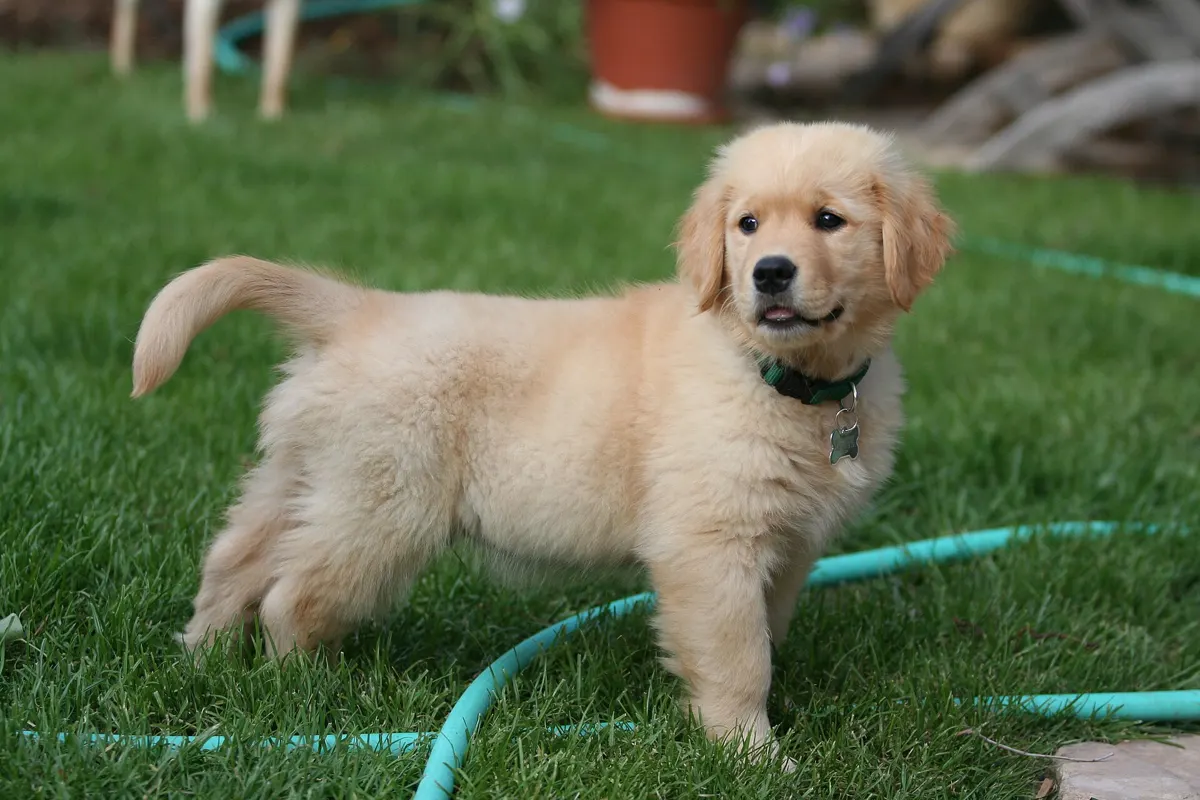
Photo: Scott via Wikimedia Commons, CC BY 2.0
🐾 Getting ready for a puppy? Grab the free Golden Retriever Puppy Checklist (PDF) — no email required.
You turn around in the yard and catch your golden retriever happily snacking on something you really wish they weren’t. Eating poop, which veterinarians call coprophagia, is one of the most upsetting habits owners deal with. The good news is that it’s common, it often fades in puppies, and there’s a lot you can do. The first step is a vet visit to rule out medical causes, followed by calm, consistent management at home.
This guide covers why dogs do it, which health problems your vet will want to rule out, the real risks, and practical steps that help.
How common is poop eating in dogs?
More common than most owners think. In a 2018 study from the UC Davis School of Veterinary Medicine, researchers surveyed more than 1,500 dog owners, mostly in the United States. About 16% said they had seen their dog eat another dog’s stool (or their own) at least six times, and about 23% had seen it at least once.
A few of the study’s other findings are useful for owners:
- Greedy eaters were more likely to do it. About half of the frequent stool eaters were described as greedy eaters, compared with about 28% of dogs who didn’t eat stools.
- Multi-dog homes were more likely, possibly because there’s simply more poop around.
- Fresh stools were the target. Most stool-eating dogs went for stools no more than two days old.
- It wasn’t linked to diet or age in that sample, and stool-eating dogs were just as easy to house train as other dogs.
The researchers proposed that the habit may be a leftover instinct from wolf ancestors, who may have kept their resting areas clean of fresh droppings before parasite eggs in them became infective. That’s a hypothesis, not a settled fact, but it helps explain why so many otherwise normal, healthy dogs do it.
The study didn’t single out golden retrievers. Among AKC breed groups, terriers and hounds were the most likely to be stool eaters. Still, many goldens are enthusiastic, food-motivated eaters who explore the world with their mouths, so it’s no surprise the habit shows up in plenty of golden homes.
Why golden retriever puppies eat poop
For young puppies, some poop eating is normal. The AKC explains that mother dogs lick their puppies to help them go to the bathroom and clean up after them for about the first three weeks. Puppies then investigate, play with and sometimes eat stools, their own or another animal’s.
According to the AKC, this behavior fades in most cases before a puppy is about nine months old. VCA Animal Hospitals adds that good nutrition, supervision and direction help it clear up, while a lot of owner attention can accidentally reinforce it.
That doesn’t mean you should just wait it out. Eating other animals’ poop can expose a puppy to parasites, viruses or toxins, and habits that start young can stick. A few puppy-specific tips:
- Ask your vet about a stool test for parasites. VCA calls stool testing the minimum level of testing for a puppy that eats stools.
- Go out with your puppy for every potty break, reward them right after they go, and pick up the stool before they turn around. Our puppy potty training schedule can help you predict when those breaks will happen.
- Avoid long stretches of confinement without enrichment. VIN and AVSAB both describe excessive early confinement, boredom and lack of interaction as factors that can set up the habit.
- Never punish accidents in the house. Harsh house-training methods are one of the causes the AKC lists, because some puppies learn to “hide the evidence.”
Medical causes your vet should rule out
Most poop eating turns out to be behavioral, but VCA says medical causes must be ruled out before you can call it purely behavioral. This matters most when an adult golden starts the habit for the first time, or when it suddenly gets worse.
Possible medical contributors that the AKC, VCA and VIN describe include:
- Intestinal parasites (worms).
- Poor digestion or absorption of nutrients, for example with chronic diarrhea or pancreatic problems. VCA notes that stools with a lot of undigested food are more likely to be eaten.
- A diet that’s unbalanced or too low in calories. VIN notes that deficiencies are less common with complete commercial foods and more likely with home-made diets put together without a veterinary nutritionist.
- Conditions that increase appetite, such as diabetes, Cushing’s disease or thyroid disease.
- Medications that increase appetite, such as steroids.
- Cognitive dysfunction in older dogs, a form of canine senility that VIN says can lead to poop eating.
Your vet will likely examine your dog, ask about diet and stool habits, and may recommend a fecal test, blood tests or other screening. The Oregon Veterinary Medical Association recommends regular fecal analysis for dogs who eat poop, since they can pick up parasites along the way.
If your golden is eating another pet’s stool, VCA notes it can be worth having that pet checked too, because poorly digested stool may be part of the attraction.
When to call your vet
Call your veterinarian, rather than waiting, if:
- An adult golden suddenly starts eating poop, or the habit suddenly gets worse.
- Your dog seems hungrier than usual, is losing weight, or has other new changes in appetite, energy or behavior.
- Your dog has vomiting, diarrhea, lethargy or a poor appetite. See our vomiting and diarrhea guides for warning signs.
- Your dog ate stool from a pet taking medication, or from a sick animal.
- Your dog ate a lot of cat litter and then has trouble pooping, isn’t pooping or has abnormal stools. The AKC lists these as reasons to call your vet.
- Your senior golden also seems confused or is having accidents in the house.
Behavioral reasons dogs eat poop
Once your vet has ruled out medical problems, the habit is usually behavioral. Common reasons the AKC, VIN and AVSAB describe include:
- Normal scavenging and curiosity. Dogs evolved as scavengers, and stools are an interesting smell to them.
- Habit. VIN notes that some dogs simply develop a taste for it, which makes the habit harder to break.
- Boredom and too little interaction, especially in dogs left alone for long periods or kept confined.
- Stress and anxiety, including separation anxiety or big routine changes such as a move or a new pet. Our separation anxiety guide covers that side.
- Attention. A dramatic reaction can reward the behavior. AVSAB describes owners who unintentionally reward it by rushing over to play with or cuddle a dog who is sniffing poop.
- Avoiding punishment. Dogs scolded for accidents may eat the evidence, and older dogs with arthritis or cognitive changes may struggle to get outside in time.
- Following your lead. AVSAB describes dogs who become interested in stools because they follow their owners around while they scoop the yard.
- Feeding near the potty area. The AKC recommends keeping feeding and potty areas separate.
- Living with a sick or older dog, especially one with stool accidents.
Cat poop is a special temptation
Many dogs find cat stool and litter boxes irresistible. The AKC notes that cat poop can carry parasites and bacteria such as Salmonella, some of which can spread to people. Practical fixes from the AKC and AVSAB:
- Put the litter box where your cat can easily reach it and your golden can’t, for example behind a baby gate.
- Consider a covered or top-entry litter box, and scoop often.
- If neighborhood cats use your yard, ask your vet about regular parasite checks.
How to stop a golden retriever from eating poop
Be realistic. In the UC Davis survey, owners reported very low success rates for common approaches, about 1 to 4% for behavior techniques and 0 to 2% for deterrent products. Those were owners’ own reports of what they tried, often without professional help, so they don’t prove that nothing works. But they do show this is a stubborn habit and that preventing access matters most. VIN puts it simply: patience and trying several tactics give you the best chance.
1. Get the vet check first
Rule out medical causes and parasites before you focus on training. If your vet finds a problem, treating it may reduce the habit.
2. Remove the opportunity
Prevention is the most reliable tool you have. VCA, VIN, AVSAB and the AKC all agree:
- Pick up stools right away, in the yard and on walks.
- Supervise potty breaks. Go out with your dog, ideally on a leash or long line at first, so you can guide them away from stools before they reach them.
- Keep the yard clean so curiosity doesn’t turn into a habit.
- Block litter box access if you have cats.
- Feed on a regular schedule so you can predict when your dog will need to go. VIN suggests this, and it makes supervision much easier.
The free Puppy Care Log has a “Toilet observation” entry where you can note when your golden goes. It’s a simple notebook that stays on your device, not a diagnostic tool, but a few days of notes can help you plan supervised potty breaks and share details with your vet.
3. Teach a better habit after every potty break
VCA, VIN and AVSAB all recommend teaching your dog to come to you right after going:
- Wait quietly while your golden goes.
- As soon as they finish, cheerfully call them to you, or ask for a sit.
- Reward with a high-value treat, then a quick game of fetch or tug.
- Clean up the stool while your dog is busy with you.
With repetition, many dogs start running to you after they go instead of turning around to investigate. AVSAB suggests making the yard a place for play with you so that games compete with the old habit. A solid recall helps a lot, and our recall training guide walks through building one with positive reinforcement.
4. Teach “leave it”
A reliable “leave it” lets you interrupt the habit on walks and in the yard. AVSAB recommends a “leave it” or “stay” cue for dogs who try to beat you to the poop. Practice first with low-value items indoors, reward generously for looking away, and build up gradually. Our puppy training guide covers “leave it” alongside other foundation skills.
5. Add exercise, play and enrichment
Bored dogs find their own entertainment. VIN and AVSAB recommend more exercise, play and interaction, especially for dogs whose habit seems linked to boredom or anxiety. Our exercise needs guide covers keeping a golden busy at different life stages, and chew toys and food puzzles can help fill quiet time.
6. Ask your vet about diet and eating speed
Never change your golden’s diet on your own because of poop eating. VIN suggests talking with your vet about whether a diet change or a higher-fiber food might help, and how to switch safely. Because greedy eating was linked to the habit, VIN also suggests slow-feeder bowls or food toys for fast eaters. See our slow feeder bowls guide, and our feeding guide for working out portions with your vet’s input.
7. Be cautious with deterrent products and home remedies
Stool-eating deterrent chews and powders, pineapple, meat tenderizer and other home remedies are widely recommended online. The evidence for them is weak:
- In the UC Davis survey, none of the 11 marketed products meaningfully changed the behavior, based on owner reports.
- VCA says remedies such as papaya, yogurt and cottage cheese have never been proven effective, and that most dogs either get used to taste deterrents or learn to avoid treated stools.
- Any additive has to go to every pet whose stool is being eaten, not just the dog doing the eating.
- Some products and remedies contain ingredients, such as garlic, MSG or spices, that may not suit every dog, and VIN notes that meat tenderizer and hot sauce can upset the stomach.
Check with your vet before giving your dog any supplement, deterrent or food additive.
8. Don’t punish
Rubbing a dog’s nose in stool, yelling or using harsh corrections doesn’t help. VCA calls the “nose in the stool” method outmoded, inhumane and useless, and says it may actually encourage the habit. VIN warns that punishment can worsen anxiety. AVSAB’s position on humane dog training recommends reward-based methods rather than punishment. Stay calm, interrupt and redirect when you need to, and reward your golden every time they leave poop alone.
When to get extra help
If the habit continues despite good management, ask your vet for a referral to a veterinary behaviorist or a qualified reward-based trainer. VIN notes that when anxiety or compulsive behavior is involved, your vet can decide whether medication might help. For dogs who are hard to supervise, VIN mentions that a properly fitted basket muzzle is an option some owners use, but it needs careful introduction and supervision, so discuss it with your vet or trainer first.
Hygiene for you and your family
Poop eating also affects the people in your home. VIN notes that stool-eating dogs can put owners at slightly higher risk of bacteria such as Salmonella and E. coli, and recommends avoiding licks and washing your hands frequently until the habit is under control. A few simple habits help:
- Wash hands after handling your dog’s mouth, toys and bowls, and teach children to do the same.
- Pick up stools quickly to protect other dogs and people too.
- Keep up with the parasite control your vet recommends. Our flea, tick and heartworm guide covers building a prevention plan with your vet.
If you’re bringing home a new puppy, the free puppy checklist helps you set up potty supplies, poop bags and vet visits before the first day.
The short version
- Poop eating is common and often fades in puppies, but it’s worth a vet visit, especially if an adult golden starts suddenly.
- Your vet can rule out parasites, digestive problems, diet issues and conditions that increase appetite.
- Preventing access works better than any product: clean up right away, supervise potty breaks and block litter boxes.
- Teach your golden to come to you for a reward after every potty break, and build a solid “leave it.”
- Add exercise, play and enrichment, and talk to your vet before changing food or trying deterrents.
- Never punish. Stay calm, redirect and reward, and call your vet if your dog shows any signs of illness.
Frequently asked questions
Why is my golden retriever puppy eating poop?
Eating poop is common in puppies. Mother dogs clean up after their litters, and puppies explore the world with their mouths, so some pick up the habit early. The AKC says that in most cases the behavior fades before a puppy is about nine months old. Your vet should still check your puppy, including a stool test for parasites, and you can help by cleaning up right away, supervising potty breaks and rewarding your puppy for coming to you after going.
Is it dangerous if my golden eats poop?
It is usually more gross than dangerous, but it isn't risk-free. Veterinary Partner (VIN) notes that eating feces raises the risk of intestinal parasites and bacteria such as Salmonella and E. coli, and that some dogs have become sick from medication passed in another dog's stool. Poop from other animals may also carry viruses, parasites or toxins. Ask your vet about regular stool testing, wash your hands, and call your vet if your dog shows vomiting, diarrhea, lethargy or other signs of illness.
My adult golden suddenly started eating poop. Should I see a vet?
Yes. The AKC and VCA Animal Hospitals both advise having your veterinarian rule out medical causes, especially when an adult dog starts the habit. Possibilities they list include parasites, poor digestion or absorption of nutrients, an unbalanced or insufficient diet, and conditions that increase appetite, such as diabetes, Cushing's disease or thyroid disease, or medications like steroids. In older dogs, VIN adds that cognitive dysfunction can play a role.
Do poop-eating deterrent chews and powders work?
The evidence is weak. In a large UC Davis owner survey published in 2018, owners reported success rates of 0 to 2% for 11 products marketed to stop stool eating. VCA notes that most dogs either get used to the taste or learn to avoid treated stools. Any additive must go to every pet whose stool is being eaten, and some contain ingredients that aren't suitable for every dog, so talk to your vet before trying one.
Should I punish my golden for eating poop?
No. The AKC, VCA and VIN all warn against harsh punishment. Scolding can add anxiety, can teach a dog to eat the "evidence" before you see it, and can even reward a dog who wants your attention. Instead, prevent access, stay calm, and reward your golden generously for leaving poop alone and coming to you.
A quick note: this guide is general information from published sources, written by dog lovers, not a veterinarian. Your own vet knows your dog's history, so check with them before changing food, exercise or treatment.
Sources
- Hart BL et al. (2018), The paradox of canine conspecific coprophagy, Veterinary Medicine and Science (UC Davis School of Veterinary Medicine)
- AKC: Why Dogs Eat Poop and How to Stop It
- AKC: Why Do Dogs Eat Cat Poop?
- VCA Animal Hospitals: Dog Behavior Problems, Coprophagia
- Veterinary Partner (VIN): Feces Eating in Dogs and Cats
- American Veterinary Society of Animal Behavior (AVSAB): Help! My Dog Eats His Own Waste!
- Oregon Veterinary Medical Association: Dog Behavior, Coprophagia
- AVSAB Position Statement on Humane Dog Training
Keep reading
Golden Retriever Puppy Potty Training Schedule: A Step-by-Step Plan That Works
A practical golden retriever puppy potty training schedule: how often to go out, how to use the crate, what to do after accidents and how long house training really takes.

Golden Retriever Diarrhea: Common Causes, Warning Signs and When to Call the Vet
Why golden retrievers get diarrhea, which warning signs mean you should call the vet right away, what vets usually do, and how to lower the odds of another upset stomach.
Flea, Tick and Heartworm Prevention for Golden Retrievers: A Vet-Guided Plan
How to plan flea, tick and heartworm prevention for a golden retriever with your vet: year-round protection, coat checks, safe product use, testing and swim-friendly routines.
Golden Retriever Recall Training: How to Teach Your Golden to Come When Called
A step-by-step plan to teach a golden retriever to come when called: name games, a happy recall cue, long-line practice, an emergency recall word and the mistakes that quietly ruin recall.
Best Slow Feeder Bowls for Golden Retrievers: Do They Help and How to Choose One
Do slow feeder bowls help golden retrievers who gulp their food? Types compared, size and material tips, bloat context and when to ask your vet about fast eating.