Best Playpen and Exercise Pen for Golden Retriever Puppies
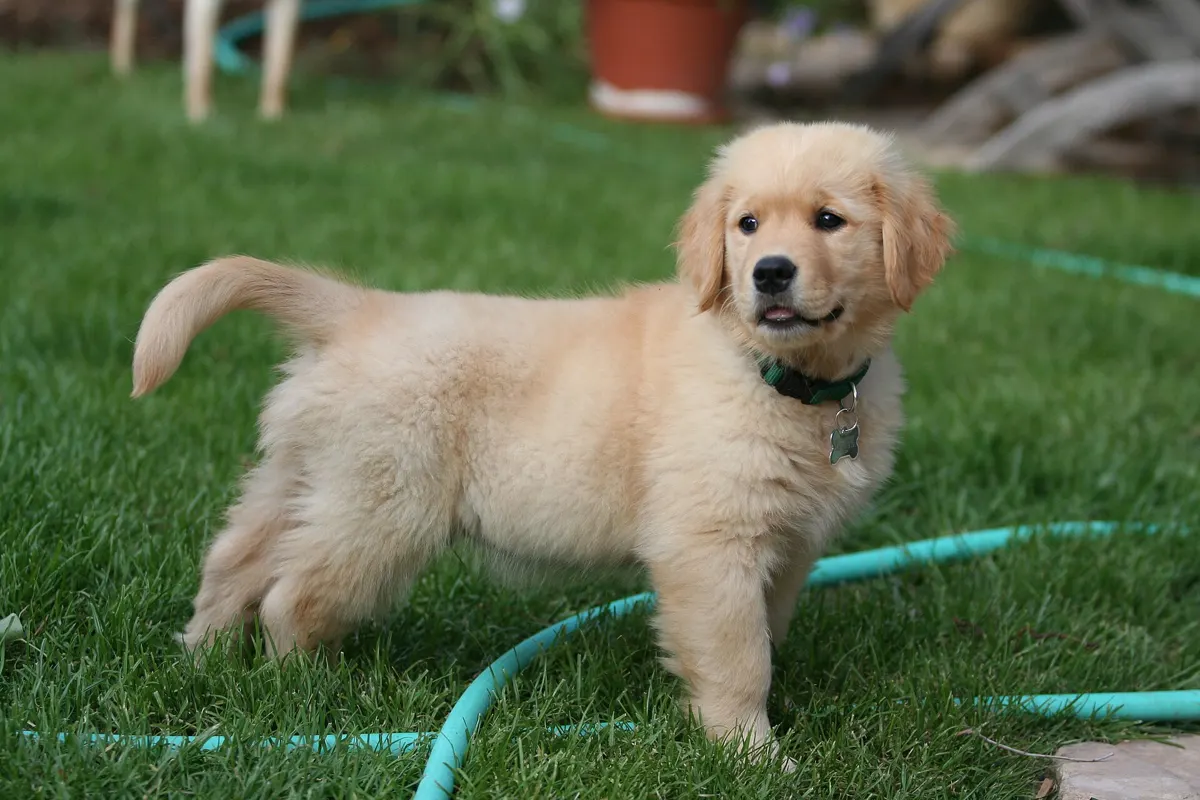
Photo: Scott via Wikimedia Commons, CC BY 2.0
🐾 Getting ready for a puppy? Grab the free Golden Retriever Puppy Checklist (PDF) — no email required.
The best playpen for a golden retriever puppy is a sturdy, 36- to 48-inch-tall metal wire exercise pen with a walk-through door and secure latches. Golden puppies grow fast, love to chew, and quickly outgrow short 24-inch pens or soft-sided mesh enclosures. Choosing a tall, chew-resistant pen early gives you a safe, flexible space without buying a replacement a few months in.
Raising a golden retriever puppy means balancing two realities: they want to be near you, and they put everything in their mouths. An exercise pen (often called an ex-pen) bridges the gap between a cozy crate and full freedom of the house, letting you cook dinner, answer emails, or take a shower without worrying about chewed baseboards or hidden potty accidents.
We haven’t tested these pens ourselves. Heights, panels and features come from the manufacturers’ pages, and we checked each Amazon listing on November 28, 2026. Models and sizes change, so confirm details with the maker before you buy.
When a playpen helps a golden puppy (and when it doesn’t)
A playpen is a management tool, not a substitute for training or supervision. According to VCA Animal Hospitals, planned confinement keeps young puppies safe, prevents house-training mistakes, and protects your home when you cannot watch them directly. VCA lists exercise pens and play yards alongside crates and gates as confinement options.
Where a playpen shines
- A safe zone during busy moments: When you are folding laundry, prepping meals, or working from home, a pen keeps your puppy in the same room as you while keeping cords, shoes, and kids’ toys out of reach.
- A potty-training buffer: For young puppies who cannot hold their bladder long, VCA Animal Hospitals notes that an exercise pen can hold a resting spot (like an open crate) and a toileting area such as a pee pad or artificial turf if you must be away longer than your puppy can hold it. (Pair this with a consistent golden retriever puppy potty training schedule so your puppy still learns to go outdoors.)
- A gentler option for crate-anxious puppies: If your puppy panics when a crate door closes, the AKC says a larger puppy-proofed area may suit them better while you work on calm golden retriever crate training and ask your vet about any early signs of golden retriever separation anxiety.
- A calm barrier around kids or guests: Pens give your puppy a place to decompress when visitors arrive or when young children are playing nearby.
When a crate or baby gate is the better tool
- Overnight sleep and naps: A properly sized crate gives your puppy a snug resting spot, and the AKC says it can support potty training. If you are still setting up your sleeping arrangement, check our guide to your golden retriever puppy’s first night home and our breakdown of what size crate a golden retriever needs.
- Escape artists and climbers: Once a golden learns they can hook their paws over the top rail or shove a lightweight panel across the floor, an open pen is no longer safe. A sturdy crate (see our best dog crate for golden retrievers) or a hardware-mounted gate is the safer choice. VCA notes that freestanding gates can be easily knocked over and that most gates should be fastened to a solid surface such as a door jamb.
- Blocking off an entire room: If you already have a puppy-proofed kitchen or mudroom, a tall walk-through pet gate gives your puppy more room to move without taking up floor space with eight panels.
What to look for in a playpen for a golden retriever puppy
Golden retrievers are large, athletic, and famously mouthy during their first year. Shopping for a pen with those traits in mind saves you from buying twice.
Panel height vs. a growing, jumping puppy
A 24-inch pen looks plenty tall for an 8-week-old puppy, but golden retrievers shoot up quickly. VCA’s advice is to choose a height your dog cannot easily scale. A helpful guideline is to choose a pen tall enough that when your puppy stands on their hind legs, the top rail stays well above their head so they cannot hook their front paws over the edge and vault out.
- 36 to 42 inches: A practical range for most golden retriever puppies through the early months.
- 45 to 48 inches: Best if your puppy is already a jumper, or if you want a pen that still contains an older adolescent indoors or on the grass.
Panel count and footprint
Classic wire exercise pens such as MidWest’s come with 8 connected panels (24 inches wide each), which form an octagon, square, or rectangle. Modular pens let you add or remove panels to fit tight living rooms or expand the space as your puppy grows. You can also attach an 8-panel pen to the front of a wire crate to create a secure “apartment” setup.
Metal vs. plastic vs. fabric/mesh
- Coated metal wire (best overall): Durable, chew-resistant, easy to wipe down, and more stable than lightweight pens when anchored. VCA warns that dogs who chew wires can injure their teeth or jaws, so redirect bar chewing to a proper chew toy. Look for a protective finish (such as black e-coat) if you plan to use it outdoors.
- Molded plastic: Quiet and gentle on hardwood floors, often with rubber feet. However, the American Kennel Club (AKC) says plastic playpens aren’t the best choice for puppies, who could gnaw on the plastic while teething, and suggests staying away from them until teething is done.
- Soft-sided fabric and mesh: Lightweight and convenient for travel with small breeds, but a poor match for most golden retriever puppies. Sharp puppy teeth can tear mesh and zippers quickly, and an energetic golden can easily tip a lightweight pop-up pen.
Door design and latches
Stepping over a 42-inch panel twenty times a day gets old fast, and becomes a tripping hazard when you are carrying a wiggly puppy. Look for a step-through door with a slide-bolt latch or double latches. Some puppies learn to nose or paw at a single, loose latch.
Floor protection and stability
Metal panels can scratch hardwood or tile and slide around when a puppy leans against them. Look for pens that include rubber feet, corner stabilizers, or ground anchors for outdoor grass use. Indoors, placing a washable, waterproof mat or a large piece of textured vinyl flooring under the pen protects your floors from both scratches and potty accidents.
Chew safety
Inspect the welds, wire ends, and latch hardware before letting your puppy inside. Avoid pens with loose plastic clips that a puppy can pop off and swallow, and make sure the bar spacing is narrow enough that your puppy cannot wedge their snout or paw between the slats.
Top playpens and exercise pens for golden retriever puppies
Below are four playpen models from established pet-gear makers, compared by the specs that matter most for a growing golden retriever.
| Model | Material | Available heights | Panels and footprint | Best use case |
|---|---|---|---|---|
| MidWest Homes for Pets Exercise Pen with Door | Metal wire, black e-coat | 24”, 30”, 36”, 42”, 48” | 8 connected 24”-wide panels; folds flat; add-on panels sold separately | Best all-around wire pen and crate attachment |
| FXW Homeplus Dog Playpen | Metal | 24”, 32”, 40”, 45” | Modular sets from 3 panels + 1 gate up to 14 panels + 2 gates; add-on panels | Best modular indoor pen for large, active pups |
| Richell Convertible Elite 6 Panel | Hardwood frame with wire slats | 35.8” | 6 panels; 68.9” x 31.9” as a pen; converts to gate or room divider | Best living-room look and multi-use room divider |
| IRIS USA 34” Exercise 8-Panel Pet Playpen with Door | Heavy-duty molded plastic | 34.25” | 8 panels (7 plus 1 door panel); 63” x 63” | Floor-friendly option for gentle, non-chewing pups |
1. MidWest Homes for Pets Exercise Pen with Door
The MidWest Homes for Pets Exercise Pen is simple, sturdy, and easy to adapt. It comes as eight connected metal panels that unfold without tools and fold flat for storage or travel, and it comes in five heights up to 48 inches. For a golden retriever puppy, the 36-inch, 42-inch, or 48-inch height gives you room to grow.
- What stands out: Includes four ground anchors for outdoor use on grass, can be attached to most dog crates, and accepts matching MidWest add-on panels if you want to expand the play area later. MidWest also sells mesh tops for pets that jump or climb.
- Keep in mind: On slick indoor floors, a heavy puppy can nudge an unanchored wire pen out of shape. Pairing it with a crate or placing it on a grippy mat keeps it steady.
2. FXW Homeplus Dog Playpen
If you want a modular indoor setup, the FXW Homeplus Dog Playpen is built specifically for indoor use. It comes in 24-, 32-, 40-, and 45-inch heights and modular panel packs (from 3 panels plus a gate up to 14 panels with two gates).
- What stands out: FXW lists the taller sizes for larger dogs, uses a threshold-free gate so puppies don’t have to step over a ledge, and pairs anti-slip rubber feet with short connecting stakes that match the panel height so dogs are less likely to bump into protruding rods.
- Keep in mind: FXW designs it for indoor use and says its flat-footed stakes are hard to push into the ground, so it is better suited to a dedicated indoor spot than the lawn.
3. Richell Convertible Elite 6 Panel
For owners who want a pen that blends into a living room and stays useful after puppyhood, the Richell Convertible Elite converts between a six-panel pen, a room divider, and a freestanding pet gate. It has a hardwood frame with wire slats and uses specially designed caps to lock panels at 90- or 180-degree angles.
- What stands out: The model stands 35.8 inches high with a 25.6-inch-wide door opening and 1 1/2-inch spaces between the wire slats, and Richell recommends it for dogs from about 8.8 to 88 pounds.
- Keep in mind: At 35.8 inches, an athletic adolescent golden may eventually be able to jump over it if left unattended, the pen shape is long and narrow (68.9 by 31.9 inches), and wood frames should be monitored if your puppy is a heavy wood chewer.
4. IRIS USA 34” Exercise 8-Panel Pet Playpen with Door
The IRIS USA 34” Exercise 8-Panel Pet Playpen is made of heavy-duty molded plastic connected by full-length rods, creating a 63-by-63-inch square. Each panel has rubber feet to protect floors and keep the pen in place, and the front panel includes a built-in door.
- What stands out: Easy to clean, gentle on hardwood or tile floors, made in the USA, and expandable with additional panels.
- Keep in mind: Follow the AKC’s guidance on plastic pens. If your golden puppy starts chewing on the molded edges or door frame during teething, switch to a metal pen right away.
How to set up your puppy’s playpen
A well-organized pen helps your puppy settle faster and keeps messes easy to clean.
- Protect the floor first: Lay down a washable waterproof playpen mat, a whelping pad, or a non-slip rug larger than the pen’s footprint so the edges extend past the panels (this stops puppies from chewing the mat corners).
- Create a cozy rest zone: Place a chew-resistant bed or an open crate at one end. Attaching the pen to the front of your puppy’s crate gives them a familiar den to nap in while keeping the pen anchored.
- Add spill-resistant water: Use a heavy ceramic bowl or a clip-on bowl attached to the wire panels, as the RSPCA suggests for crates, so your puppy cannot flip their water bowl during zoomies.
- Stock safe, engaging chews: Rotate two or three safe options, like a stuffed rubber toy or a puppy-appropriate chew, from our best teething toys for golden retriever puppies guide.
- Plan the potty zone (only if needed): If you must leave your puppy longer than they can hold their bladder, place a grass patch or potty pad holder as far from the bed and water as possible. If your puppy shreds paper pee pads, remove them immediately to prevent ingestion.
Keeping track of naps, meals, and potty breaks makes pen time much smoother. Our free Puppy Care Log and Golden Puppy Checklist can help you map out a daily rhythm.
Introducing the playpen with positive reinforcement
Never toss your puppy into a brand-new pen and walk out of sight. Building positive associations takes just a few short sessions, following the same reward-based principles VCA Animal Hospitals recommends for confinement training:
- Make it a treat zone with the door open: Toss a few pieces of kibble or small training treats inside the pen and let your puppy walk in and out freely. Feed meals inside the open pen so they associate it with good things.
- Add a quiet activity and close the door briefly: Give your puppy a long-lasting chew or food-stuffed toy inside the pen, close the latch, and sit right next to the pen reading or working. Open the door while your puppy is calm, before they start barking or pawing.
- Build distance gradually: Once your puppy relaxes with you beside them, stand up, walk across the room, and return calmly to drop a treat. Slowly work up to stepping out of sight for a few minutes at a time.
- Keep exits boring: When you let your puppy out, wait for four paws on the floor (not jumping on the gate), open the door calmly, and head straight outside for a potty break.
If your puppy whines persistently, drools heavily, or panics every time they are confined, pause and talk with your veterinarian or a certified reward-based trainer before pushing further.
Playpen safety rules every golden owner should know
- Remove collars and harnesses every time: The AKC warns that collars can get caught on crates, fencing, or another dog’s jaw, with deadly results, and its crate guide says to take the collar off for safety. Keep your puppy “naked” inside their pen.
- Never use a pen for all-day confinement: Exercise pens are for short, managed stretches, not all-day isolation. VCA notes that extended periods of confinement are not healthy, and puppies need regular potty breaks, socialization, training, and play. See our guide on how long a golden retriever can be left alone for age-appropriate expectations.
- Watch for climbing or escape attempts: If your puppy starts hooking paws over the top, wedging their muzzle under the bottom rail, or tipping the panels, stop leaving them unattended in the pen. You can add a top made for your pen (VCA notes some pens include a ceiling panel to prevent climbing out), or transition to a crate.
- Check for swallowed hazards: Inspect bedding, toys, and floor mats daily for torn fabric or missing pieces. If you ever suspect your puppy swallowed part of a toy, pad, or plastic clip, or if they show vomiting, lethargy, or belly discomfort, contact your veterinarian promptly.
- Outdoor shade and supervision: If you use an exercise pen in the yard, anchor it securely into the grass, provide shade and fresh water, and never leave a puppy outside unsupervised. The AKC says someone should be nearby whenever a dog is in a playpen.
For a complete rundown of everything else you need before pickup day, check our new golden retriever puppy checklist and what to buy for a golden retriever puppy.
This guide is general information, not veterinary advice. If your puppy is hurt, sick, or showing signs of distress in confinement, talk with your veterinarian.
Playpen picks for golden retriever puppies
We describe what to look for in each type of product. Affiliate product links, when present, are marked as sponsored.
Pick 1
MidWest Exercise Pen with Door (48 in)
Best for: Goldens who need a classic wire pen that grows with them, indoors or on the lawn
What to look for:
- Eight connected 24 in wide wire panels with a black e-coat finish
- Step-through door with slide-bolt latch and thumb snaps
- Four ground anchors for outdoor use; can attach to most dog crates
- Linked listing is the 48 in pen; MidWest also makes 24 to 42 in heights and add-on panels
Pick 2
FXW Homeplus Indoor Dog Playpen (40 in)
Best for: A modular indoor pen for a dedicated corner of the house
What to look for:
- Metal panels with anti-slip rubber feet
- Threshold-free walk-through gate
- Add or remove panels as your puppy grows; 24, 32, 40 and 45 in heights
- Linked listing is the 40 in, 8-panel set; FXW says it's for indoor use
Pick 3
Richell Convertible Elite 6 Panel (35.8 in)
Best for: Homes that want a wood pen that later works as a gate or room divider
What to look for:
- Hardwood frame with 1 1/2 in spaces between wire slats
- Lockable door panel with a 25.6 in opening
- Richell recommends the 35.8 in model for dogs about 8.8 to 88 lb
- Sold by Richell dealers; the Amazon listing we found was the shorter 31.5 in version, so we didn't link it
Prices and availability change, so we do not list them here. Check the retailer's page for current details.
Frequently asked questions
What height playpen does a golden retriever puppy need?
Choose a pen your puppy can't easily climb or jump: for most golden retriever puppies that means about 36 to 42 inches, or 45 to 48 inches if you have an athletic jumper. Standard 24-inch pens work only briefly for very young puppies before a growing golden can lean over or climb out.
Is a playpen better than a crate for a golden retriever puppy?
They serve different jobs. A properly sized crate is a good fit for sleep, short naps and house training, while a playpen gives your puppy room to play, drink water and stretch safely during the moments you can't watch them closely. Stay nearby either way.
Can a golden retriever puppy sleep in a playpen at night?
Some owners attach an open crate inside a playpen for nighttime, especially if a puppy isn't comfortable with a closed crate door yet. Many puppies do well in a properly sized crate next to your bed, which also makes it easier to hear when they need a potty break.
Are plastic or mesh playpens safe for golden retriever puppies?
Coated metal wire pens are usually the most practical choice for golden puppies. Soft-sided mesh pens are light and easy to chew, and the American Kennel Club says plastic playpens aren't the best choice for puppies because they could gnaw on the plastic while teething.
Should my puppy wear a collar inside an exercise pen?
No. Take off your puppy's collar and tags (and any harness) before putting them in a playpen or crate. The AKC warns that collars can get caught on crates, fencing or another dog's jaw, which can be deadly.
How do I keep a golden retriever puppy from moving their playpen?
Attach the pen to a sturdy wire crate, use the corner stabilizers or rubber feet that come with some pens indoors, and use the included ground anchors when setting up on grass outdoors. A non-slip mat underneath also reduces sliding on smooth floors.
When should I stop using a playpen for my golden retriever?
Stop leaving your puppy alone in an open-top playpen as soon as they start climbing the bars, pushing the panels over or trying to jump out. At that point, add a top made for your pen or switch to a crate, a securely mounted gate or a puppy-proofed room.
A quick note: this guide is general information from published sources, written by dog lovers, not a veterinarian. Your own vet knows your dog's history, so check with them before changing food, exercise or treatment.
Sources
- MidWest Homes for Pets: Exercise Pen with Door
- MidWest Homes for Pets: Exercise Pen Add-On Panels
- FXW: Homeplus Dog Playpen for Indoor Use
- Richell USA: Convertible Elite Pet Gate/Crate 6 Panel
- IRIS USA: 34" Exercise 8-Panel Pet Playpen with Door
- AKC: Choosing the right playpen for your dog
- AKC: Collar dangers
- AKC: Everything you need to know about crate training your dog
- VCA Animal Hospitals: Crate training and confinement for puppies and dogs
- VCA Animal Hospitals: House training your puppy
- RSPCA: Crate and playpen training
Keep reading

Golden Retriever Crate Training: A Calm, Step-by-Step Plan
Learn how to crate train a golden retriever puppy or adult with calm, reward-based steps, realistic time limits, night tips, and safety advice.
Best Dog Crate for Golden Retrievers: Wire, Heavy-Duty, and Travel Crates Compared
Compare the best dog crates for golden retrievers: wire, heavy-duty aluminum and crash-tested travel kennels, with maker dimensions and safety specs.
What Size Crate Does a Golden Retriever Need? Puppy to Adult Guide
Most adult golden retrievers fit a 42-inch crate, while tall males may need 48 inches. Learn how to measure, use a puppy divider, and size for travel.

Golden Retriever Puppy Potty Training Schedule: A Step-by-Step Plan That Works
Golden retriever puppy potty training schedule by age: how often to go out, a sample day, crate and night trips, accidents, and when to call the vet.
Golden Retriever Puppy's First Night Home: A Realistic Plan
How to handle a golden retriever puppy's first night home: crate near your bed, calm night potty trips, what to do about crying and when to call a vet.
What to Buy for a Golden Retriever Puppy: The Must-Haves vs. Nice-to-Haves List
What to buy for a golden retriever puppy, sorted into must-haves, nice-to-haves and things to skip, with what to look for in each item, plus a free printable checklist.