Best Dog Boots for Golden Retrievers: Hot Pavement, Snow, and Trail Protection
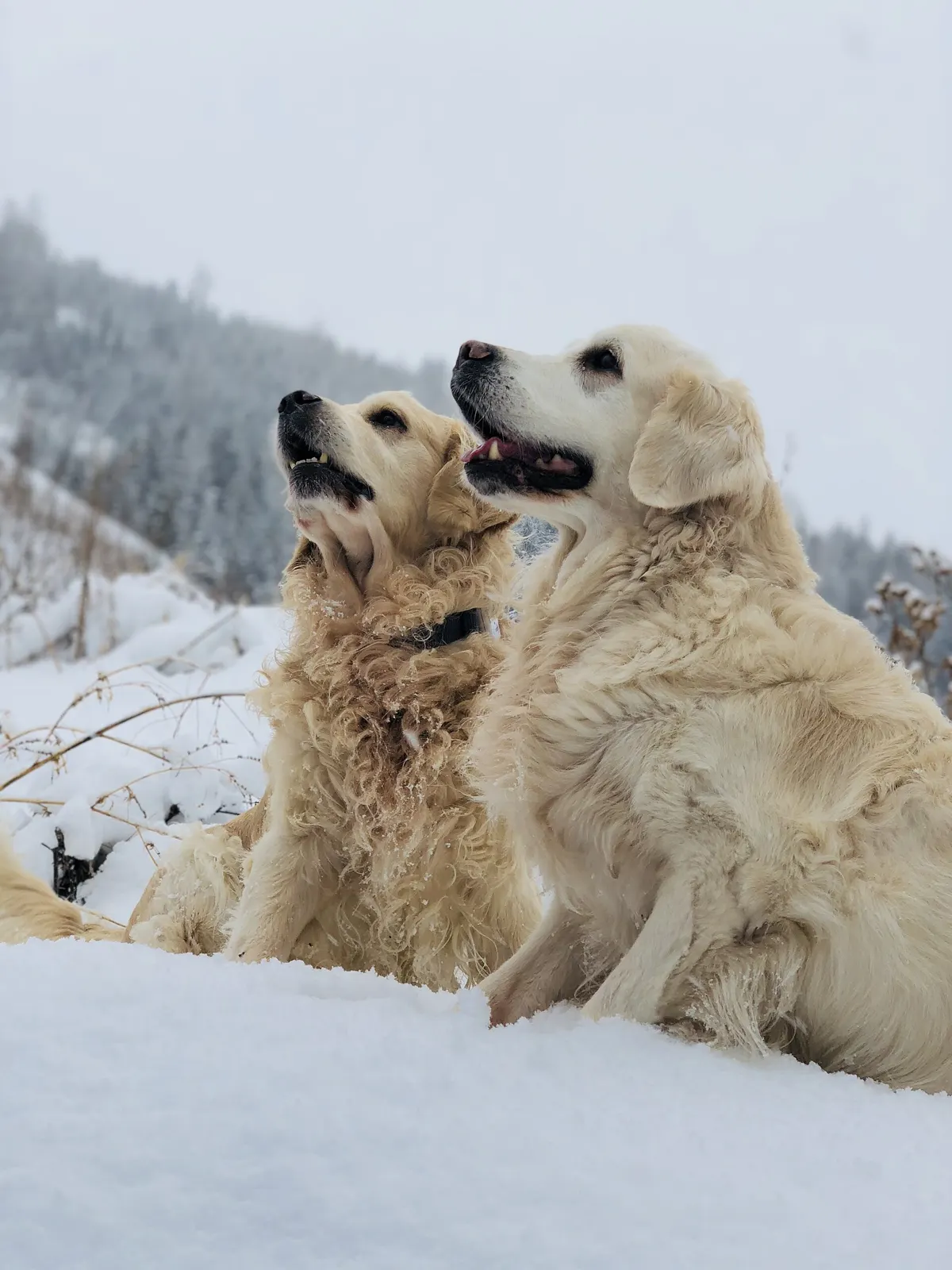
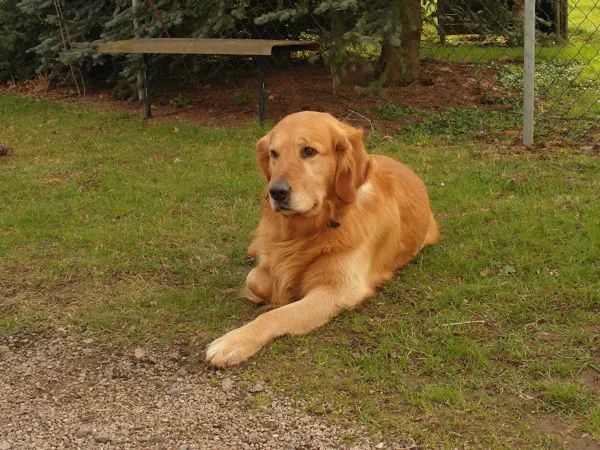
Photo: Skittle1986 via Wikimedia Commons, CC BY 4.0
🐾 Getting ready for a puppy? Grab the free Golden Retriever Puppy Checklist (PDF) — no email required.
The best dog boots for golden retrievers depend on the surface you are protecting against: Ruffwear Grip Trex stand out for rocky trails and hot pavement, Ruffwear Polar Trex and Muttluks Original Fleece-Lined are built for snow and freezing temperatures, Canada Pooch Soft Shield Boots offer easy-on protection for slushy winter walks, and PawZ Rubber Dog Boots work well as a lightweight barrier against road salt. Because many dogs have wider front paws than rear paws, and brands size by different measurements, getting the measurement method right matters just as much as the brand you choose.
Below, we break down when your golden actually needs footwear (and when bare paws are better), how to measure accurately for each brand, how five large-dog boot models compare, and what to do if your dog’s paws show signs of injury.
We haven’t tested these boots ourselves. Features and size charts come from the manufacturers’ pages, and we checked each Amazon listing on November 28, 2026. Designs and size charts change, so confirm details with the maker before you buy.
When golden retrievers actually need boots (and when they don’t)
The AKC breed standard describes the golden’s feet as round and compact with thick pads, and the ASPCA notes that paw pads cushion the feet, insulate against extreme weather and help dogs walk on rough ground. Still, Ruffwear points out that pads alone aren’t enough protection against varied terrain, extreme temperatures and chemicals.
When boots make a real difference
- Hot pavement, asphalt, and sand: Dogs can burn their paw pads on hot pavement. VCA Animal Hospitals recommends a simple check: if you cannot comfortably hold your palm against the pavement for over 10 seconds, it is too hot for your dog’s bare paws.
- Ice-melt salt and chemical deicers: According to the ASPCA, VCA and the Merck Veterinary Manual, common salt-based deicers can dry out or irritate paw pads, and can cause stomach upset or poisoning if licked off after a walk.
- Snowballing between the toes: Golden retrievers grow fur between their pads, and wet, sticky snow can build up between the paw pads. Ruffwear’s founder lists snow buildup between the pads as one sign that your dog could use boots.
- Sharp trails, gravel, and ice crust: Sharp rocks, rough trails and crusty, icy snow can scrape or cut pads during hikes or active outings.
- Protecting a healing paw: If your dog has a minor scrape or sensitive pad, ask your vet whether a boot is a good idea before putting one over an injured or bandaged foot.
When you can skip boots
- Mild-weather walks on grass, dirt, or cool pavement: If the surface is comfortable for bare feet, your golden can usually go without.
- Swimming and water play: Don’t put fabric or hiking boots on a golden for swimming. As the American Kennel Club (AKC) notes, trapped water inside a boot is uncomfortable and excess moisture between the toe pads can increase the likelihood of yeast infections.
- Replacing heat safety: Boots protect paws from hot ground, but they do not cool your dog’s body. In hot or humid weather, shift walks to early morning or evening, bring water, and review our guides to golden retriever heatstroke and the best cooling products for golden retrievers.
How to measure a golden retriever’s paws (by brand method)
A common reason dog boots twist, rub, or fly off into a snowbank is using the wrong measuring method. Do not assume one measurement fits every brand. Some makers size by paw width, while others size by paw length.
Before you grab a ruler, trim your golden’s nails; Ruffwear recommends trimmed toenails for the best boot fit, and Muttluks sizes include the nails. If you need a refresher, see our step-by-step guide on how to trim a golden retriever’s nails.
Method 1: Weight-bearing paw width (Ruffwear)
Use this method for brands whose charts list paw width:
- Place a blank sheet of paper on a hard, flat floor.
- Have your golden stand squarely with one front paw centered on the paper, so their weight is on that paw.
- Hold a pen straight up and down and mark the widest points on the left and right sides of the paw.
- Measure the distance between the two marks.
- Repeat on a rear paw. Ruffwear notes that many dogs have wider front paws than rear paws, so measure all paws.
Brand rule to know: According to Ruffwear’s sizing chart, if your dog’s paw width falls between two sizes, size down. Because Ruffwear sells boots in pairs of two, you can buy a larger pair for the front paws and a smaller pair for the back paws if they measure differently.
Method 2: Weight-bearing paw length (Muttluks)
Use this method for brands whose charts list paw length:
- Place your golden’s front paw on a sheet of paper while they stand with full weight on it.
- Mark the back of the heel (aligning your pen straight down the back of the leg, per Muttluks’ size chart) and the tip of the longest toenail.
- Measure the distance between the two marks.
Brand rule to know: Muttluks recommends choosing the smallest size that fits the entire paw including the toenails, noting that boots that are too large may slip off or wear prematurely. Its chart lists golden retrievers as a Large example, but says breed examples are approximate because paw sizes vary within breeds.
Method 3: The maker’s own guide (Canada Pooch and PawZ)
Canada Pooch provides a printable Boots Sizing Guide on its product page to help you measure your dog’s paws before ordering. PawZ lists its sizes by paw measurement in inches (Large up to 4 inches, X-Large up to 5 inches) and links a size chart that places golden retrievers in Large; check your own dog’s measurement against it.
5 best dog boots for golden retrievers compared
Each of the models below is built for a specific job. Rather than hunting for one “do-it-all” boot that compromises on breathability in July or traction in January, match the boot’s sole, upper, and closure to the conditions your golden actually walks in.
| Boot model | Best use case | Outsole | Closure system | Sold as | Sizing method |
|---|---|---|---|---|---|
| Ruffwear Grip Trex | Rocky trails, gravel, hot pavement | Vibram non-marking lug outsole | Hook-and-loop cinch closure | Pair (2 boots) | Paw width |
| Ruffwear Polar Trex | Snow, ice, winter hikes | Winter outsole with glass-fiber lugs | Hook-and-loop closure + stretch pullover gaiter | Pair (2 boots) | Paw width |
| Muttluks Original Fleece-Lined | Cold winter walks, snowballs | Flexible treated leather | Elasticized rib-knit cuff + ankle strap | Set of 4 | Paw length |
| Canada Pooch Soft Shield Boots | Slush, salted sidewalks, wet cold | Rubber grip sole | Top toggle + reflective hook-and-loop ankle strap | Set of 4 | Printable sizing guide |
| PawZ Rubber Dog Boots | Short walks on road salt, rain, mud | Natural rubber (no separate sole) | Pull-on, no straps | Pack of 12 | PawZ size chart (inches) |
1. Best for trails and hot pavement: Ruffwear Grip Trex
If your golden joins you on rocky hikes, gravel paths, or unavoidable stretches of warm pavement, Ruffwear recommends the Grip Trex for hiking, biking, running and hot and rugged surfaces.
- Sole and upper: A rugged, non-marking Vibram lug outsole provides traction and protection on varied terrain, while the tightly woven polyester air-mesh upper is breathable and keeps dirt and trail debris out.
- Closure and fit: A gusset design gives a wide opening for easy on and off. A hook-and-loop cinch closure secures around the narrowest part of the leg, and reflective trim adds low-light visibility.
- Why it works for goldens: Because Grip Trex are sold in pairs of two across sizes up to 3.25 inches in paw width, you can match wider front paws and narrower rear paws.
- Watch-outs: The mesh upper is built for breathability rather than winter warmth; Ruffwear’s cold-weather boot is the Polar Trex. Ruffwear also recommends checking the closure about 15 minutes into your outing and adjusting as needed.
2. Best for snow, ice, and winter trails: Ruffwear Polar Trex
For golden retrievers who love snow, icy trails, and cold-weather hikes, the newly redesigned Ruffwear Polar Trex Winter Boots address two big winter complaints: slipping on ice and losing boots in snow.
- Sole and upper: The updated Polar Trex pairs a waterproof, windproof softshell upper, which Ruffwear says keeps paws dry and warm, with a winter-specific outsole whose glass-fiber lugs sit directly under the paw for traction on ice and snow.
- Closure and fit: A hook-and-loop closure cinches the boot, and a stretch pullover gaiter goes over the closure to keep snow from building up on it, which Ruffwear says improves boot retention. Reflective trim improves visibility on dark winter walks.
- Why it works for goldens: Like Grip Trex, Polar Trex are sold in pairs of two, letting you dial in separate front and rear sizes.
- Watch-outs: Because of the glass-fiber lugs, Ruffwear recommends keeping these boots for outdoor use only, so they are not for slick indoor floors.
3. Best for cold winter walks and flexibility: Muttluks Original Fleece-Lined
If your golden dislikes stiffer soles, Original Fleece-Lined Muttluks take a softer, more flexible approach for winter walks.
- Sole and upper: A waterproof, windproof, breathable softshell exterior and fleece inner lining sit over a flexible treated leather sole that Muttluks says adapts to paw movement and individual paw shapes.
- Closure and fit: An adjustable elasticized rib-knit leg cuff fits snugly up the leg, and the strap should fall at the narrow spot on the leg, just above the dewclaw. They come as a set of four, with Size L covering 3.75–4.25 inches and Size XL covering 4.25–4.75 inches in paw length.
- Why it works for goldens: Muttluks designed them to keep snowballs, cold, ice and salt off the pads on winter walks.
- Watch-outs: Muttluks says to wash them in cold water, air dry, and re-treat the leather soles after each wash. Because all four boots in the box are the same size, dogs with a major front-to-back paw size mismatch may get a looser fit in back.
4. Best easy-on boot for slush and salted sidewalks: Canada Pooch Soft Shield Boots
If you want a practical winter boot for daily neighborhood walks through wet snow, slush, and road salt, without wrestling your golden’s paws through a narrow opening, Canada Pooch Soft Shield Boots focus on simple on-and-off design.
- Sole and upper: A water-resistant upper shell with a fleece lining pairs with a flexible rubber grip sole; Canada Pooch says they help keep paws from getting dry and itchy from snow salts.
- Closure and fit: A wide opening makes it easier to slip the paw in. Once the foot is in, you adjust the toggle at the top of the boot and wrap the reflective hook-and-loop strap to secure it. Sold as a set of four.
- Why it works for goldens: The wide opening is forgiving for fluffy paws, and the toggle plus ankle strap are designed to keep the boots in place.
- Watch-outs: Like other four-packs, all four boots share one size, so double-check both front and rear paws against Canada Pooch’s printable sizing guide.
5. Best lightweight salt and rain barrier: PawZ Rubber Dog Boots
For golden retrievers who hate bulky footwear, or for quick potty breaks on heavily salted city sidewalks, PawZ Rubber Dog Boots are thin, balloon-style rubber booties.
- Sole and upper: Made of waterproof natural rubber with no separate sole, zippers, or straps. They’re reusable and meant to be thrown away once worn out, and they come in packs of 12 (Large is listed for paws up to 4 inches; X-Large up to 5 inches).
- Closure and fit: The snug rubber opening stretches over the paw, and PawZ says the thin rubber lets your dog feel the ground naturally.
- Why it works for goldens: Little to put on or adjust for dogs that refuse structured boots, and a waterproof barrier against chemical deicers, mud, and wet slush.
- Watch-outs: There is no thick lugged outsole or insulation, so for rocky trails a trail boot like the Grip Trex is the closer match. PawZ says not to leave them on while your dog is resting or sleeping and generally recommends removing them after one or two hours.
How to get a golden retriever used to dog boots
Even well-fitting boots can trigger a “robot high-step” the first time your golden puts them on. A calm, gradual routine with positive reinforcement works far better than strapping on all four boots and heading straight for the trail.
- Build a positive association first: Following the AKC’s boot acclimation advice, let your golden explore and sniff the boots while pairing them with praise and high-value treats.
- Start with one boot indoors: Slip one boot onto a front paw, ensure the toes reach all the way to the front of the boot, fasten it snugly at the narrowest part of the leg, and reward immediately. Keep the first sessions short and add time with each use.
- Practice short indoor walks: Once your golden ignores one boot, add the others indoors. Toss a treat a few feet away or invite them to walk toward you so they focus on moving forward rather than staring at their feet.
- Watch the dewclaws: The AKC breed standard says front dewclaws on goldens are normally left on, and Muttluks places its strap just above the dewclaw. If a strap presses on the dewclaw, try thin dog socks underneath; Ruffwear says its boot-liner socks stay in place even if your dog has a dewclaw and can help with a snugger fit.
- Re-check the fit mid-walk: On your first few outdoor walks, pause after about 15 minutes to check that the straps haven’t loosened, the soles haven’t twisted sideways, and there is no redness around the ankle or dewclaw.
Bringing a young puppy home soon? Getting them comfortable with gentle paw handling early can make future boot fitting, nail trims, and vet exams easier. You can organize those early milestones with our free golden puppy checklist and Puppy Care Log.
Paw-care alternatives when boots aren’t practical
If your golden simply cannot tolerate boots, or you are heading out on a mild day with minor hazards, you still have ways to protect their feet:
- Apply a pet-safe paw balm: VCA suggests a thin layer of paw balm just before a winter walk as a barrier against salt-covered sidewalks, and the ASPCA calls paw wax or booties an excellent barrier for sensitive feet. The ASPCA also advises avoiding human hand moisturizers, which can soften the pads and lead to injury.
- Keep the fur between the pads trimmed: The ASPCA recommends combing and trimming the hair between the toes even with the pads to avoid painful matting. If your dog fidgets, ask a professional groomer to tidy the paws. For more coat and foot maintenance tips, see our golden retriever grooming guide.
- Rinse and dry after winter walks: After walking on salted streets, wash your golden’s paws in warm water (or wipe them with a damp cloth) so they don’t lick chemical residue off their feet, then dry them.
- Adjust your route and gear: In summer, stick to shaded grass paths during cooler morning and evening hours. On hikes and road trips, pair safe paw routines with a well-fitted walking harness (see our best harness for golden retrievers) and pack a paw-rinse towel and first-aid basics using our golden retriever car travel guide. For pacing outdoor outings safely across life stages, check golden retriever exercise needs.
Signs to stop and see your veterinarian
Inspect your golden’s paws, including between the toes and around the nails, after walks in heat, snow, or rough terrain. Stop activity and contact your veterinarian if you notice any of the following, as outlined by VCA Animal Hospitals, the ASPCA and the Merck Veterinary Manual:
- Signs of paw pad burns: Red, swollen or blistered pads, loose flaps of skin, or red, ulcerated patches after being on hot surfaces.
- Bleeding, deep cuts, or embedded debris: Bleeding that will not stop with pressure, deep cuts, torn or broken nails, or thorns or glass embedded so deeply that you would have to dig into the pad (do not attempt that at home).
- Possible frostbite: Pale or red skin that is swollen and painful after cold exposure, especially on the feet. Move your dog somewhere warm and call your vet; don’t rub the area or use snow or very hot water on it.
- Signs of infection or allergy flare-ups: Redness, swelling, pus, ongoing pain, or constant paw licking and chewing. Constant licking can also point to underlying golden retriever allergies and itchy skin, which your vet can diagnose and treat.
- Sudden limping: Any unexplained limp or refusal to bear weight warrants a veterinary exam; see our guide to golden retriever limping for what to note before your appointment.
- Suspected deicer or antifreeze ingestion: Vomiting, diarrhea, weakness, tremors or seizures after licking salt-treated paws or snow (or mouth sores with calcium chloride products), or clumsiness and extra thirst after possible antifreeze exposure, are urgent reasons to call your veterinarian or the ASPCA Animal Poison Control Center immediately.
Looking for more gear recommendations for your golden? Browse our full golden retriever gear picks to compare harnesses, cooling gear, car safety equipment, and grooming tools.
This guide is general information, not veterinary advice. Ask your vet before using boots on a dog with a paw injury, joint problem or other health condition.
Dog boot picks for golden retrievers
We describe what to look for in each type of product. Affiliate product links, when present, are marked as sponsored.
Pick 1
Ruffwear Grip Trex (sold in pairs)
Best for: Goldens who hike, run or cross hot, rocky or gravelly ground
What to look for:
- Vibram non-marking lug outsole and breathable mesh upper
- Hook-and-loop cinch closure at the narrowest part of the leg
- Sized by weight-bearing paw width, 1.50 to 3.25 in; size down between sizes (Ruffwear)
- Linked listing is the 2.75 in pair; choose your measured size and buy front and rear pairs separately if they differ
Pick 2
Ruffwear Polar Trex (2026 redesign, sold in pairs)
Best for: Goldens who walk or hike in snow and on ice
What to look for:
- Waterproof, windproof softshell upper
- Winter outsole with glass-fiber lugs; Ruffwear says outdoor use only
- Stretch pullover gaiter over the hook-and-loop closure
- Linked listing is the 2.50 in pair; choose your measured paw width
Pick 3
Muttluks Original Fleece-Lined
Best for: Cold winter walks for goldens who prefer a flexible sole
What to look for:
- Flexible treated leather sole and fleece lining
- Set of four boots, all one size
- Sized by paw length: L 3.75 to 4.25 in, XL 4.25 to 4.75 in (Muttluks)
- Sold by Muttluks; we didn't find a matching Amazon listing
Pick 4
Canada Pooch Soft Shield Boots
Best for: Everyday winter walks through slush and salted sidewalks
What to look for:
- Water-resistant shell, fleece lining and rubber grip sole
- Wide opening, top toggle and reflective hook-and-loop strap
- Pack of four; check Canada Pooch's printable sizing guide
- Linked listing is size 4; choose your measured size
Pick 5
PawZ Rubber Dog Boots (Large)
Best for: Quick salted-sidewalk, rain and mud walks for dogs who dislike bulky boots
What to look for:
- Waterproof natural rubber, no straps or separate sole
- Pack of 12, reusable until worn out
- Large is listed for paws up to 4 in; PawZ's chart puts golden retrievers in Large
- Don't leave them on while resting; PawZ suggests removing after one or two hours
Prices and availability change, so we do not list them here. Check the retailer's page for current details.
Frequently asked questions
Do golden retrievers really need dog boots?
Not for every walk. Many healthy golden retrievers handle mild grass, dirt, and cool sidewalks barefoot, but boots are genuinely helpful on scorching pavement, salted winter streets, sharp ice or rocky trails, and when snow balls up between their toes.
What size dog boots do golden retrievers usually wear?
Paw sizes vary from dog to dog, and Ruffwear notes that many dogs have wider front paws than rear paws. Always measure your dog's weight-bearing paws using the exact width or length method listed by the boot manufacturer rather than guessing by breed.
Why do dog boots keep falling off my golden retriever?
Boots usually slip off because the size is slightly too large, the strap is not cinched at the narrowest part of the leg above the paw, or long nails and untrimmed paw fur prevent the foot from seating all the way to the toe. Ruffwear and Muttluks both suggest checking the fit about 15 minutes into a walk.
Can golden retrievers wear dog boots on hot pavement?
Yes, breathable mesh boots with rubber outsoles can shield paw pads from hot asphalt and sand. However, boots do not prevent overheating, so you still need to walk during cooler hours and watch for heatstroke signs.
Are dog boots safe for golden retrievers with dewclaws?
Many goldens keep their front dewclaws, and boots can still work if the closure sits cleanly without pressing on the nail. If you notice redness or rubbing around the dewclaw, try pairing the boots with thin dog socks as liners, stop use if the skin looks irritated, and ask your veterinarian about any chafing or bleeding.
Can my golden retriever wear boots while swimming or in heavy rain?
Waterproof rubber booties can handle slush and puddles on short walks, but standard fabric boots are not meant for swimming. The AKC notes that excess moisture trapped between the toe pads can increase the likelihood of yeast infections.
What if my golden retriever refuses to walk in boots?
Start indoors for short periods with high-value treats, beginning with one boot before putting on all four. If your dog still cannot tolerate boots, paw balm, trimmed paw fur, and warm-water rinses after salted walks are practical alternatives.
A quick note: this guide is general information from published sources, written by dog lovers, not a veterinarian. Your own vet knows your dog's history, so check with them before changing food, exercise or treatment.
Sources
- Ruffwear: Grip Trex dog boots (features and paw-width sizing)
- Ruffwear: Polar Trex winter boots (2026 redesign)
- Ruffwear: Do dogs really need boots?
- Ruffwear: Behind the design of the Polar Trex dog snow boots
- Ruffwear: Bark'n Boot dog socks (boot liners)
- Muttluks: Dog boots size chart
- Muttluks: Original Fleece-Lined Muttluks
- Canada Pooch: Soft Shield Boots
- PawZ: Rubber dog boots (features, sizes and wear time)
- AKC: Dog boots, how to choose and get your dog used to them
- AKC: Official Golden Retriever breed standard (PDF)
- VCA Animal Hospitals: Dog paw injuries and how to help
- VCA Animal Hospitals: Be careful with ice melt
- ASPCA: Keeping pets safe during winter, the dangers of ice melts
- ASPCA: Dog grooming tips (paw care)
- Merck Veterinary Manual: Keeping pets safe during cold winter months
- Merck Veterinary Manual: What to do in a dog or cat emergency
Keep reading

Golden Retriever Heatstroke: Warning Signs, First Aid and Prevention
Heatstroke is a veterinary emergency. Learn the signs in golden retrievers, what to do while getting to the vet, who is most at risk and how to keep your dog safe in hot weather.
Best Cooling Products for Golden Retrievers: Mats, Vests, Pools and What Really Works
How to keep a golden retriever cool: cooling mats, vests, pools, shade and water, which products help, which don't, and heatstroke warning signs every owner should know.
Golden Retriever Grooming: A Simple Home Routine for Coat, Ears, Nails and Paws
A practical golden retriever grooming guide: the right brushes, bathing, ear and nail care, trimming feathering, and why you should never shave a golden.
How to Trim a Golden Retriever's Nails: Step-by-Step, Tools and What to Do If You Cut the Quick
Learn how to trim golden retriever nails safely at home: finding the quick on light or dark nails, clippers vs. grinders, desensitization, and first aid.
Golden Retriever Exercise Needs: How Much Is Enough at Every Age
How much exercise does a golden retriever need? Age-by-age guidance for puppies, adults and seniors, plus swimming, mental games and hot-weather safety.
Best Harness for Golden Retrievers: Fit, Style and No-Pull Features Explained
How to choose the best harness for a golden retriever: front-clip vs. back-clip, no-pull features, sizing and fitting steps, and picks for puppies, pullers and car travel.
Car Travel With a Golden Retriever: Preparing, Packing and Planning Stops
Plan a car journey with your golden retriever: appropriate restraint, practical packing, supervised breaks and a destination routine, without leaving your dog alone in a parked car.

Golden Retriever Limping: Common Causes and When to See the Vet
Why is my golden retriever limping on a front or back leg? The common causes in goldens, what you can safely check at home, and which limps need a vet today.