Golden Retriever Limping: Common Causes and When to See the Vet
Please see your vet. This guide is general education, not a diagnosis or treatment plan. If your golden seems unwell, call your veterinarian. If it looks like an emergency, go to an emergency vet right away.
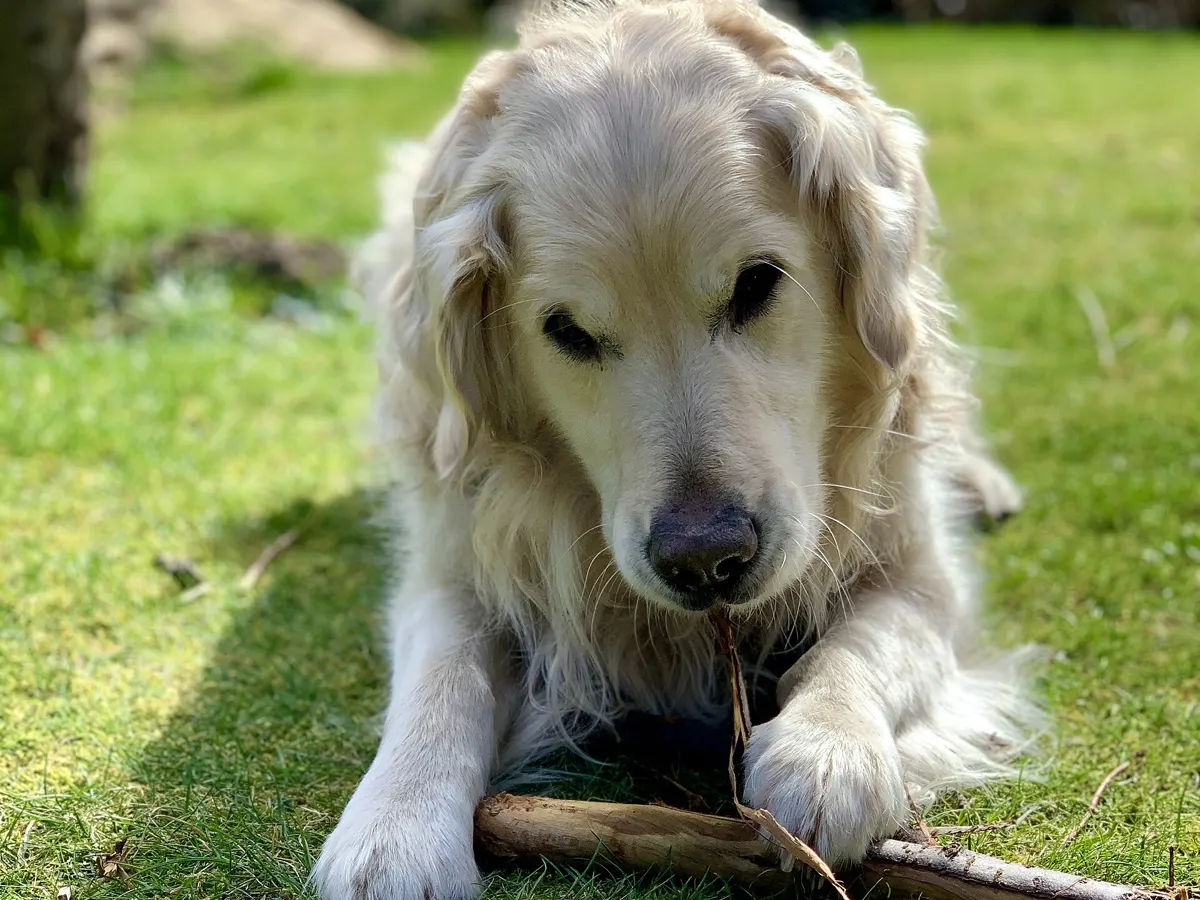
Photo: Johannnes89 via Wikimedia Commons, CC BY-SA 4.0
🐾 Getting ready for a puppy? Grab the free Golden Retriever Puppy Checklist (PDF) — no email required.
Your golden comes in from the yard, or gets up from a nap, and suddenly isn’t putting full weight on one leg. Goldens are tough, cheerful dogs that will keep playing fetch on a sore leg, so a limp is worth taking seriously. Some limps are a thorn in the paw. Others are the first sign of a joint problem that does better the earlier it’s treated.
General education only. We can’t diagnose your dog. If your golden is limping for more than a day, or shows any of the emergency signs below, see your vet.
First: is it an emergency?
Go to your vet or an emergency clinic right away if your golden:
- Won’t put any weight on the leg, or is dragging it
- Has a leg that looks bent at an odd angle, or a joint that looks dislocated
- Is bleeding heavily, or has a deep wound or bite
- Started limping after a fall, a dog fight or being hit by a car
- Is in obvious severe pain (crying, trembling, snapping when touched), or also seems weak, lethargic, feverish or isn’t eating
- Has a hard, warm, painful swelling on a leg bone
VCA Animal Hospitals notes that most dogs won’t walk on a broken leg, torn ligament or dislocated joint, and that a dog in severe pain shouldn’t be examined at home, because handling can make the injury worse. If your dog can’t walk, VCA suggests using a blanket as a sling to get them to the car.
For everything else, VCA’s rule of thumb is simple: if the limp lasts more than 24 hours, see your vet.
What you can safely check at home
If your dog is calm and not in severe pain, a gentle look can give your vet useful information. VCA’s first-aid guidance suggests:
- Watch your dog walk. Which leg is it: front or back, left or right? Does your dog carry the leg, touch it down lightly, or take shorter steps?
- Note the timeline. Did it start suddenly or slowly? Is it worse in the morning, after rest, or after exercise?
- Use two people. One person holds and comforts the dog, the other looks. Even loving dogs may bite when they hurt.
- Start at the toes. Look between the toes and pads for thorns, splinters, grass awns, cuts or redness, and check each nail for breaks. (Long nails can change how a dog walks, so see our guide to trimming golden retriever nails.)
- Work up the leg gently. Note any swelling, heat or spot where your dog pulls away. Compare with the other leg. Stop if it becomes too painful.
Then rest your dog: VCA advises confining lame dogs and restricting activity. That means leash-only potty breaks, no fetch, no stairs or jumping in and out of the car if you can help it.
Don’t reach for the medicine cabinet. The FDA warns that human pain relievers such as ibuprofen, naproxen and aspirin are processed differently in dogs and can cause stomach ulcers, kidney damage or liver damage, and acetaminophen can damage a dog’s liver. Even another dog’s leftover prescription may not be right for yours. Call your vet before giving any medication.
Common causes of limping in golden retrievers
Limping (lameness) can come from any part of the leg: skin, nails, muscles, tendons, ligaments, joints, bones or nerves. Here are the causes that come up most with goldens.
| Cause | Typical age | Which legs | What it often looks like |
|---|---|---|---|
| Paw or nail injury | Any | Any | Sudden limp, licking the paw, a cut pad, torn nail or something stuck between the toes |
| Sprain or strain | Any, often active dogs | Any | Limp after hard play or a slip; may improve with rest |
| Panosteitis | Usually 6-18 months | Can shift from leg to leg | Sudden limp with no injury, painful leg bone, may come and go |
| Elbow dysplasia | Often from about 5 months; some diagnosed at 4-6 years | Front, often both | Limp that’s worse after exercise and doesn’t fully go away with rest |
| Hip dysplasia | Young dogs and adults | Back | Bunny-hopping, stiffness, trouble rising |
| Cruciate ligament (CCL) disease | Usually adults | Back | Trouble rising or sitting, limp after rest, reluctance to jump into the car |
| Arthritis | Any, but signs often show in older dogs | Any | Stiffness after rest, slowing down on walks, trouble with stairs |
| Bone cancer (osteosarcoma) | Varies; more common in large breeds | Any, often near the wrist or knee | Limp plus a firm, warm, painful swelling that gets worse |
Paw injuries and sprains
The simplest causes are the most common: a thorn, a burr, a cut pad or a torn nail. VCA says that if you can see a foreign body between the toes and reach it easily, you can remove it, clean the area with antibacterial soap and soak the foot in warm water with Epsom salts. Don’t put ointments on it unless your vet approves. For swelling that might be a sprain or bruise, VCA suggests an ice pack for 15 minutes and a call to your vet.
Panosteitis (“growing pains”)
VCA describes panosteitis as a painful inflammation of the long leg bones in young, fast-growing dogs, and lists the golden retriever among the larger breeds prone to it. It usually affects dogs between 6 and 18 months old, and the limp can shift from one leg to another over weeks. Episodes can come with fever, tiredness or a poor appetite.
It eventually goes away on its own, but it’s painful, so dogs need vet-prescribed pain relief during flare-ups. VCA stresses that X-rays are still important, because more serious bone problems can look the same in young dogs. VCA also recommends feeding a diet made for large-breed puppies and keeping your puppy lean.
Elbow dysplasia
The American College of Veterinary Surgeons (ACVS) explains that elbow dysplasia is an inherited problem where the three bones of the elbow don’t fit together properly as the dog grows, which leads to pain and arthritis. ACVS lists golden retrievers among the breeds predisposed to it.
Signs often start from around 5 months of age, but some dogs aren’t diagnosed until 4 to 6 years. The front-leg limp usually gets worse over weeks to months, is worse after exercise and doesn’t fully go away with rest. ACVS notes that both elbows are often affected, which can make the limp hard to spot. Instead you may just see a dog that tires quickly or won’t finish a walk. The OFA adds that the limp can stay subtle for long periods.
Diagnosis uses an exam and X-rays, sometimes CT or arthroscopy. ACVS says most cases are treated with surgery, and while it can’t be cured, it can be well managed. Earlier treatment generally means a better long-term outcome.
Hip dysplasia
A back-leg limp, stiffness getting up or a “bunny-hopping” run can point to hip dysplasia, another inherited joint problem in goldens. We cover it in detail in our golden retriever hip dysplasia guide.
Cruciate ligament (CCL) disease
The cranial cruciate ligament is the dog version of the human ACL. ACVS says its rupture is one of the most common reasons for hind-limb lameness in dogs. It’s usually caused by slow degeneration of the ligament over time rather than one bad landing, and partial tears almost always progress to full tears.
Signs ACVS lists include trouble rising from a sit or awkwardness while sitting down, trouble jumping into the car, a limp that’s sometimes only noticed after long rest, muscle loss in the leg and a clicking sound from the knee. ACVS also notes that many dogs with one affected knee later develop the same problem in the other one.
For goldens specifically, a 2013 UC Davis study of 759 golden retrievers’ hospital records found no CCL tears in intact dogs, but tears in about 5% of males and 8% of females neutered before 12 months of age. That’s one hospital’s records, not proof for every dog, but it’s part of why spay/neuter timing is worth discussing with your vet.
ACVS names excess body weight and poor physical condition as risk factors owners can influence, which is one more reason to keep your golden at a healthy weight and fit with regular, steady exercise. Treatment is usually surgery, though some dogs are managed with strict rest, rehab and medication. Your vet or a surgeon will help you decide.
Arthritis
Arthritis (degenerative joint disease, or osteoarthritis) can follow joint problems such as dysplasia, injuries or surgery, and VCA calls it the most common chronic disease in dogs. Besides limping, VCA lists signs like sleeping more, walking slower or less far, being slow to stand up, trouble getting into the car or up stairs, and sitting with the hind legs stretched out. The damage can’t be reversed, but VCA says pain relief, non-slip floors, ramps, gentle regular movement and weight loss for overweight dogs can make a real difference. Our joint supplements guide explains where supplements fit in, but they’re not a substitute for a diagnosis.
Bone cancer (osteosarcoma)
This is the cause nobody wants to hear about. Goldens are on VCA’s list of breeds predisposed to osteosarcoma, an aggressive bone cancer that usually starts in the long bones of the legs. VCA says it’s very painful and often shows up as a limp with a distinct swelling, sometimes warm to the touch, plus low energy or a poor appetite. A limp with a firm swelling on the bone in an adult golden needs a vet visit promptly, not a wait-and-see. See our guide to cancer in golden retrievers for other warning signs.
What your vet will do
Expect your vet to watch your dog walk and trot, feel each joint and bone for pain, swelling or looseness, and ask about the timeline you noted. X-rays are common, and sedation is sometimes needed to examine a painful knee or take good images. Before prescribing an anti-inflammatory, your vet may want bloodwork, especially for older dogs. If the FDA’s advice holds one lesson, it’s this: the right pain relief for a limping dog comes from your vet, not your medicine cabinet.
Can you prevent limping?
You can’t prevent every injury, but you can lower the odds of the joint problems goldens are prone to:
- Pick a puppy from health-tested parents. Elbow and hip dysplasia are inherited, and the OFA keeps elbow and hip databases for breeding dogs. See how to choose a golden retriever breeder.
- Keep your golden lean, from puppyhood on. Extra weight adds strain on growing and aging joints.
- Build fitness steadily. Regular moderate exercise beats a sedentary week followed by a weekend of hard fetch.
- Feed a large-breed puppy food and avoid overfeeding while your puppy grows.
- Keep nails trimmed and check paws after hikes, especially in grass-awn season.
Bringing home a new golden? Our free puppy checklist helps you plan vet visits, food and safe exercise from day one.
When to see your vet
Book a visit if your golden:
- Has limped for more than 24 hours, even if it seems mild
- Limps on and off, or the limp moves between legs
- Is stiff after rest, slows down on walks or avoids stairs or the car
- Has any swelling, heat or lump on a leg
Go right away if your dog won’t bear weight, the leg looks deformed, there’s heavy bleeding, the limp followed trauma, or your dog is in severe pain.
Related
Frequently asked questions
Why is my golden retriever limping but not in pain?
Dogs often hide pain. ACVS notes that dogs may not whine, cry out or hold the leg up, but a limp that keeps going is itself a sign of pain. Treat any ongoing limp as something hurting, and have your vet check it.
How long should I wait before taking a limping dog to the vet?
VCA advises seeing a vet if a limp lasts more than 24 hours. Go right away if your dog won't put weight on the leg, the leg looks deformed or swollen, there's heavy bleeding, or the limp started after a fall, fight or car accident.
Can I give my golden ibuprofen or aspirin for a limp?
No, not unless your vet tells you to. The FDA warns that human pain relievers such as ibuprofen, naproxen, aspirin and acetaminophen can harm dogs. Dog-specific NSAIDs need a prescription, so call your vet first.
Why is my young golden limping on different legs?
A limp that moves from leg to leg in a dog under about 18 months can be panosteitis ('growing pains'), which VCA lists as more common in large breeds including goldens. Elbow dysplasia can also start around 5 months. Your vet will usually need X-rays to tell them apart from more serious problems.
Why does my golden limp after lying down or first thing in the morning?
Stiffness or limping after rest is common with arthritis and with cruciate ligament disease, which ACVS says can cause limping that's sometimes only noticed after long periods of rest. It's worth a vet visit rather than assuming it's just age.
Do golden retrievers tear their ACL?
Yes, it happens. In dogs it's called the cranial cruciate ligament (CCL). ACVS says CCL rupture is one of the most common causes of hind limb lameness, and a UC Davis study of golden retrievers found CCL tears in some early-neutered goldens. Extra weight and poor fitness are risk factors you can influence.
A quick note: this guide is general information from published sources, written by dog lovers, not a veterinarian. Your own vet knows your dog's history, so check with them before changing food, exercise or treatment.
Sources
- VCA Animal Hospitals: First Aid for Limping Dogs
- American College of Veterinary Surgeons: Canine Elbow Dysplasia
- American College of Veterinary Surgeons: Cranial Cruciate Ligament Disease
- VCA Animal Hospitals: Panosteitis in Dogs
- VCA Animal Hospitals: Osteosarcoma in Dogs
- FDA: Get the Facts about Pain Relievers for Pets
- OFA: Elbow Dysplasia
- Torres de la Riva et al. (2013), Neutering Dogs: Effects on Joint Disorders and Cancers in Golden Retrievers, PLOS ONE
- VCA Animal Hospitals: Degenerative Joint Disease in Dogs
Keep reading

Golden Retriever Hip Dysplasia: Signs, Causes, Treatment and Prevention
What golden retriever owners should know about hip dysplasia: early signs, how it's diagnosed, treatment options, prevention and questions to ask a breeder.

Golden Retriever Exercise Needs: How Much Is Enough at Every Age
How much exercise does a golden retriever need? Age-by-age guidance for puppies, adults and seniors, plus swimming, mental games and hot-weather safety.
Is My Golden Retriever Overweight? Body Condition Chart and a Safe Weight-Loss Plan
How to tell if your golden retriever is overweight: the rib and waist test, the 9-point body condition score, why weight matters for joints and lifespan, and a vet-guided plan.


How to Trim a Golden Retriever's Nails: Step-by-Step, Tools and What to Do If You Cut the Quick
How to trim a golden retriever's nails safely: clippers vs. grinders, how to find the quick, a step-by-step method, how often to trim and what to do if you cut too short.