Dog Ramps for Golden Retrievers: Choosing for Your Dog and Your Space
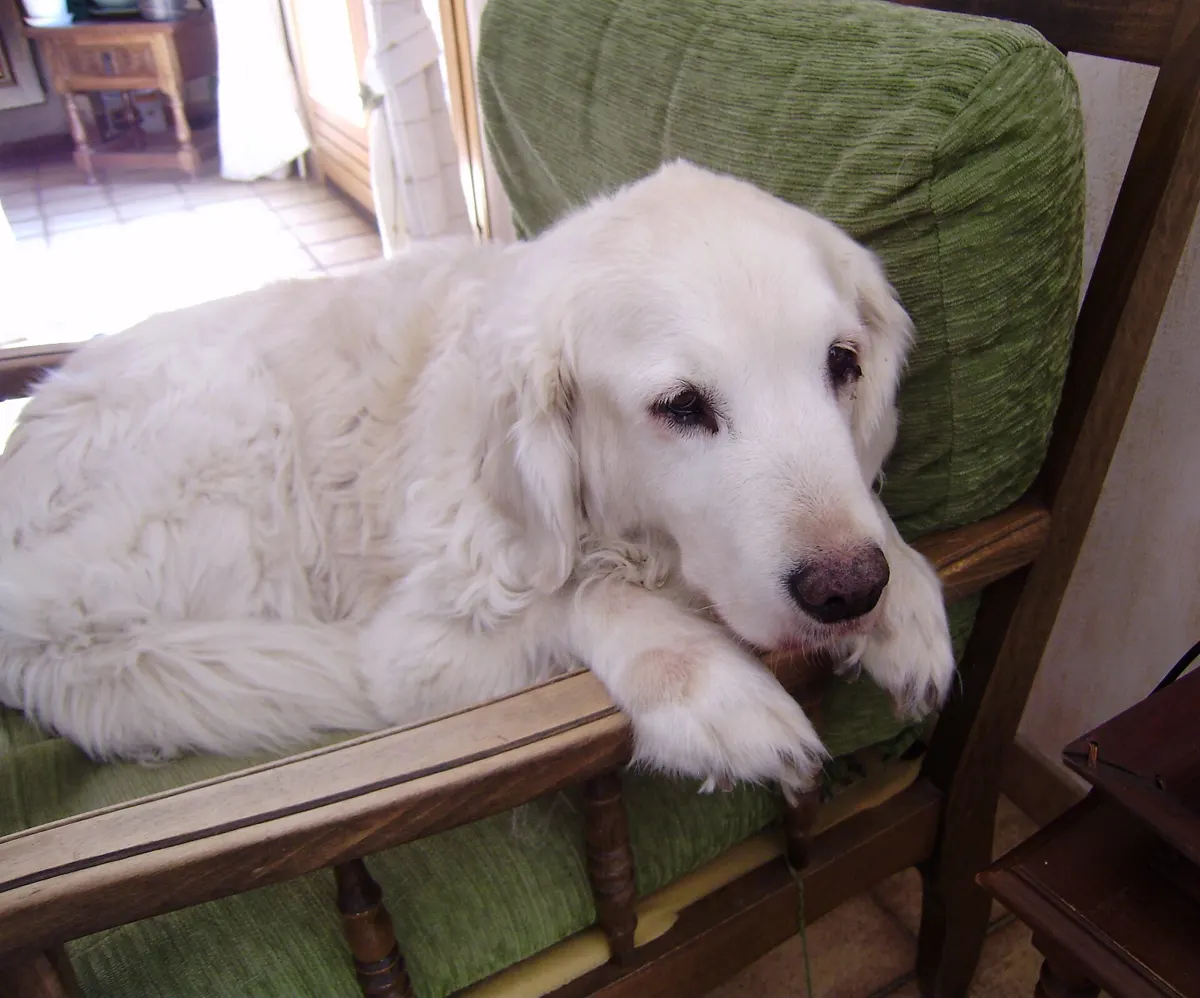
Photo: William Zollinger via Wikimedia Commons, CC BY-SA 3.0
🐾 Getting ready for a puppy? Grab the free Golden Retriever Puppy Checklist (PDF) — no email required.
The useful question is not which ramp is best for every golden. It is whether a particular setup helps your dog reach a place comfortably, and whether you can install and supervise it properly. This is a selection guide, not a hands-on product test, brand ranking or promise to prevent joint disease.
Decide whether access is appropriate first
VCA’s mobility guidance discusses ramps, traction and changes to the home for dogs with mobility difficulties. It says that furniture access should continue only if your veterinarian considers it safe. A low resting place or restricting access may be more appropriate than adding a ramp.
A new reluctance to climb, limp or change in movement needs assessment, not a shopping diagnosis. Our limping guide helps organize questions for your vet. Puppies, dogs recovering from surgery and dogs with existing pain need individual guidance; a ramp does not override an activity restriction.
Measure the place, not just the dog
Write down the access height, clear approach space and where the upper and lower ends will rest. For a car, assess the particular opening and the manufacturer’s supported attachment method while the vehicle is parked. For furniture, check that the ramp cannot move away from the edge.
Compare those measurements with the product’s intended use, deployed dimensions, load rating and installation instructions. Consider how you will lift, unfold and store it. A large advertised capacity does not prove a stable installation, and an extra-long ramp is not useful if there is no room for it. We do not prescribe an angle, length or capacity for all goldens.
Compare footing, support and edges
VCA recommends a sturdy ramp that does not slip, with good traction and protection against falling off the side. Consider the whole route: slippery floor at the bottom, a cluttered landing or a loose rug can undermine an otherwise sensible setup.
Inspect the walking surface, supports, hinges and attachment points as directed by the manufacturer. Reassess a wet or damaged surface before use. Side protection does not make supervision unnecessary, and no accessory removes every fall risk.
| Situation | Questions worth asking | Reason to reconsider |
|---|---|---|
| Parked vehicle | Does the ramp attach as intended, and can you manage it? | Unstable support or inadequate approach space |
| Bed or sofa | Is continued access appropriate, and is the base secure? | The vet advises avoiding that activity |
| Doorway | Can the installation remain stable and maintain traction? | Unsafe edges or a route you cannot supervise |
Introduce it without pressure
VCA advises spending time helping the dog become comfortable with a ramp. In a stable setup permitted by its instructions, let your dog investigate and reward comfortable voluntary approaches. Keep the surroundings calm and allow them to back away. Do not tug a collar, push them upward or improvise a support from loose cushions to complete an exercise.
If your dog freezes, slips or seems uncomfortable, stop and reassess rather than increasing the challenge. Ask your veterinarian or a qualified reward-based professional for help when needed. There is no deadline for learning, and an alternative route may be the better choice.
Keep the wider care plan in view
VCA’s osteoarthritis guidance treats vehicle ramps as one possible environmental change alongside veterinary care and improved traction. It does not establish that a ramp cures arthritis or guarantees prevention in a healthy puppy.
For the rest of the home, see senior care and bed selection. Choose access arrangements around your dog, rather than making your dog cope with a purchase.
Ramp designs and questions to compare
We describe what to look for in each type of product. Affiliate product links, when present, are marked as sponsored.
Pick 1
Portable vehicle ramp
Best for: Owners assessing access to a particular parked vehicle
What to look for:
- Intended vehicle use and compatible attachment
- Documented load rating and secure support
- Grip on the walking surface and both ends
- A folded size and weight you can handle
Pick 2
Supported indoor ramp
Best for: A resting spot your veterinarian agrees your dog can continue using
What to look for:
- Fit to the actual furniture height
- A stable base that cannot slide
- Good traction and protected sides
- Clear approach and exit space
Pick 3
Fixed access ramp
Best for: A doorway or recurring access point needing an assessed installation
What to look for:
- Suitability for the location and weather
- Secure installation and edge protection
- Walking surface maintained for traction
- A plan for supervision and restricted access
Prices and availability change, so we do not list them here. Check the retailer's page for current details.
Frequently asked questions
Is a ramp always better than stairs?
No. The appropriate access arrangement depends on your dog's mobility, the surface and available space. VCA discusses both ramps and steps. Ask your veterinarian about a dog with pain, injury or restricted activity.
What ramp length or weight rating should I buy?
Measure the actual access height and available floor space, then check the manufacturer's intended use, dimensions, setup instructions and load rating for your dog. There is no universal golden retriever ramp size in this guide.
Will a ramp prevent or cure joint disease?
No such guarantee is established here. A suitable ramp can be an environmental aid within an individual care plan, not a diagnosis, treatment or substitute for veterinary advice.
What if my dog refuses the ramp?
Do not pull or force them onto it. Check stability and footing, allow an easy retreat and seek veterinary or qualified reward-based help if pain or fear is suspected.
A quick note: this guide is general information from published sources, written by dog lovers, not a veterinarian. Your own vet knows your dog's history, so check with them before changing food, exercise or treatment.
Sources
Keep reading
Senior Golden Retriever Care: When They Age, What to Watch and How to Help
When is a golden retriever a senior? How often to see the vet, signs of arthritis and other age-related problems, diet, exercise, home setup and when to call your vet.


Golden Retriever Limping: Common Causes and When to See the Vet
Why is my golden retriever limping on a front or back leg? The common causes in goldens, what you can safely check at home, and which limps need a vet today.
Best Dog Bed for Golden Retrievers: Size, Support and Chew-Proofing Guide
How to choose the best dog bed for a golden retriever: the right size, orthopedic foam vs. cooling vs. chew-resistant beds, washable covers and a comparison table by life stage.