Home › Training, Behavior & Exercise
How to Stop a Golden Retriever From Jumping on People: A Step-by-Step Greeting Plan

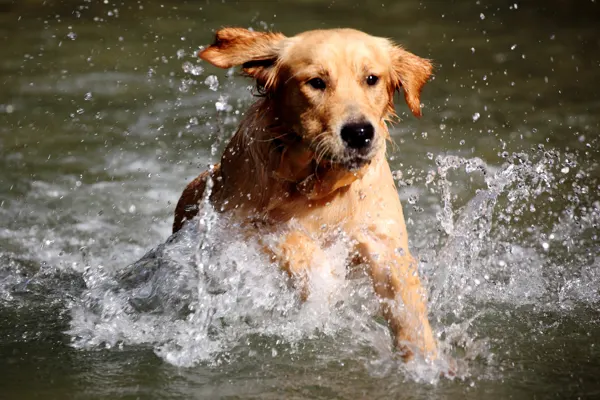
Photo: Pete Markham from Loretto, USA via Wikimedia Commons, CC BY-SA 2.0
🐾 Getting ready for a puppy? Grab the free Golden Retriever Puppy Checklist (PDF) — no email required.
A golden retriever who greets everyone like a long-lost friend is part of the breed’s charm, right up until those front paws land on a toddler, an older relative or a guest’s clean clothes. Jumping is one of the most common greeting problems in dogs, and it’s very fixable. The trick is to stop thinking “how do I make my golden stop jumping?” and start thinking “what do I want my golden to do instead?”
This guide walks through why goldens jump, a step-by-step plan for teaching a calm greeting, how to handle the front door, guests and people on walks, and the common mistakes that keep jumping going. It draws on guidance from the AKC, VCA Animal Hospitals’ veterinary behaviorists, Humane World for Animals (formerly the Humane Society of the United States) Best Friends Animal Society and other shelter trainers.
General education only. If jumping is new or sudden, or comes with growling, snapping or signs of fear, talk to your veterinarian before you start training.
Why golden retrievers jump on people
VCA’s veterinary behaviorists give a simple explanation: social dogs naturally jump up when they greet people. Dogs greet other dogs face to face, and jumping gets them closer to our faces. Then, most of the time, the person they jumped on gives them attention, even if it’s a “no!” or a push. As VCA puts it, behaviors that help dogs reach their goals are repeated.
Not every jumper is just happy, though. VCA notes two other patterns:
- Overexcited or overstimulated dogs may jump because they’re wound up, which is common with young, playful dogs.
- Less confident dogs may jump because a greeting makes them uneasy. For them, jumping may release stress or help defuse an uncomfortable moment.
Goldens are typically friendly, people-loving dogs, so most golden jumpers fall into the “I’m so happy to see you” group. But size matters. The AKC points out that large dogs can unintentionally knock people over, and VCA notes that unruly behavior is a bigger problem in large dogs because of their size. A jump that’s cute from a puppy can hurt a child or a frail adult once that puppy is grown.
First, choose your greeting rule
Every trainer and behaviorist we drew on starts in the same place: decide what you want your golden to do when they meet someone. The AKC calls this a greeting rule. Common choices:
| Greeting rule | Why it works |
|---|---|
| Four paws on the floor | Your dog can’t jump and keep all four paws on the ground at the same time. VCA suggests mastering this first. |
| Sit to greet | A sit is also incompatible with jumping and is easy to ask for at the door. |
| Go to a mat or bed | Useful at the front door when guests arrive, once your dog knows the cue. |
| Hand target (“touch”) | Humane Colorado’s trainers suggest a nose-to-hand touch as an alternative, which gives an excited dog a job. |
Pick one rule and stick with it. The AKC’s example: don’t let your dog jump on you when you’re in jeans but not when you’re in a suit. Your golden can’t tell the difference between “allowed” and “not allowed” jumping unless you make the rule the same every time.
Step-by-step: teaching a calm greeting
This plan follows VCA’s approach of starting easy and making things harder only when your dog is succeeding. Keep sessions short and upbeat, and have small, tasty treats ready. If your golden doesn’t reliably sit yet, start with our puppy training guide.
1. Start with family, in a quiet room
Practice first with people your golden already knows, somewhere calm. As your dog walks up to the person, VCA suggests delivering a treat before your dog even tries to jump, and continuing to feed while all four paws stay on the floor. Your golden never gets a chance to jump because they’re busy eating, so they’re practicing the right behavior from the very first rep.
2. Feed low
Drop treats on the floor between your dog’s front paws rather than holding them up high. VCA notes that feeding low encourages dogs to stay on the floor. The AKC suggests a similar trick: scatter a few treats on the floor as you come in, since most dogs immediately put their noses down to sniff, and a dog can’t jump and search the floor at the same time.
3. Practice alone with a “hello” routine
If no one is around to help, VCA describes a solo exercise:
- Calmly smile at your dog and say “Hello,” then immediately mark (“yes” or a clicker) and drop a treat between their front paws.
- When they finish, roll a treat a few feet away so they turn away and can come back to greet you again.
- As they walk back toward you, say “Hello,” mark the calm approach and feed on the floor again.
- Repeat for a few short sessions until your dog consistently approaches, pauses with four paws down and looks at you or the floor for the treat.
Over time, “Hello” becomes the cue for a calm greeting.
4. Add the sit (optional)
If you’d rather your golden sit to greet, VCA recommends waiting until four paws on the floor is solid, then asking for a sit as your dog approaches and rewarding it. Soon you can say “sit” as soon as your dog gets close, and that becomes the new greeting posture.
5. Make it harder, one thing at a time
Once your dog is succeeding, change one thing at a time: a little more excitement, a new place (like the yard on a leash), another person sitting quietly nearby, or a few more seconds of four-paws-down before the treat. VCA suggests gradually stretching the time between treats to teach patience.
6. Reward the right moment, every time
The AKC stresses timing. Greet your dog as soon as they follow the rule, and don’t make them wait while you take off your coat or put down your bags. Even if your golden spent several minutes jumping before they finally settled, respond warmly the moment they get it right.
What to do when your golden jumps anyway
Mistakes will happen, especially early on. When they do:
- Remove your attention calmly. The AKC suggests turning your back, stepping away or briefly disengaging. VCA advises not looking at, speaking to or touching your dog while they jump. Dogs Trust suggests crossing your arms and turning sideways so your hands stay tucked away and less exciting.
- Re-engage the moment four paws are down. Quiet praise and attention turn back on as soon as your dog is following the rule.
- Step out if you need to. VCA says you can quietly walk past or step behind a gate or door. Once your dog is calm, call them over and reward the calm greeting before jumping starts.
- Don’t repeat the cue over and over. Humane Colorado advises giving the cue once, then standing still and waiting for your dog to offer the sit before you reward.
Over time, as the AKC puts it, your golden learns that polite greetings turn attention on and jumping turns it off.
Mistakes that keep jumping going
Most persistent jumpers have been accidentally rewarded. Watch out for these:
- Pushing, grabbing or holding paws. The AKC says even negative attention can feel rewarding, and some dogs treat physical contact as the start of a game.
- Kneeing your dog in the chest. The AKC says kneeing can be seen as play, can damage trust and may even cause injury.
- Scolding, loud noises or water sprays. VCA warns that corrections can frustrate an excited dog and make them more worked up, and that startling a dog may cause fear. A dog may even link the scary moment with the person they were trying to greet. The AVSAB’s position statement on humane dog training recommends reward-based training over aversive methods.
- Inconsistency. VCA says that if calm greetings are rewarded only sometimes, or some people still give attention for jumping, the jumping can actually get stronger. Hold a quick family meeting so everyone follows the same plan.
- Big, exciting greetings while your dog is learning. The AKC suggests keeping greetings calm and low-key during training, since dogs pick up on our energy. You can bring back more enthusiastic hellos once your dog has the hang of it.
Front door and guests
The front door is where a lot of jumping happens, because visitors are new and exciting and usually don’t know your rules. Plan for it.
Manage first. Until your golden is trained, the AKC, Humane World and Best Friends all recommend preventing practice when guests arrive. Options include:
- Your dog’s crate (see our crate training guide)
- A baby gate or exercise pen
- A separate room until the excitement settles
- A leash, held just tight enough that your dog can’t easily jump. VCA cautions against pulling or jerking it.
VCA’s door-charging guidance adds that until training is done, it’s best to take your dog out of the area when you need to open the door.
Then practice with helpers. Best Friends describes a useful routine: once your dog sits reliably for a treat, put a mat or bed just inside the door and practice being the “visitor” yourself. Walk in, ask once for a sit, and reward when your dog sits. When that’s going well, add a knock or the doorbell, then invite friends to do the same. Best Friends suggests keeping a treat jar outside the door so every visitor can reward a polite sit.
Tell guests what to do. The AKC recommends telling family, guests and acquaintances exactly how to greet your dog: ignore them unless they’re following the greeting rule, then say hello calmly.
If your golden also barks at the door, our barking guide covers doorbell and window barking.
Out on walks
Strangers who say “Oh, it’s fine, I love dogs!” can undo weeks of training in a few seconds. Humane World suggests this approach when someone wants to say hi on a walk:
- Stop the person from approaching and explain that you don’t want your dog to jump.
- Get a treat ready, or hand one to the person.
- Ask your dog to sit.
- Let the person pet your dog and give the treat only while your dog stays seated.
Until greetings are solid with friends and family, the AKC suggests avoiding situations that encourage jumping on strangers. Use a “watch me” cue, a hand target or a toy to redirect your golden while people pass. A dog who pulls toward every new person may also benefit from our loose-leash walking guide.
Should you let your golden jump on you sometimes?
VCA’s behaviorists say dogs get confused when some people allow jumping and others don’t. If you love a “hug,” they suggest teaching it as a separate cued behavior, apart from greetings. Even then, ask for a standard four-paws-on-the-floor greeting first, then cue the hug. If your dog starts jumping on people who haven’t asked, go back to rewarding only calm greetings for a while.
For visitors, children and strangers, calm greetings are the safest default. VCA notes that a large or enthusiastic dog jumping up could injure someone who is small or frail.
Puppies and teenage goldens
It’s much easier to teach a calm greeting from the start than to undo a habit. VCA suggests that dogs who haven’t started jumping learn the greeting in a calm setting with familiar people first. With a puppy, that means rewarding four paws on the floor from day one, and asking everyone who meets your puppy to do the same, even though small paws on your knees feel harmless.
VCA also notes that excitable, rowdy behavior in puppies often diminishes with time and good early training, and that a dog is usually considered unruly only if the problems continue after puppyhood despite enough training. Keep sessions short and positive, and stay consistent as your golden grows.
Jumping often travels with other puppy habits. If your golden grabs sleeves or hands while jumping, see our puppy biting guide. Bringing home a new puppy? Our free puppy checklist helps you plan training and socialization from the first week, and the Puppy Care Log has an “Other observation” entry where you can jot down how greetings are going, which is handy when you talk with a trainer.
Help your golden have less to jump about
A golden with pent-up energy finds self-control harder. Training works better when your dog’s basic needs are covered:
- Exercise that fits their age and health. See how much exercise a golden needs.
- Mental work. Short training sessions, food puzzles and sniffing games give busy minds a job.
- Calm-behavior rewards all day. VCA recommends rewarding quiet, calm, non-demanding behavior with play, affection and attention, and meeting jumping and demanding behavior with inattention.
When to get professional help
See your veterinarian, and ask about a referral to a qualified behavior professional, if:
- The jumping is new or sudden, or your golden seems to be in pain
- It comes with growling, snapping, hard mouthing or other aggressive behavior
- Your golden shows signs of fear or uncertainty around greetings, such as leaning away, looking away, ears pinned back, lowering their body or tail, or moving to the side. VCA says not to let anyone reach for or touch a dog showing these signs.
- Jumping isn’t improving after weeks of consistent, whole-family training
Qualified help includes board-certified veterinary behaviorists and certified professional dog trainers who use reward-based methods.
The short version
- Pick one greeting rule: four paws on the floor or sit.
- Reward it before your dog has a chance to jump, and feed low.
- Remove attention calmly when your dog jumps, and re-engage when they get it right.
- Manage guests and the door with a leash, gate, crate or separate room while you train.
- Get everyone, including visitors, to follow the same rules.
- Skip kneeing, pushing and scolding, and talk to your vet if jumping comes with fear or aggression.
Frequently asked questions
Why does my golden retriever jump on people?
Usually to say hello. VCA's veterinary behaviorists explain that social dogs jump to get closer to a person's face, and that jumping keeps happening because it gets attention. Some dogs also jump when they are overexcited, and less confident dogs may jump because a greeting makes them uneasy.
Should I ignore my golden when they jump on me?
Yes, but ignoring is only half the plan. The AKC advises calmly removing your attention when your dog jumps, by turning away or stepping back, and rewarding right away when all four paws are back on the floor or your dog follows the greeting rule you chose, such as a sit.
Is it OK to knee my dog or push them down when they jump?
It's not recommended. The AKC says pushing, grabbing or holding paws can still feel like attention, and that kneeing a dog can damage trust and may even cause injury. VCA adds that scolding, loud noises or squirting water can cause fear and may make a dog wary of the people it is trying to greet.
How do I stop my golden from jumping on guests?
Manage first, then train. Use a leash, gate, crate or a separate room when guests arrive so your golden can't practice jumping, and send your dog to a mat or bed if they know that cue. Then practice with friends who agree to greet your dog only when all four paws are on the floor or your dog is sitting.
My golden still jumps even though we've been training. What's wrong?
Usually someone is still rewarding it. VCA notes that if calm greetings are rewarded only sometimes, or jumping still gets attention from some people, the jumping can actually get stronger. Make sure everyone in the house and every regular visitor follows the same rules.
When should I get professional help for jumping?
Talk to your veterinarian if jumping is new or sudden, comes with growling, snapping, mouthing that hurts or signs of fear, or isn't improving with consistent training. Your vet can rule out medical problems and refer you to a qualified professional such as a board-certified veterinary behaviorist or a certified dog trainer who uses reward-based methods.
A quick note: this guide is general information from published sources, written by dog lovers, not a veterinarian. Your own vet knows your dog's history, so check with them before changing food, exercise or treatment.
Sources
- AKC: How to Stop Your Dog From Jumping on People
- VCA Animal Hospitals: Dog Behavior Problems, Greeting Behavior, Jumping Up
- VCA Animal Hospitals: Using Predictable Rewards to Train Your Dog
- VCA Animal Hospitals: Dog Behavior Problems, Greeting Behavior, Door Charging
- VCA Animal Hospitals: Disobedient, Unruly and Excitable Dogs
- Humane World for Animals: How to stop your dog from jumping
- Best Friends Animal Society: How to Stop Dogs From Jumping on People
- Humane Colorado: How to teach your dog not to jump up
- Dogs Trust: How to stop your dog jumping up at people
- AVSAB Position Statement on Humane Dog Training
Keep reading
Golden Retriever Puppy Training: A Step-by-Step Guide for the First Year
How to train a golden retriever puppy: socialization, biting, crate and potty training, and what to expect from the angel stage through the teenage months.
Golden Retriever Puppy Biting: Why It Happens and How to Stop It
A humane plan for golden retriever puppy mouthing: safer play, toy redirection, calm breaks, child supervision and warning signs that need professional help.
Why Is My Golden Retriever Barking So Much? Causes and How to Help
Why does your golden retriever bark at night, at strangers, for attention or when left alone? The common causes and gentle, reward-based fixes from the ASPCA, VCA, Cornell and the AKC.
How to Stop a Golden Retriever Pulling on the Leash
Why goldens pull and how to teach loose-leash walking with positive reinforcement. Step-by-step training, gear that helps, common mistakes and a practice plan.

Golden Retriever Exercise Needs: How Much Is Enough at Every Age
How much exercise does a golden retriever need? Age-by-age guidance for puppies, adults and seniors, plus swimming, mental games and hot-weather safety.